Budapest
Thermal Baths, Danube Nights
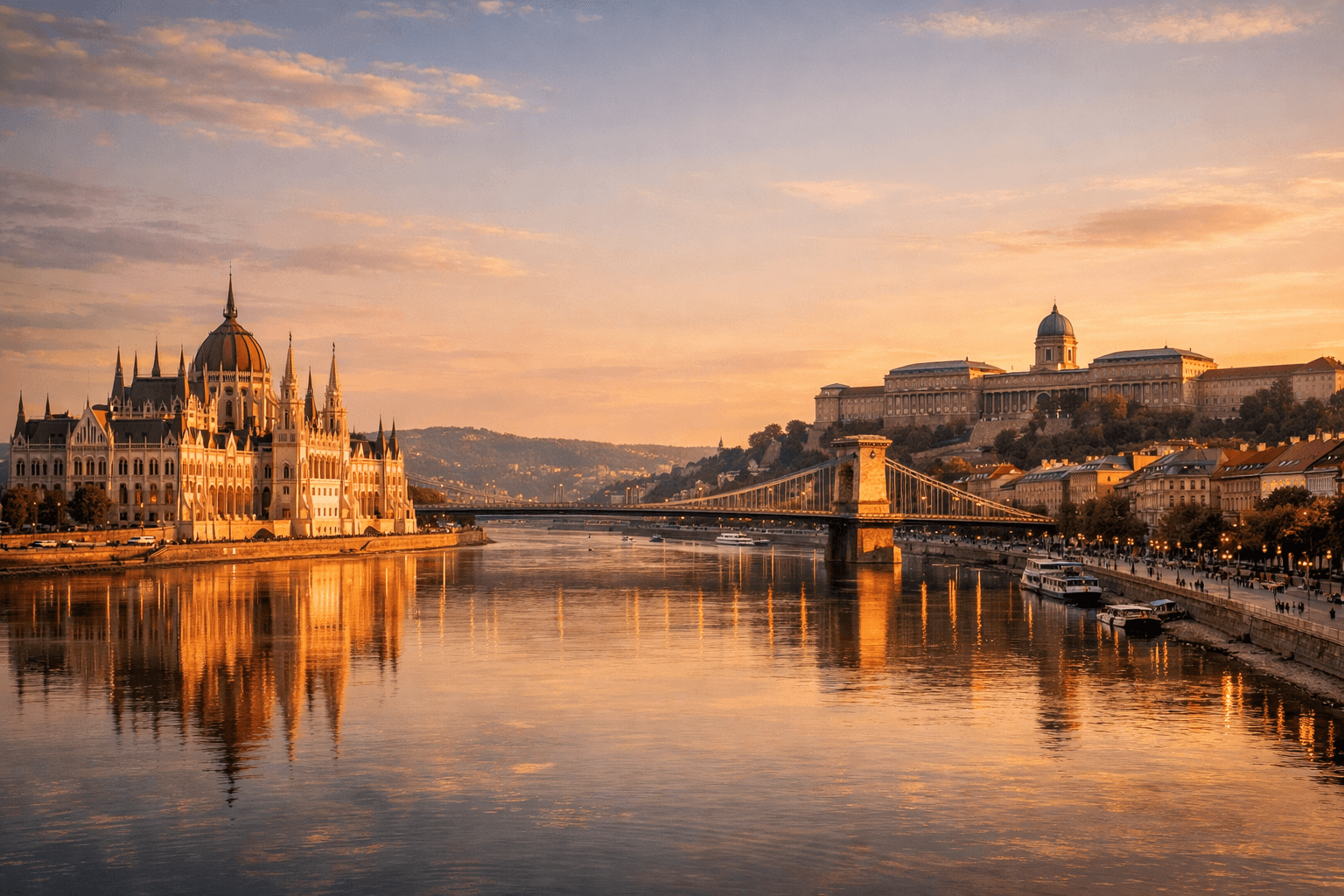
Steam rises from historic baths as the Danube reflects Parliament lights and footsteps echo on cobblestone bridges.
Spring and early fall shine—soak at Széchenyi, stroll Castle Hill, cruise the river at dusk, and book bath tickets ahead.
Discover now and begin your Budapest evening.
01 · Overview
Learn about Budapest
Budapest Overview
Budapest: The City of Baths, Bridges and Quiet Grandeur
History
Budapest grew from two distinct cities—Buda and Pest—joined across the Danube in the 19th century, inheriting a tapestry of Roman, Ottoman, Habsburg and modern influences. Its broad boulevards, grand public buildings and layered neighborhoods record cycles of imperial prosperity, war and 20th-century upheaval, which still shape the city’s mood and architecture.
Current status
Today Budapest feels like a capital that has relaxed into itself: a busy European city with a steady stream of visitors but plenty of quieter corners. It’s a hub for culture, higher education and startups, where renovated historic facades sit alongside adaptive reuse projects and lively cafés.
Local culture
Hungarians in Budapest take local tradition seriously but without theatricality — family gatherings, neighborhood markets and late coffee shop conversations are where you sense daily life. There’s a practical pride in craftsmanship, from pastry-making to carpentry, and a straightforward warmth to hospitality: polite, reserved at first, quick to become helpful once rapport is built.
Food
Budapest’s food scene balances peasant-rooted classics and contemporary interpretation: think slow-simmered goulash and paprikás, alongside inventive bistro plates and seasonal produce. Don’t miss the pastries and cafés that form the city’s coffeehouse culture, nor the markets where you can taste fresh sausages, cheeses and dense rustic breads.
Attractions
The Danube Promenade and Parliament Building are central to understanding Budapest’s visual identity. Walking along the river offers uninterrupted views of the ornate Hungarian Parliament on one bank and the castle-topped Buda hills on the other, which is why a short riverwalk is the best way to orient yourself to the city.
The Castle District on the Buda side rewards a slow approach rather than a checklist visit. Cobbled streets, baroque houses and quiet terraces around Fisherman’s Bastion provide panoramic views and a sense of the city’s older, upper-class neighborhoods; go early or late to avoid the midday crowds.
The thermal baths are both practical and social institutions, where locals come to soak, socialize and slow down. Facilities vary from palatial Art Nouveau baths to simpler neighborhood pools — spending a couple of hours here is as much about people-watching and rhythm as it is about the water itself.
Andrássy Avenue and Heroes' Square show Budapest’s imperial ambitions in stone. This stretch links elegant façades, high-end shops and museums; it’s the most concentrated place to see the city’s grand 19th-century planning and to step into the Museum of Fine Arts or the nearby City Park.
Ruin bars and the Jewish Quarter illustrate the city’s contemporary, creative side. Converted courtyards and repurposed buildings are lively by night and casual by day, offering a glimpse of how Budapest reuses its past for present social life.
Practical note
Budapest is best explored on foot with public transport for longer hops; mix landmark visits with time in markets, parks and cafés to really feel the city. Check opening hours and seasonal schedules for baths and museums before you go, and plan to stray from the main sights — the most memorable moments are often found on quieter streets.
Places to Go
Hungarian Parliament Building (Országház)
Széchenyi Thermal Bath
Fisherman's Bastion (Halaszbastya)
St. Stephen's Basilica (Szent István Bazilika)
Szimpla Kert (original ruin bar)
Things to Do
Soak at Széchenyi Thermal Bath
Walk the Chain Bridge and riverside
Explore Buda Castle & Fisherman's Bastion
Visit the Great Market Hall and taste local food
Night out in a ruin bar (Szimpla Kert)
Blogs to Read
Budapest - Lonely Planet
Comprehensive city guide covering top sights, neighbourhoods, thermal baths, and practical travel tips; useful as a reliable, up-to-date overview for first-time visitors and trip planning.
Budapest Food Guide: What to Eat & Where to Find It - Budapest Tourism
Official city food guide outlining traditional dishes, markets, restaurants at different budgets, and local eating customs — great for food-focused travellers who want practical, vetted recommendations.
10 Hidden Gems in Budapest Most Travelers Miss - Kata Budapest (local tour guide)
Local guide’s selection of lesser-known spots and neighbourhood tips, with context about why each place feels authentically Budapest — ideal for travellers wanting off-the-beaten-path experiences.
Where Locals Actually Eat in Budapest — An Honest Guide - Kata Budapest
Practical, food-focused recommendations from a licensed local guide highlighting daily menus, neighbourhood favourites, and how to eat like a local — useful for realistic meal planning and avoiding tourist traps.
Budapest Food Guide: Best Restaurants, Cafés & Rooftop Bars - Happy When Abroad
Personal-tested recommendations for brunch, cafés, street food and rooftop bars with price and atmosphere notes — helpful for travellers who want tried-and-visited options across budgets.
02 · Find
Explore Local

We haven't mapped neighborhoods for Budapest yet.
03 · Plan
Build Itinerary
Your trips
Your next trip starts here. Make a plan and find it here when you return.
Language Guide
04 · Travel Tips
Travel Tips
Local customs
- Greet with a handshake and eye contact; use titles (Mr./Ms.) in formal settings until invited to use first names.
- Learn a few Hungarian phrases: köszönöm (thank you), kérem (please), jó napot (good day).
- Keep noise low on public transport and in apartment buildings, especially after 10 PM.
- Dress modestly when visiting churches; cover shoulders and knees.
- Tipping: 10–15% in restaurants if service is not included; round up for taxis and leave small change for cafés.
- Respect thermal-bath rules: shower before entering pools, no street clothes in pools, bring a towel and flip-flops.
Transportation options
- Public transport: Budapest has an extensive metro, trams, buses, and suburban trains. Buy validated single tickets or passes; inspectors issue fines for unvalidated tickets.
- Metro: Lines M1, M2, M3, M4 cover central areas; M1 (yellow) is historic and useful for city center stops.
- Trams: Tram 2 along the Danube is scenic and practical for riverfront stops; tram and bus networks are frequent and reliable.
- Taxis: Use official companies or app-based services; insist on the meter or agree the fare before starting. Avoid unmarked cars.
- Ride-hailing and scooter apps operate in the city — check local availability and parking rules for scooters.
- Biking and walking: Central Budapest is compact and walkable; bike lanes exist but watch tram tracks and cobblestones.
- From the airport: Options include airport shuttle buses, fixed-price private transfers, taxis, and ride-hailing — allow 30–60 minutes to city center depending on traffic.
Safety
- Emergency number: 112 for police, ambulance, and fire across the EU.
- Pickpockets target trams, metro stations, and busy tourist sites; keep valuables zipped and in front pockets or a money belt.
- Avoid unlicensed taxis and drivers who approach you at transit hubs; use official stands or apps.
- Stay aware at night in crowded entertainment districts; petty theft and scams are the most common problems.
- Keep copies of your passport and travel insurance details separate from the originals.
- Tap water in Budapest is generally safe to drink; bottled water is widely available if you prefer.
Insider tips
- Visit thermal baths early morning or late evening for fewer crowds; bring a padlock if you prefer locker security.
- Try local foods: lángos (fried dough), gulyás (goulash), and chimney cake at markets — portions are often shareable.
- Explore beyond the tourist spine: walk in Districts VII (ruin bars) and IX (local markets, street food) for a less-touristy feel.
- Buy combined public-transport day passes if you plan many trips; single tickets quickly add up.
- ATMs are common; use machines inside banks for lower fraud risk and check card fees with your bank beforehand.
- Currency: Hungary uses the forint (HUF); small vendors may not accept cards. Carry some cash for markets and smaller cafés.
- Museums: many offer late openings one evening a week—check schedules locally to avoid crowds.
- Photo etiquette: ask before photographing people, especially in markets or religious sites.
- Expect cobblestones and stairs; bring comfortable shoes and a small daypack for bottles and layers.