Copenhagen
Canals, Candles, Cozy Evenings
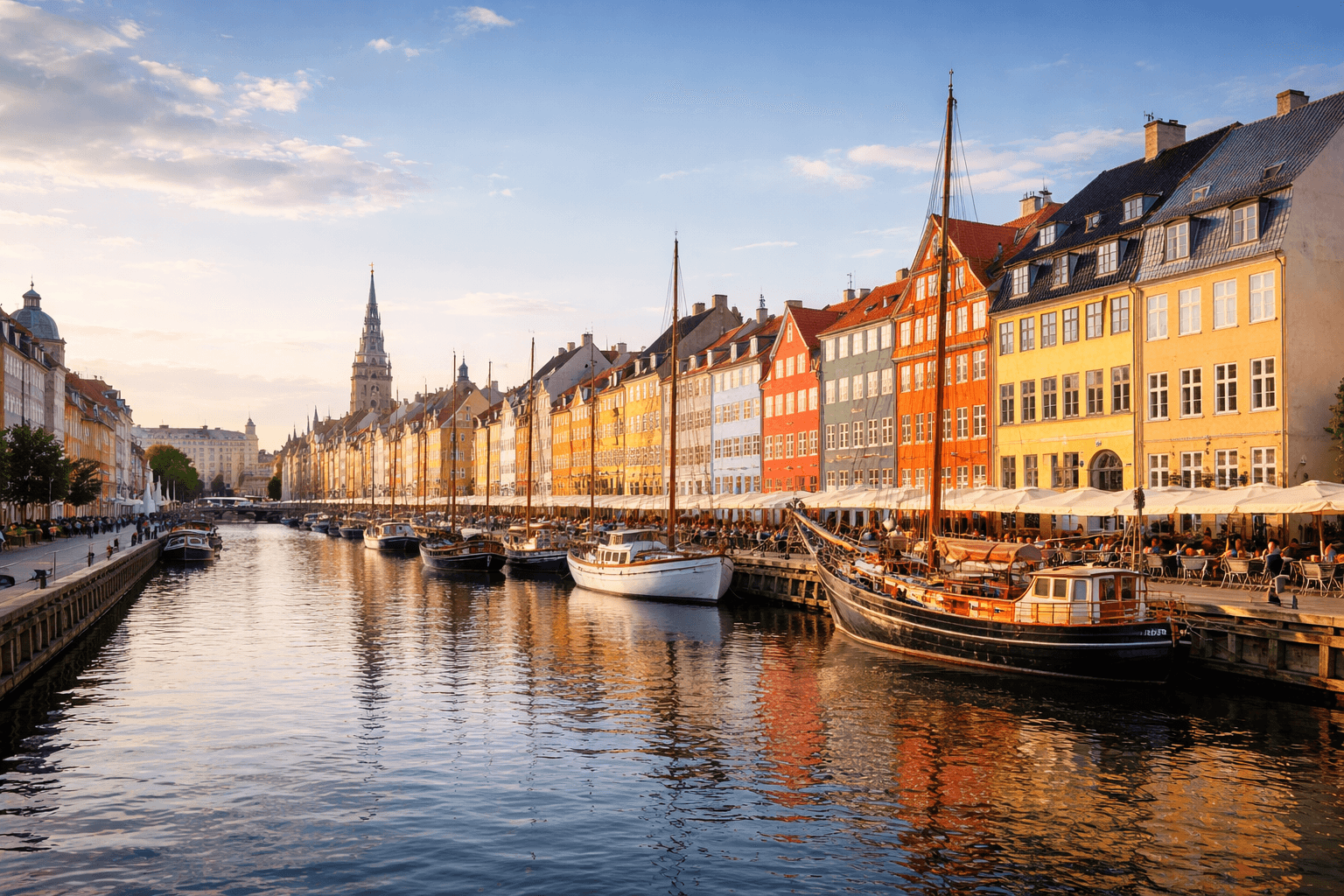
Soft light glows along canal water as bicycles whisper past cafés and candlelit windows warm the blue-hour streets.
Late spring to early autumn shines—cycle Nyhavn, explore Tivoli Gardens, taste Nordic cuisine, and use a Copenhagen Card for transit.
Start your journey now and slip into Copenhagen’s hygge rhythm.
01 · Overview
Learn about Copenhagen
Copenhagen Overview
Copenhagen: Calm Design, Salt Air, and a Slow Urban Pulse
History
Copenhagen began as a modest Viking fishing village and over the centuries grew into Denmark’s political and mercantile center. The city’s layered past is readable in its streets: medieval churches and softened Renaissance facades sit beneath the clean lines of 20th‑ and 21st‑century Nordic architecture, a reminder that Copenhagen has always balanced tradition with reinvention.
Current status
Today Copenhagen feels intimate and deliberately scaled — dense but never claustrophobic, with an infrastructure that prioritizes bikes and short, pleasant walks. It's a prosperous, pragmatic city that channels resources into design, public space, and cycling networks; expect efficient transit, thoughtful public gardens, and neighborhoods that change character block by block.
Local culture
The local mood is quietly civic: Danes value functionality, good taste, and social trust, which shows up in everything from well‑kept public squares to relaxed café service. Hygge still threads through everyday life — simple comforts, low-key company, and an appreciation for good lighting and well‑made objects — but Copenhageners are also engaged with sustainability and progressive urban life.
Food
Copenhagen’s food scene ranges from classic open‑faced smørrebrød and cozy neighborhood bakeries to cutting‑edge New Nordic restaurants that emphasize seasonality and local produce. You don’t need to book a Michelin table to get a memorable meal; excellent casual spots, market stalls, and seafood stands deliver authentic tastes of the city at a fraction of the price.
Attractions
Nyhavn
Nyhavn is the city’s postcard stretch of colorful 17th‑ and 18th‑century warehouses lining a lively canal. It’s pleasant to stroll or sit at a waterside café, but it’s also a tourist magnet — go early or use it as a brief, scenic stop rather than a full‑day plan.
Tivoli Gardens
Tivoli Gardens mixes historic charm with family fun: an old amusement park with decorative lighting, gardens, and a handful of classic rides. It’s atmospheric in the evening and worth a visit if you appreciate vintage leisure spaces and a local, festive vibe.
The Little Mermaid
The Little Mermaid statue is modest and famously small, perched on a rock by the water and best seen as part of a coastal walk. It’s iconic in a symbolic way, but the sculpture itself rarely rewards a special trip — combine it with nearby waterfront routes and residencies instead.
Christiansborg Palace & the Canal Ring
Christiansborg, set on Slotsholmen, gathers the institutional heart of Denmark with views over the canal ring and quick access to museums and parliamentary history. The surrounding area is compact and walkable, making it a useful hub for shading a day of civic history, nearby courtyards, and good museums.
Strøget and Neighborhood Walks
Strøget, the main pedestrian thoroughfare, is best used as an axis rather than a shopping monolith — wander its cross streets to find independent shops, cafés, and old bakeries. For a more local feel, explore distinct neighborhoods like Vesterbro for a younger scene or Christianshavn for canals and relaxed cafés.
Final note
If your time is limited, prioritize walking, cycling, and a short harbor tour to get the city’s character; reserve a focused museum visit or a special‑occasion restaurant for a second day. Copenhagen rewards slow travel: a few well chosen neighborhoods and a sensible pace will give you a truer sense of the place than trying to tick every landmark off a list.
Places to Go
Nyhavn
Tivoli Gardens
The Little Mermaid (Den Lille Havfrue)
Christiansborg Palace
Rosenborg Castle (Rosenborg Slot)
Things to Do
Stroll Nyhavn and take a canal cruise
Visit Tivoli Gardens
See Rosenborg Castle and the Crown Jewels
Walk Slotsholmen: Christiansborg Palace & Parliament
Visit Freetown Christiania and Christianshavn canals
Blogs to Read
02 · Find
Explore Local

We haven't mapped neighborhoods for Copenhagen yet.
03 · Plan
Build Itinerary
Your trips
Your next trip starts here. Make a plan and find it here when you return.
Language Guide
04 · Travel Tips
Travel Tips
Copenhagen — compact practical tips
Local customs
- Danes are polite and low-key: keep voices moderate and respect personal space.
- Greet with a simple “hej” (hi); punctuality is appreciated for meetings and tours.
- Tipping: not required; round up or leave ~5–10% for exceptional service — cards cover most service charges. (visitdenmark.com)
- Dress casually but neatly; layers are useful because weather changes quickly.
Transportation
- Metro, S‑train, regional trains, and buses use the national ticketing system (Rejsekort / DOT tickets). Buy single tickets at machines, use the DOT/Rejsekort app, or get a City Pass if you’ll ride heavily. Validate/swipe where required. (publictransport.dk)
- Bikes are the most practical short‑trip option — expect separated bike lanes and heavy bike traffic on main routes. Don’t ride on sidewalks; follow lane markings. (visitcopenhagen.com)
- Taxis are available but expensive; rideshares and public transport are usually cheaper. Walking is easy inside the central districts.
- Copenhagen Airport (CPH) is well connected by metro and train; buy tickets before boarding.
Safety
- Copenhagen is generally safe; normal city caution for belongings and crowded tourist spots is enough.
- On bikes: use lights after dark and obey traffic signals — fines can apply for violations. Wear a helmet if you prefer (not legally required). (international.kk.dk)
- Nightlife: stick to well-lit streets, watch drinks, and use licensed taxis or an approved rideshare to get home.
Money & practicalities
- Currency: Danish krone (DKK). Many places are cashless — cards and mobile payments are widely accepted; carry a small amount of cash for occasional market stalls. (visitdenmark.com)
- Power: 230V, type C/E plugs; bring an adapter if needed.
- Pharmacies (Apotek) close earlier than supermarkets; keep basic meds with you.
Insider tips
- Rent a bike from a local shop (not an unbranded street bike) for better gear and lock; avoid cycling in rush hour if unfamiliar with bike flow. (visitdenmark.com)
- Explore neighborhoods by foot or bike: Nørrebro for cafés and secondhand shops, Vesterbro for food and nightlife, Christianshavn for canals.
- Eat like a local: try smørrebrød at a lunchtime spot rather than formal dinner; bakery items are reliable on the go.
- Museums often have quieter mornings; buy timed-entry for major attractions when possible.
Quick checklist
- Download Rejseplanen/DOT or have ticket method ready. (publictransport.dk)
- Bring a good rain jacket and layers.
- Use bike lanes, lights, and plan routes — Copenhagen’s bike network is dense but busy. (visitcopenhagen.com)