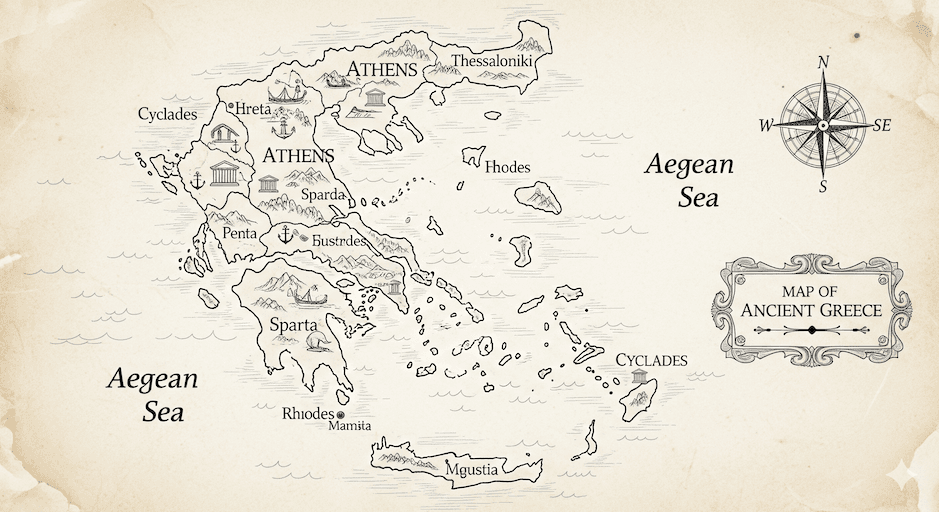
Crete
Crete: Sea, Sun, Ancient Stories
Stroll olive-scented lanes, taste Cretan cuisine by the sea, hike Samaria Gorge — best visited May–June for mild skies and wildflowers.
Soak in pink sands at Elafonissi; rent a car for hidden coves and lively villages.
Plan your visit to Crete's beaches and Minoan ruins. Discover now.
01 · Overview
Learn about Crete
Crete Overview
Crete: An Island of Stone, Sea, and Slow Time
History
Crete is where the Minoan civilization — one of Europe’s earliest advanced cultures — rose around 2000 BCE, leaving frescoed palaces, complex pottery and myths that still shape tourist expectations. Over millennia the island was contested by Byzantines, Venetians and Ottomans; each left a visible layer in fortresses, towns and religious life that gives Crete its stitched-together, lived-in feel.
Current status
Today Crete is Greece’s largest island and a place of contrasts: bustling ports and resort stretches sit beside remote mountain villages that keep a seasonal rhythm. Infrastructure is modern enough for comfortable travel, but much of the island’s charm comes from how slowly parts of it move — expect quiet mornings in the hills and busy, warm evenings along the coast.
Local culture
Cretan identity is strong and practical: family, land and hospitality shape daily life and public festivals. Music and dance remain important, often led by the lyra and laouto, and local communities still mark the agricultural calendar with feasts where visitors are welcomed to join.
Food
Crete’s cuisine is deceptively simple and intensely local — olive oil, wild greens, cheese, legumes, and fresh seafood form the backbone of most meals. Try dakos, a barley rusk topped with tomato and mizithra, and look for small tavernas where the menu changes with what’s available that morning; eating here is as much about place as flavor.
Attractions
Knossos Palace
Knossos is the island’s emblem of antiquity: the reconstructed palace complex near Heraklion offers a slice of Minoan scale and ceremonial life. While the reconstructions are interpretive, walking the site gives a tangible sense of how central Crete was to early Aegean civilization.
Elafonissi Beach
Elafonissi is famous for its pale-pink sand and shallow turquoise lagoons, a landscape that feels a world away from the island’s mountains. It’s popular for good reason, but visit early or late in the day if you prefer quiet stretches and softer light for photographs.
Samaria Gorge
For active travelers, Samaria Gorge is a half-day to full-day trek through a dramatic, narrow canyon carved by millennia of water and time. The walk finishes at a coastal village — a satisfying combination of inland solitude and seaside relief — and rewards those who don’t mind a steady descent.
Chania Old Town
Chania’s old town is compact and walkable, with Venetian harborside architecture, shaded alleys and an easygoing café culture that’s ideal for aimless wandering. It’s a good base for exploring western Crete while offering enough charm and local life to keep you occupied without a car.
Practical note
Plan your days around what you want to feel: cultural depth (archaeology and towns), wild nature (gorges and mountains), or relaxed seaside time. Check opening times and seasonal accessibility for mountain roads and archaeological sites before you go; local rhythms matter here and change with the seasons.
Places to Go
Palace of Knossos
Heraklion Archaeological Museum
Samaria Gorge (Samaria National Park)
Elafonissi Beach
Spinalonga Island (fortress)
Things to Do
Visit the Palace of Knossos (near Heraklion)
See the collection at the Heraklion Archaeological Museum
Hike a major gorge — Samaria Gorge (White Mountains)
Beach day at Elafonissi (southwest Crete)
Lagoon and boat trip to Balos and Gramvousa (northwest Crete)
Blogs to Read
Hidden Crete away from crowds — without the hype
Local-run guide highlighting quiet cultural and natural spots across Crete with practical tips for avoiding crowded attractions; useful for travelers who want authentic villages, short walks, and less-touristed beaches.
Hidden Gems in Crete: Off the Beaten Track
A well-illustrated list of lesser-known places (monasteries, beaches, villages) across the island with photos and short logistics notes — good for planning day trips beyond the popular sights.
Hidden Gems in Crete: Quiet Beaches and Villages
Practical, season-aware recommendations for quieter beaches, traditional villages and day routes, plus advice on when to visit each spot — helpful for timing a trip to avoid crowds.
Hidden Gems of Crete: Off-the-Beaten-Path Experiences
Local-operator blog focused on authentic experiences (small coves, rural wineries, remote gorges) with actionable itineraries and why each spot suits different traveler types — useful for experiential and slower travel planning.
Elafonisi Beach Trip from Rethymno
Detailed practical guide for visiting Elafonisi (logistics, timing, stopovers) with on-the-ground tips to manage crowds and combine the visit with nearby points of interest — good for day-trip planning to a top scenic beach.
02 · Find
Explore Local

We haven't mapped neighborhoods for Crete yet.
03 · Plan
Build Itinerary
Your trips
Your next trip starts here. Make a plan and find it here when you return.
Language Guide
04 · Travel Tips
Travel Tips
Crete — Practical travel tips
Local customs
- Greet with a simple "Yassas" (ya-SAS) or "Kalimera" (good morning); a smile goes a long way.
- Dress modestly when visiting churches or monasteries; shoulders and knees should be covered.
- Handshakes are common; older people may expect a slightly more formal greeting.
- Tipping: round up in cafes, leave 5–10% in restaurants if service is good; small tips for taxi drivers and hotel staff are appreciated but not mandatory.
- Avoid loud, confrontational behaviour in public — Cretans value politeness and calm.
Transportation options
- Car rental: best way to see the island (mountain roads can be narrow and winding). Rent a small car for easier parking and fuel economy.
- Public buses (KTEL): reliable between major towns and cities; timetables vary by season — check local schedules when you arrive.
- Taxis: common in cities; agree on meter use or a price before long trips (especially from remote spots).
- Domestic flights and ferries: use ferries to reach nearby islands or the mainland; book ahead in high season (July–August).
- Driving tips: expect tight curves, sudden slow vehicles, and local drivers passing on blind hills. Keep an eye out for sheep and goats on rural roads.
Safety
- Routine safety: Crete is low on violent crime; use common-sense precautions (lock car, don’t leave valuables visible).
- Beach safety: some beaches have strong currents; heed local warnings and watch children closely where there’s no lifeguard.
- Mountain hiking: bring water, sun protection, sturdy shoes, and a map/GPS. Weather can change quickly in higher areas.
- Medical care: city hospitals cover emergencies; carry basic medication and travel insurance that includes evacuation if you plan remote hikes.
- Night safety: main towns are safe after dark, but avoid poorly lit isolated areas and watch for uneven pavements.
Insider tips
- Timing: visit archaeological sites early morning or late afternoon to avoid heat and crowds.
- Food: try local specialties (dakos, moussaka variations, Cretan cheese, and grilled seafood). Ask locals for family-run tavernas away from tourist hubs.
- Markets: buy olive oil and herbs from producers; sample before buying and expect to haggle modestly at local stalls.
- Water: tap water is generally safe in towns, but many prefer bottled water in rural areas.
- Cash vs card: cards are accepted in most places, but carry cash for small villages, buses, markets, and tavernas.
- Siesta rhythm: many small shops close midday (roughly 1–5pm), so plan errands around that.
- Photography: ask permission before photographing people in villages, especially elderly residents.
- Local festivals: if your trip overlaps a panigiri (village festival), attend — food, music, and dancing give a clear sense of island life.
- Avoid peak season crowds by visiting shoulder months (May–June, September–October) for milder weather and easier access.
Quick practical notes
- Power sockets: standard European type (Type C/F), 230V. Bring an adapter if needed.
- Sim cards: local prepaid SIMs give good data coverage; top-up shops are widespread.
- Language: English is widely understood in tourist areas; learning a few Greek phrases is appreciated.