Finnish-Lapland
Arctic Silence, Northern Lights
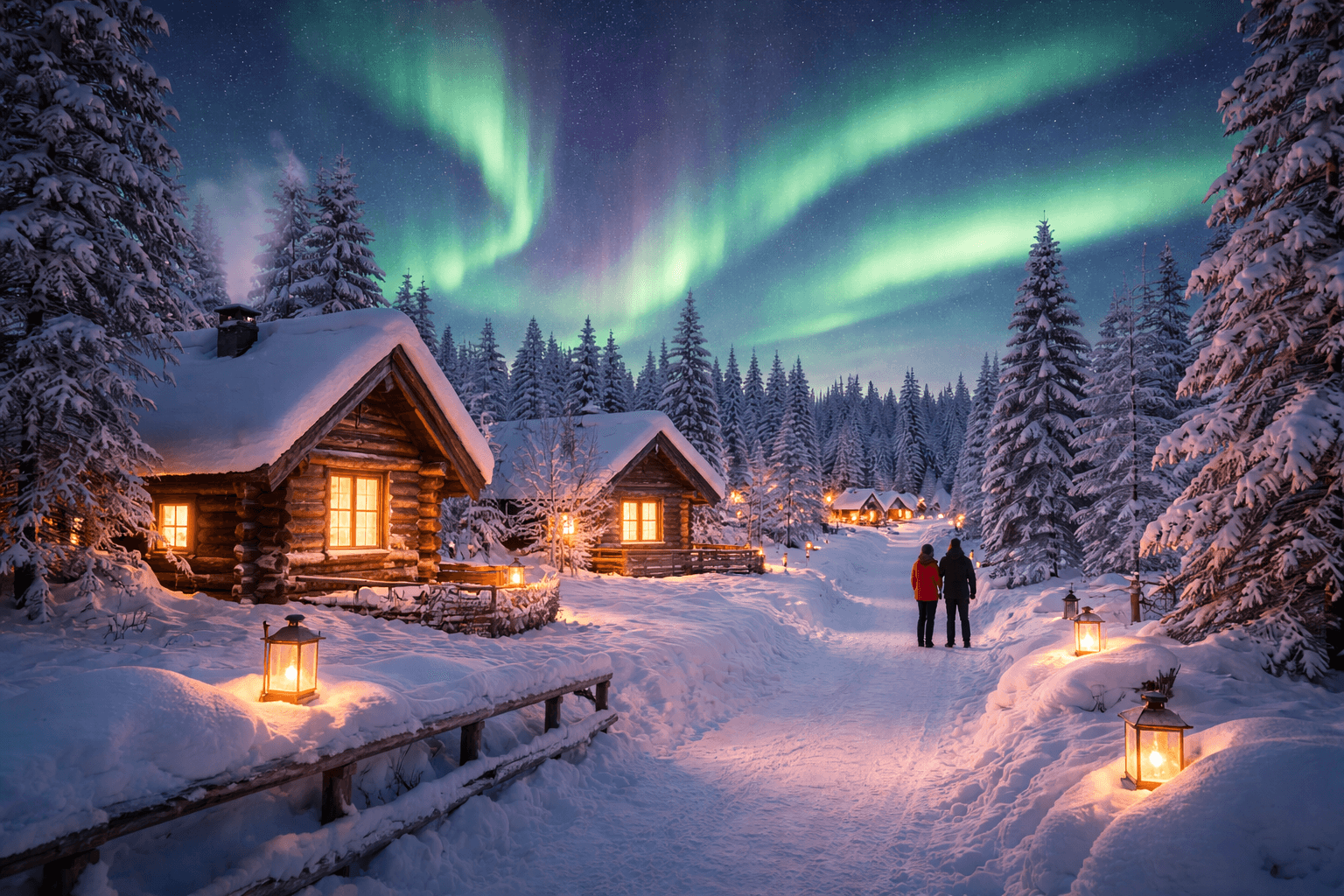
Snow hushes the forest as reindeer tracks cross frozen trails and the aurora ripples across a crystal-clear sky.
Winter brings Northern Lights, husky sleds, and glass igloos; summer glows with midnight sun hikes—pack thermal layers.
Start your journey now and step into Lapland’s Arctic calm.
01 · Overview
Learn about Finnish-Lapland
Finnish-Lapland Overview
Finnish Lapland: Quiet Arctic Light and Time-Honored Ways
History
Lapland, the northernmost part of Finland, has long been a borderland of survival and exchange. Its history is shaped by reindeer pastoralism, trade routes between east and west, and the endurance of the Sámi people, whose presence and traditions predate national borders. In the 20th century, wartime events and postwar modernization brought roads, tourism, and new economic patterns, but the region's deep relationship with the land remains central.
Current status
Today Finnish Lapland balances small, resilient towns and vast tracts of protected wilderness. Cities like Rovaniemi act as practical hubs—air connections, visitor services, and museums—while much of the region retains slow rhythms: seasonal shifts, small communities, and industries built around forestry, tourism, and reindeer herding. Infrastructure is good for travel, but expect long distances and prepare for weather to set the pace.
Local culture
Sámi culture is the living core of Lapland: language, joik (a form of song), handicrafts (duodji), and reindeer herding are active, contemporary traditions rather than museum pieces. Finns outside Sámi communities bring a similarly pragmatic northern culture—polite reserve, deep respect for nature, and resourcefulness. Meeting local guides, attending a joik performance, or visiting a Sámi-run enterprise gives the clearest sense of how culture shapes daily life here.
Food
Lapland’s cuisine is seasonal and straightforward, leaning on what the land provides—reindeer, freshwater fish, wild berries, and mushrooms. Typical meals are hearty and designed for cold days; smoked fish, reindeer stew, and berry preserves appear often, and modern kitchens combine these ingredients with Nordic minimalism. Coffee culture is strong: a pause with kahvi (coffee) is a reliable way to connect with locals.
Attractions
Northern Lights and Arctic light
Lapland is one of Europe’s most reliable places to see the aurora borealis; during long winter nights the sky can put on dramatic shows. Beyond auroras, the quality of light here—soft, clear, and slow-changing in shoulder seasons—shapes the way people photograph and move through the landscape.
Santa Village and Rovaniemi
Rovaniemi’s Santa Claus Village is a tourist fixture that neatly blends family-friendly spectacle with the region’s winter economy. It’s busy and deliberately engineered for visitors; go if you want the convenience of a single stop for photos, postmarks from the Arctic Circle, and child-focused experiences, but expect crowds at peak season.
Wilderness activities: snowmobile, ski, and ice experiences
Cross-country skiing, snowshoeing, and fatbiking are the best ways to feel the scale of Lapland without crowds, while snowmobile safaris and ice-fishing trips deliver straightforward, adrenaline-light outdoor adventure. Guides matter: a local guide turns logistics into a simple day and points out animal tracks, lighting conditions, and safe routes.
Sámi cultural experiences and reindeer farms
Visiting a Sámi family or a reindeer farm offers a grounded, personal view into everyday life and livelihoods tied to the land. These visits are most rewarding when arranged through Sámi-run operators who respect traditions and give space for conversation rather than staged performance.
National parks and summer midnight sun
In summer, Finland’s national parks in Lapland—subarctic fell country with marked trails and simple huts—become places of long, slow days under the midnight sun. Hikes are straightforward yet rewarding: you can cover ground and still feel solitude; bring good layers and plan logistics in advance.
Practical note from a local friend
Pick one or two focal experiences—aurora watching, a Sámi visit, or a wilderness trip—instead of overpacking an itinerary. Distances are long, weather is decisive, and the best memories come from moving slowly: a single long hike, an evening by a woodstove, or a conversation over coffee.
Places to Go
Santa Claus Village (Rovaniemi)
Arktikum (Arctic Museum & Science Centre, Rovaniemi)
Ranua Wildlife Park (Ranua / near Rovaniemi)
Pallas–Yllästunturi National Park
Urho Kekkonen National Park (Urho Kekkonen / Saariselkä area)
Things to Do
Chase the Northern Lights (Aurora Borealis)
Husky Safari
Reindeer Farm Visit and Sleigh Ride
Snowmobile (or ATV) Safari
Stay in a Glass Igloo / Snow Hotel / Fell Cabin
Blogs to Read
A guide to Lapland, Finland
Comprehensive practical guide covering highlights across Finnish Lapland (when to go, top towns like Rovaniemi, activities such as husky safaris, northern lights tips and local food recommendations); useful for planning itineraries and understanding seasonal differences. (lonelyplanet.com)
Lapland – Top winter destination by Lonely Planet (Visit Finland blog / news)
Official Visit Finland piece about Lapland’s winter appeal, sustainable labels and regional highlights; good for authoritative info, seasonal framing and links to local services and events. (fcb.visitfinland.com)
Finnish Lapland — The Complete Travel Guide
Regional tourism site with detailed destination pages (Rovaniemi, Levi, Saariselkä, Inari), activity guides (northern lights, glass igloos, safaris) and practical tips on tours and accommodations — useful as a one-stop reference for choosing towns and bookings. (finnishlapland.com)
Blog — Lapland Travel Guides & Stories | LaplandTour.fi
Operator-led blog with honest, experience-based posts: northern lights hunting tips, gear guides, sample itineraries and local advice from guides who work in Finnish Lapland — useful for realistic activity expectations and packing. (laplandtour.fi)
Blog | Lapland Tour Packages
Practical posts on weather, realistic temperature expectations, sample itineraries and activity costs in Lapland with recent updates; helpful for budgeting and daily planning. (laplandtourpackages.com)
02 · Find
Explore Local

We haven't mapped neighborhoods for Finnish-Lapland yet.
03 · Plan
Build Itinerary
Your trips
Your next trip starts here. Make a plan and find it here when you return.
Language Guide
04 · Travel Tips
Travel Tips
Finnish Lapland — Practical Travel Tips
Local customs
- Greet with a simple "hei" or "moi"; Finns are reserved and value personal space.
- Be punctual for tours, transfers and restaurant bookings; lateness is frowned upon.
- Remove shoes when entering small cabins or private homes if hosts indicate.
- Quietness is appreciated in public places and nature; avoid loud talking late at night.
- Tipping is not required; round up or leave 5–10% for exceptional service.
- Respect Sámi culture: ask before photographing people, and don’t appropriate traditional clothing or symbols.
Transportation options
- Flights: Rovaniemi, Kittilä and Ivalo are main airports for Lapland; book early in high season.
- Trains/buses: Limited regional services—check timetables in advance; connections can be sparse.
- Rental car: Best for flexibility; choose winter tires and a full-coverage insurance with roadside assistance.
- Driving in winter: Use winter tires (often mandatory), drive slowly, watch for black ice and reindeer.
- Domestic flights and long-distance buses connect larger towns; plan buffer time for weather delays.
- Local transfers: Many tour operators include pickup; confirm meeting points in daylight hours.
Safety
- Winter conditions: Hypothermia and frostbite risk—layer clothing, protect extremities, monitor children.
- Weather changes fast: Carry a charged phone, map, and notify someone of backcountry plans.
- Aurora hunts: If driving at night, park safely off the road; avoid stopping on narrow shoulders.
- Wildlife: Give reindeer and other animals wide berth; they may behave unpredictably on roads.
- Ice safety: Don’t trust frozen lakes unless locals or signage confirm they’re safe for walking.
- Emergency numbers: Finland emergency number is 112; save it and local accommodation contacts.
Insider tips
- Clothing: Use wool/merino base layers, insulated mid-layers, and a windproof, waterproof outer layer.
- Footwear: Insulated, waterproof boots with good grip; consider removable crampons for icy walking.
- Daylight in winter/summer: Expect very short winter days and continuous daylight in summer—plan activities accordingly.
- Cash vs card: Cards accepted widely; carry a small amount of euros for remote spots.
- Sauna: Common and mostly mixed; follow local etiquette (shower before, keep voices low, use towel).
- Local food: Try simple local dishes (reindeer, Arctic fish, berries); portions can be modest—ask for extras if hungry.
- Book popular activities (husky/snowmobile/santa experiences, Northern Lights tours) well in advance.
- Charging & batteries: Cold drains batteries fast—carry spares and keep devices close to your body to stay warm.
- Accommodation: Cabins and remote lodges may have limited services—check heating, water and kitchen facilities beforehand.
- Photography: For aurora shots, use a tripod, wide aperture, and long exposure; bring a headlamp with a red light option.