Iceland
Fire, Ice, Endless Horizons
Cold wind carries ocean spray as waterfalls thunder, lava fields stretch wide, and northern light flickers above black sand.
Summer brings long days for the Golden Circle, glaciers, and ring-road drives; winter rewards aurora hunters—rent a car for freedom.
Start your journey now and discover Iceland’s raw edge.
01 · Overview
Learn about Iceland
Iceland Overview
Iceland: A Compact Country of Wild Landscapes and Calm Practicality
History
Iceland’s recorded history begins with Norse settlement in the late 9th and early 10th centuries, when Vikings and their Gaelic followers carved farms out of lava fields and fjords. The island formed an independent commonwealth for centuries before entering a union with Norway and later Denmark; full independence was restored in 1944. The landscape—volcanoes, glaciers, and isolated fjords—has always shaped Icelandic society, encouraging resilience, self-reliance, and a practical relationship with nature.
Current status
Today Iceland is a modern Nordic democracy with a small population concentrated around the capital, Reykjavík. The economy blends fishing, renewable energy, tourism, and a growing tech and creative sector; living standards are high, but the country manages a tension between preserving fragile environments and welcoming visitors. Expect efficient services, thoughtful design, and an emphasis on outdoor life rather than urban bustle.
Local culture
Icelanders prize practical competence, dry humor, and storytelling; literature and sagas remain central to national identity. There’s a strong do-it-yourself streak—people fix, invent, and improvise—and social trust is high: strangers are treated with courtesy and directness. Community life revolves around music, seasonal festivals, and time spent outdoors, often in geothermal pools where conversations range from local politics to weather and road conditions.
Food
Icelandic cuisine is grounded in what the sea and land provide: lamb, cod, and dairy feature prominently, and modern kitchens favor simple, high-quality ingredients. Traditional items like smoked lamb, rye bread baked in geothermal heat, and skyr (a thick cultured dairy) coexist with creative restaurants that elevate local seafood and foraged herbs. If you dine modestly or splurge sensibly, you’ll notice a clear line between honest, hearty home cooking and inventive chef-driven plates that reinterpret tradition.
Attractions
The Golden Circle is an easy, efficient loop for first-time visitors: Þingvellir National Park offers a tangible slice of geology and history where the North American and Eurasian tectonic plates meet, while nearby geysers and the thundering Gullfoss waterfall show Iceland’s geothermal and glacial energy. It’s compact enough to do in a day from Reykjavík, which makes it a practical primer for the country’s bigger adventures.
The South Coast stretches from black sand beaches to glaciers, with Seljalandsfoss and Skógafoss waterfalls punctuating the drive and the Reynisfjara beach displaying dramatic basalt columns and sea stacks. This route rewards a willingness to stop frequently: the landscape changes quickly, and short walks usually reveal the most memorable views.
Vatnajökull National Park centers on Europe’s largest glacier and nearby ice lagoons, where floating icebergs and sculpted blue ice form quietly luminous scenes. Boat trips and short walks to vantage points are the sensible way to experience the area; don’t plan to ‘see it all’—the glacier’s scale demands selectivity.
The Westfjords are for those who favor solitude and rawness over convenience: narrow fjords, steep cliffs—home to large seabird colonies—and sparse services make for long drives but dramatic rewards. If you can spare the time, the Westfjords show how Iceland looks when tourism thins out and nature calls the shots.
Reykjavík is small, walkable, and cultural where many travelers expect only nature: a compact design and music scene, museums that explain the sagas and settlement, and practical cafés where locals meet. Use the city as a base for provisioning, museum stops, and a short introduction to contemporary Icelandic life before heading into the country’s wilder reaches.
Practical note
Iceland rewards a slow, selective itinerary: pick a few regions and explore them well rather than trying to circle the whole island in a rush. Check road and weather updates before driving—conditions change quickly—and plan to be flexible so you can savor the quiet moments that make the trip memorable.
Places to Go
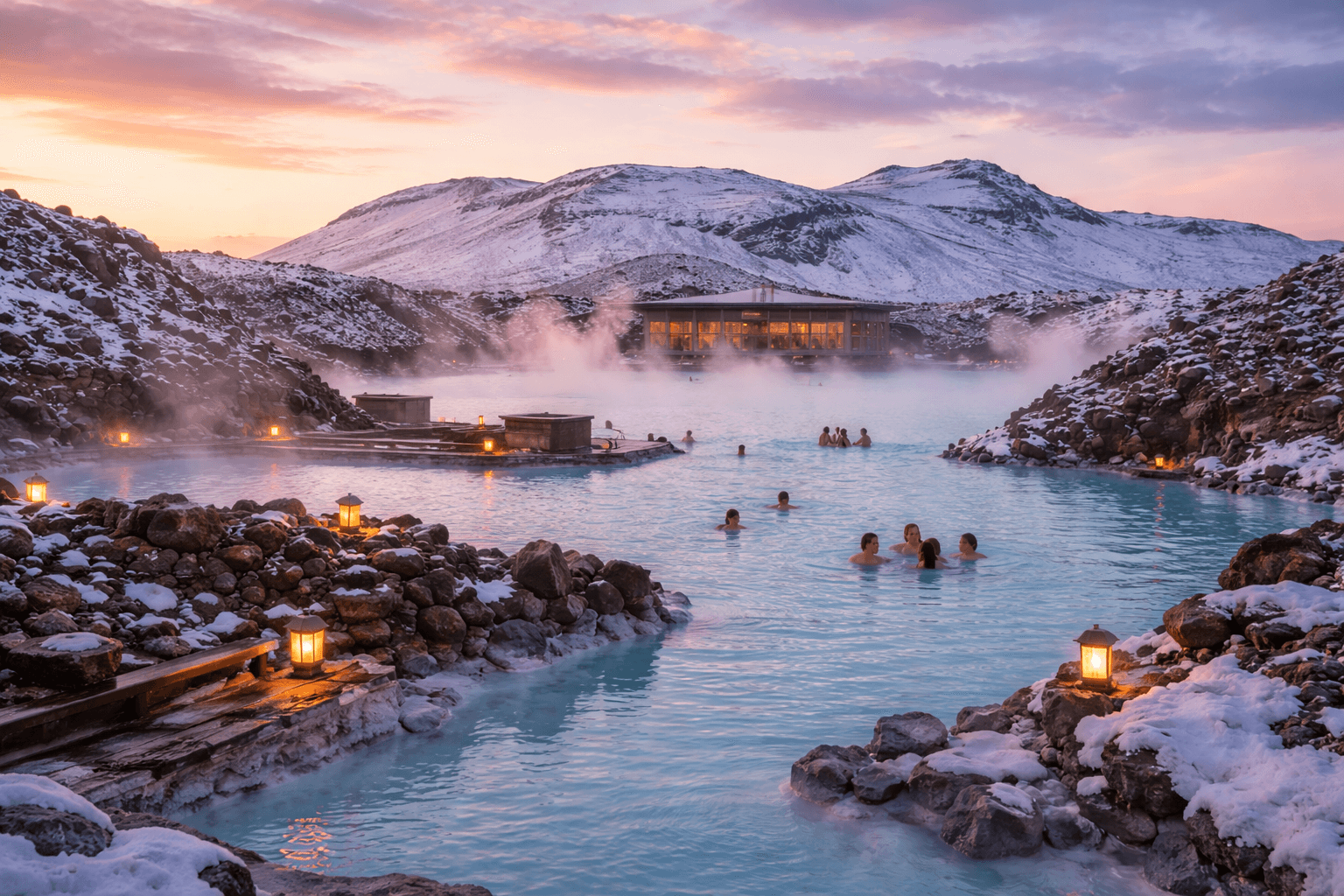
Blue Lagoon
Þingvellir National Park
Geysir / Strokkur (Haukadalur geothermal area)
Gullfoss
Jökulsárlón Glacier Lagoon
Reynisfjara (black‑sand beach) and Reynisdrangar sea stacks
Hallgrímskirkja
Harpa Concert Hall
Vatnajökull National Park (Glaciers and glacier outlets)
Laugavegur / Reykjavík city center (shops & cafés)
Things to Do
Soak at the Blue Lagoon
Drive the Golden Circle (Þingvellir, Geysir, Gullfoss)
Walk on a glacier or visit a glacier lagoon
Explore south‑coast black‑sand beaches and sea stacks (Reynisfjara / Reynisdrangar)
Stroll Reykjavík’s cultural core (Hallgrímskirkja, Harpa, Laugavegur)
Blogs to Read
Hidden Iceland Blog
Collection of in-depth guides and seasonal posts covering self-drive routes, glacier and ice-cave tips, Reykjavik restaurant recommendations, and lesser-known natural sites—useful for planning itineraries and practical logistics for both summer and winter travel. (hiddeniceland.is)
Ultimate Icelandic Food Guide: What to Try & What to Skip — Two Wandering Soles
A traveler-focused food guide that lists signature Icelandic dishes, what to order versus skip, and practical dining tips (markets, food tours, seasonal specialties)—good for food-first travelers who want honest, experience-based recommendations. (twowanderingsoles.com)
A Local’s Guide to the Westman Islands: The Hikes, Food & Hidden Spots Worth Knowing — Iceland With A View
Detailed local guide to the Westman (Vestmannaeyjar) archipelago including ferry/practical access, best hikes, where to eat, and quieter viewpoints—valuable if you plan a day trip or overnight stay off the south coast. (icelandwithaview.com)
Top 100 Places to Visit in Iceland During Your Ring Road Trip — Iceland Planner
Extensive, region-by-region list of major sights plus many lesser-known stops, with short practical notes for each place—useful for building Ring Road itineraries and spotting offbeat detours. (icelandplanner.com)
14x Hidden Gems and Lesser-Known Places in Iceland — The Global Wizards
Personal-travel blog highlighting quieter fjords, small villages, scenic beaches and local tips for slower travel in Iceland, including cautions about remote driving and supplies—handy for travelers wanting to go beyond the usual highlights. (theglobalwizards.com)
02 · Find
Explore Local

We haven't mapped neighborhoods for Iceland yet.
03 · Plan
Build Itinerary
Your trips
Your next trip starts here. Make a plan and find it here when you return.
Language Guide
04 · Travel Tips
Travel Tips
Iceland — Practical Travel Tips
Local customs
- Language: Icelandic is official; most people speak excellent English. Learn a few greetings (e.g., "halló", "takk").
- Tipping: Not expected. Rounding up or small tip for exceptional service is fine.
- Personal space & friendliness: People are reserved but helpful; be polite, remove shoes when invited into homes.
- Respect nature: Do not walk on fragile moss, keep to marked trails, and follow posted rules at sites.
- Drinking culture: Alcohol is sold in state-run stores; bars/restaurants charge more than in many countries.
Transportation
- Reykjavik: Walkable and bike-friendly. City buses cover wider areas; buy tickets or app passes in advance.
- Driving: Renting a car is the easiest way to explore outside Reykjavik. Use a 4x4 for highland/F-roads.
- Road conditions: Narrow single-lane bridges and gravel roads are common; watch for sheep and changing weather.
- Headlights: Use dipped headlights at all times while driving, day or night.
- Fuel & distances: Fuel stations are infrequent in rural areas—fill up when you can and plan longer legs carefully.
- Public transit between towns: Coaches and domestic flights connect some regions; schedules can be seasonal.
Safety
- Weather volatility: Weather can change rapidly—check forecasts before heading out and carry layers, waterproofs, and spare warm clothing.
- Driving hazards: Wind, ice, and sudden storms are common; reduce speed and avoid risky passing on gravel.
- River/shore hazards: Do not attempt to cross glacial rivers. Stay a safe distance from beaches with strong sneaker waves.
- Hiking: Stick to marked trails, inform someone of your route, carry a map, compass/GPS, and adequate food/water.
- Emergency number: Dial 112 for ambulance, police, or fire.
- Hot springs: Test water temperature before entering; follow local signage and use designated pools only.
Insider tips
- Weather gear: A breathable waterproof shell, insulated mid-layer, and sturdy waterproof boots are more useful than fashion outerwear.
- Daylight & seasons: Long daylight in summer, short days in winter—plan activities accordingly and book key services early in high season.
- Northern Lights: Visible best on dark, clear winter nights away from city lights; check aurora forecasts and cloud cover.
- Food & grocery: Grocery stores are efficient; eating out is expensive—buy picnic supplies for longer outings.
- Cash vs card: Cards are accepted almost everywhere, including small vendors and buses. Carry a small amount of cash if you want it, but not required.
- Hot pools: Local swimming pools are a central part of social life—bring a towel and follow showering rules (wash without swimsuit before entering pools).
- Photography: Respect private property and livestock; pull well off narrow roads for photos to avoid blocking traffic.
- Booking: Popular tours and accommodations fill early for peak months (June–August); reserve in advance if you have fixed dates.