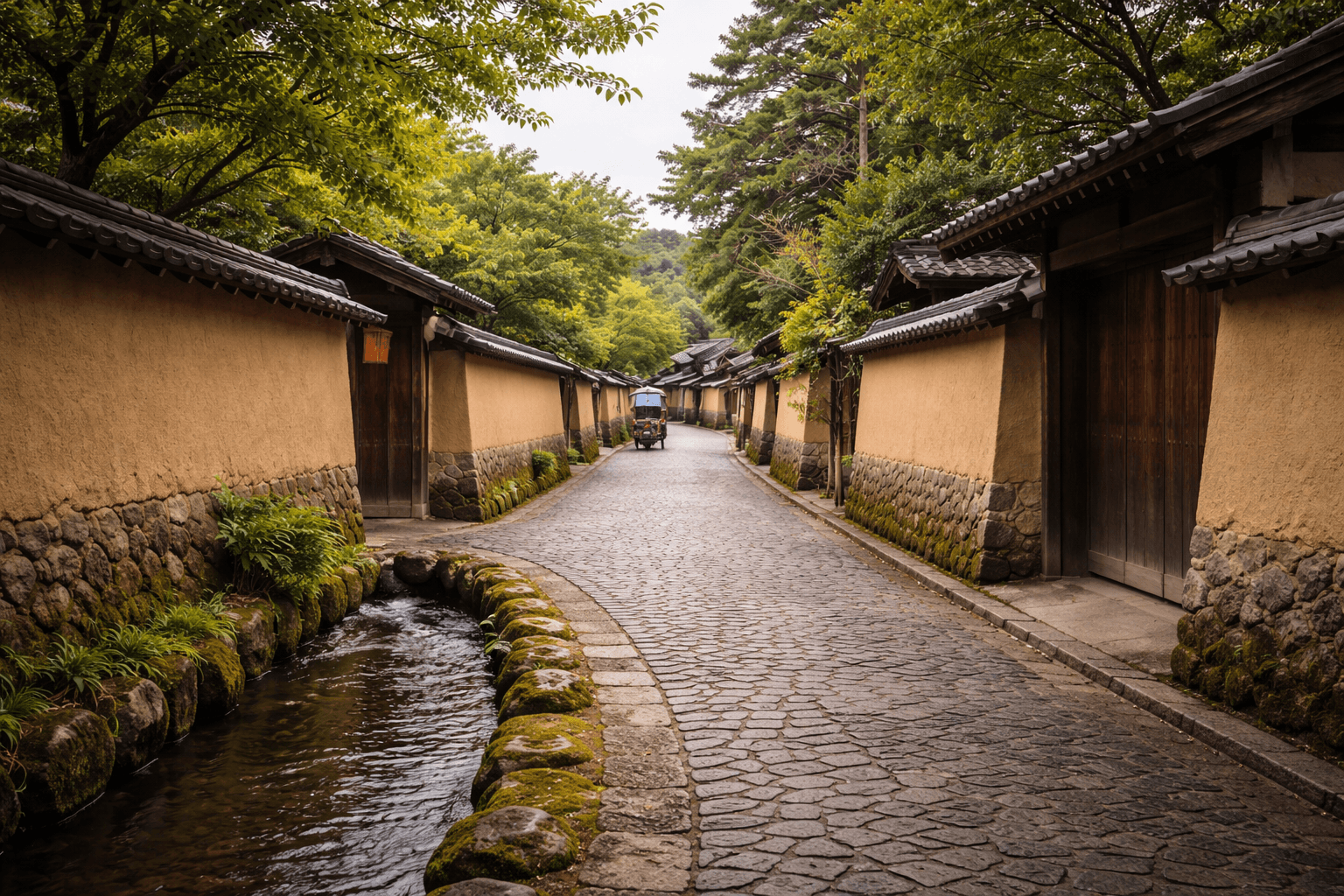
Kanazawa
Samurai Streets, Garden Stillness
Soft rain darkens stone lanes as lantern light glows on wooden facades and koi ripple the garden ponds.
Spring and autumn shine—stroll Kenrokuen Garden, explore Nagamachi samurai streets, savor fresh seafood at Omicho Market, and start early.
Discover now and settle into Kanazawa’s quiet elegance.
01 · Overview
Learn about Kanazawa
Kanazawa Overview
Kanazawa: Japan’s Quiet Masterpiece of Craft, Garden, and History
History
Kanazawa grew into prominence under the Maeda clan in the 17th century, when a prosperous feudal domain invested in the arts, gardens and architecture. Because it was not a political capital, many of its Edo-period neighborhoods and artisanal traditions were preserved rather than replaced, giving the city a continuity of atmosphere you can still feel wandering its streets.
Current status
Today Kanazawa feels simultaneously lived-in and curated: modern services and convenient transit sit alongside centuries-old workshops and narrow alleys. It’s not flashy Tokyo or Kyoto, but a thoughtful place for travelers who prefer quieter museums, well-preserved quarters, and hands-on cultural experiences.
Local culture
The city’s identity is shaped by craft: gold leafing, Kutani ceramics, lacquerware and silk dyeing remain active trades, often run by families with generations of technique. There’s a restrained, detail-focused aesthetic here — people notice finish and proportion — which makes simple walks through the chaya and samurai districts feel like informal lessons in design.
Food
Kanazawa’s coastal location yields excellent seafood, especially winter crab and sashimi, which local markets and small restaurants showcase with minimal fuss. Expect rice, pickles, and seasonal vegetables to be well considered; there’s also a strong tradition of kaiseki and tea sweets that reflects the city’s refined merchant culture.
Attractions
Kenrokuen Garden
Kenrokuen is the city’s signature stroll garden and one of Japan’s most celebrated landscape gardens. Paths meander past ponds, teahouses and carefully composed views that change with the seasons, making even a short visit feel restorative.
Kanazawa Castle
Adjacent to the garden, Kanazawa Castle offers reconstructed gates and walls that communicate the scale and presence of the Maeda domain. The grounds are pleasant to walk and provide good vantage points over the surrounding neighborhoods.
Higashi Chaya District
Higashi Chaya is an atmospheric tea-house quarter where lacquered wooden facades and narrow lanes recall Kanazawa’s merchant-era entertainment district. Some houses operate as working teahouses or small museums, and you can still find gold-leaf shops and traditional confectioners nearby.
21st Century Museum of Contemporary Art
This low-profile, circular museum favors accessible contemporary exhibitions and installations that invite interaction and reflection. It’s an excellent counterpoint to the city’s historical side — contemporary artists in a compact, daylight-filled building.
Nagamachi Samurai District
Nagamachi preserves the earthen walls and narrow lanes of samurai residences, with a few restored homes open to visitors that reveal domestic architecture and defensive layouts. Walking these streets gives a clear sense of how status and daily life were arranged in the Edo period.
Practical note
Kanazawa rewards unhurried travel: plan to walk, use short tram rides, and leave time for small museums and craft shops. Check opening times for specific sites and consider a morning at the market followed by a relaxed stroll through the garden for a well-paced day.
Places to Go
Kenroku-en (兼六園)
21st Century Museum of Contemporary Art, Kanazawa
Omicho Market (近江町市場)
Higashi Chaya District (東茶屋街) — including Kaikaro
Myōryū-ji (妙立寺, “Ninja-dera” / Ninja Temple)
Things to Do
Stroll Kenroku-en (Kenroku Garden)
Explore the Nagamachi samurai district and Nomura-ke samurai house
Wander Higashi Chaya District and visit a restored chaya
Eat at Omicho Market
Visit the 21st Century Museum of Contemporary Art
Blogs to Read
Kanazawa Budget Guide 2026 — Garden, Samurai, Seafood
A practical, up-to-date (2026) travel blog covering how to get to Kanazawa on a budget, must-see sights (Kenrokuen, Nagamachi, Higashi Chaya, Omicho Market), sample costs, and tips for pairing Kanazawa with a Shirakawa‑go day trip — useful for planning cost and timing.
Where to Stay in Kanazawa: Best Areas for First-Time Visitors
Clear, local-focused advice on the best neighbourhoods and hotels for different trip lengths and budgets, plus where to base yourself to access Kenrokuen, the castle, Omicho Market, and transport — helpful for deciding lodging and logistics.
Best Time to Visit Kanazawa in 2026: Seasonal Weather, Events & Travel Guide
Seasonal breakdown of weather, events (including winter yukitsuri in Kenrokuen), and crowd patterns with timing suggestions — useful for choosing travel dates and what to pack or prioritize each season.
Kanazawa — Private Tours & Local Highlights (My Japan Guide)
A locally oriented guide/tour-page highlighting Kanazawa’s cultural landscape (Kenrokuen, geisha and samurai districts, craft workshops, Omicho Market) with suggested itineraries and artisan/food experiences — good for picking focused half- or full-day plans.
JR Hokuriku Arch Pass Guide — Kenrokuen & Getting Around Kanazawa (Klook Blog)
Practical coverage of transport options including the Hokuriku Shinkansen and regional passes, plus concise notes on Kanazawa highlights like Kenrokuen and Omicho Market — useful for route planning and budgeting travel between cities.
02 · Find
Explore Local

We haven't mapped neighborhoods for Kanazawa yet.
03 · Plan
Build Itinerary
Your trips
Your next trip starts here. Make a plan and find it here when you return.
Language Guide
04 · Travel Tips
Travel Tips
Kanazawa — Practical Travel Tips
Local customs
- Bow slightly when greeting; polite but relaxed interactions are normal.
- Remove shoes when entering traditional ryokan, some restaurants, temples, or private homes; socks should be clean and hole-free.
- Speak quietly on trains and in public spaces; phone calls on local transit are frowned upon.
- Handle money and business cards with both hands as a sign of respect; place bills on the tray at tills when offered.
- Tipping is not practiced; a polite thank you (arigatō) is enough.
- When visiting temples and gardens, follow signage, stay on paths, and avoid touching displays or plants.
Transportation options
- Kanazawa Station is the main hub: central for buses, local trains, and highway buses.
- Local buses cover most tourist sites (Kenrokuen, Higashi Chaya, Nagamachi); carry exact change or an IC card.
- IC cards (ICOCA, Suica, etc.) are accepted on many buses and trains—convenient for short stays.
- Bicycle rental is a practical way to explore nearby neighborhoods; watch for narrow streets and pedestrians.
- Taxis are widely available and safe; use them for late-night travel or to reach dispersed sites quickly.
- For day trips (Shirakawa-go, Noto Peninsula), highway buses and guided tours are easiest; check schedules in advance.
Safety
- Kanazawa is very safe; usual precautions (watch belongings, avoid poorly lit alleys late at night) suffice.
- Keep an eye on weather forecasts in winter—heavy snow can affect transport and walking conditions.
- Carry any necessary medications with original labels and a brief English description; pharmacies may have limited evening hours.
- Emergency number in Japan is 110 for police and 119 for ambulance/fire; have your accommodation address written in Japanese for responders or drivers.
Insider tips
- Visit Kenrokuen early morning or late afternoon to avoid peak crowds and capture better light.
- Explore Higashi Chaya and Kazuemachi on foot; small side streets hold tea houses and artisan shops.
- Try local specialties: fresh sushi, Jibuni (duck or chicken stew), and gold leaf sweets—ask staff what’s seasonal.
- Many craft shops close by mid-afternoon; plan to visit galleries and studios earlier in the day.
- Bring comfortable shoes for cobbled streets and garden paths; some attractions have gravel or uneven surfaces.
- Learn a few Japanese phrases (hello, thank you, excuse me) — staff appreciate the effort and service improves.
- If staying at a ryokan, read the check-in instructions carefully (dinner and bathing times) to avoid missing meals.