Lisbon
Golden Light, Atlantic Soul
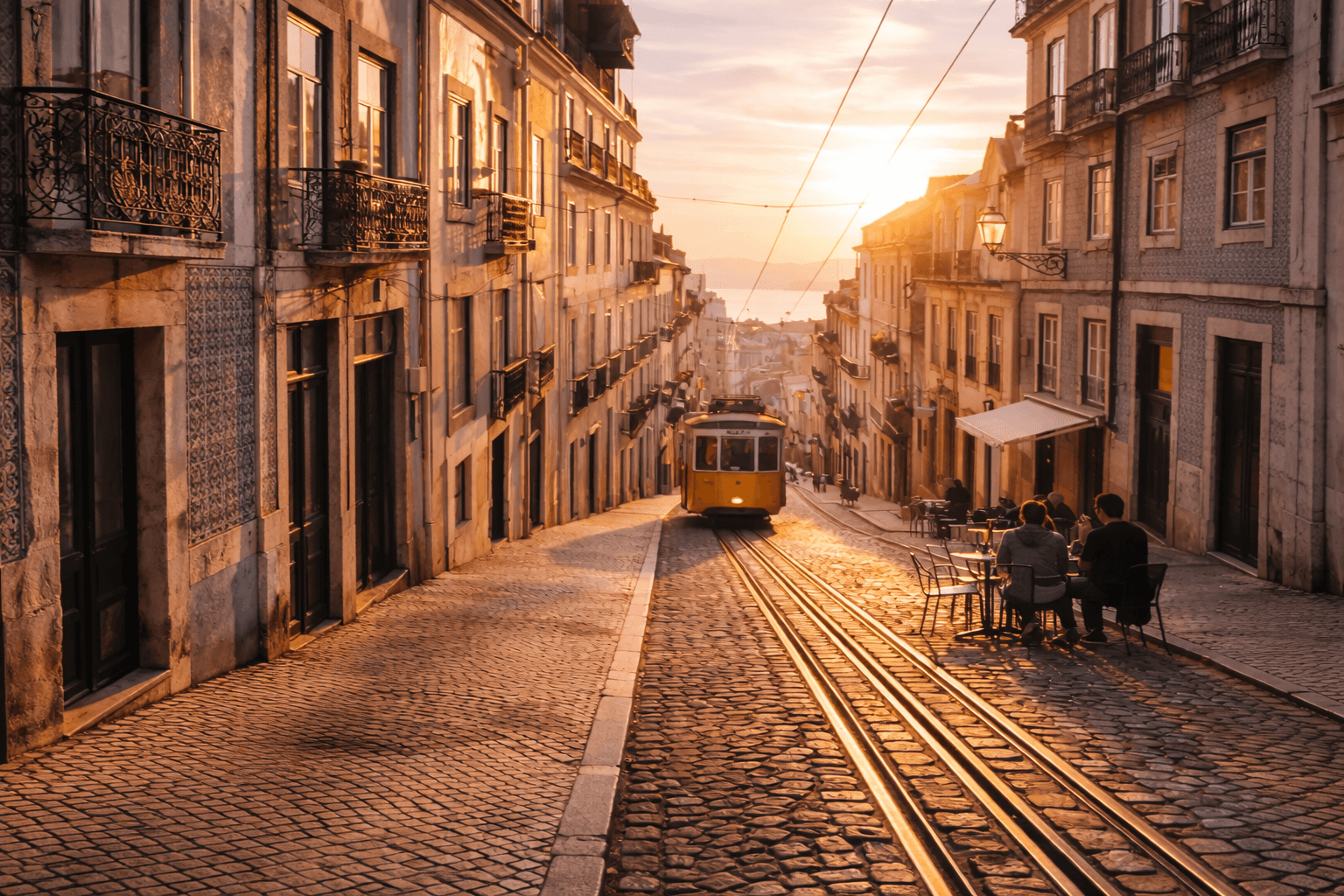
Tram 28 rattles past tiled façades as sunset spills honeyed light over Alfama and the Tagus glows below.
Spring and early fall are ideal—climb São Jorge Castle, taste pastéis de nata in Belém, ride miradouros, and wear good walking shoes.
Start your journey now and drift into Lisbon’s Atlantic rhythm.
01 · Overview
Learn about Lisbon
Lisbon Overview
Lisbon: Light, Stone, and the Slow Rhythm of the River
History
Lisbon's story is compacted into its streets: a city rebuilt and reshaped by earthquakes, conquests, and maritime ambition. From Phoenician and Roman roots to becoming the launching point for Portuguese explorers in the 15th and 16th centuries, the city still wears its past in Manueline stone, tiled façades, and convent-turned-museums. The dramatic 1755 earthquake and the subsequent Pombaline reconstruction gave the downtown Baixa a rational grid that still reads as Enlightenment-era calm among the older, windier quarters.
Current status
Today Lisbon balances old and new with a measured confidence: tech startups and creative clusters sit alongside family-run cafés and fado houses. Tourism is important but concentrated—visit-makers can still find quiet alleys and local markets if they avoid the most obvious viewing spots during midday. Practical note: check opening hours and book popular experiences in advance to avoid disappointment.
Local culture
Lisbon moves at its own tempo, a mix of relaxed cafe culture and convivial late-night life where dinners start late and streets hum after midnight. Fado—melancholic, intimate song—remains an emotional anchor, best sought in small, dim rooms rather than tourist spectacles. People here are direct but warm; a few Portuguese phrases and polite rhythms in restaurants or shops go a long way.
Food
Seafood defines much of Lisbon's flavor: grilled fish, salt cod prepared in dozens of ways, and fresh shellfish at neighborhood tasquinhas. Simple pastries matter—a pastel de nata with a hint of cinnamon is as local as a handshake—and markets like the Mercado da Ribeira are excellent places to sample small producers. Dining tends to be leisurely; allow time to enjoy wine by the river or a long meal in Alfama after an evening of fado.
Attractions
The Belém district gathers Portugal's maritime memory into a handful of monuments and museums. Belém Tower and the nearby Jerónimos Monastery are ornate reminders of the Age of Discovery; visit early or late in the day to avoid the busiest hours and to appreciate the river views that framed sailors' departures.
Alfama and São Jorge Castle feel like a separate time, a tangle of lanes that rise to a commanding viewpoint. The castle offers panoramic perspectives over the city and the Tagus; wandering the surrounding lanes reveals tile workshops, fado houses, and small squares where neighborhood life carries on uninterrupted.
Tram 28 is less about efficiency and more about atmosphere, threading through several emblematic neighborhoods on narrow tracks. Riding it gives an easy orientation to Lisbon's hills and architectural shifts, but be mindful of pickpockets and consider walking parts of the route to discover quieter streets.
LX Factory and the riverside creative districts show Lisbon's contemporary edge—repurposed industrial buildings now host design shops, galleries, and a rotating roster of pop-up events. They’re good bets for a late-afternoon stroll, a contemporary meal, or to pick up locally made goods away from the main souvenir zones.
Praça do Comércio and the riverfront are the city's public face: broad, sunlit, and historically the arrival point for merchants and explorers. Spend time here for the scale and the light, and then move into adjacent streets to find smaller cafés and viewpoints where you can watch everyday life unfold.
Final note
Lisbon rewards curiosity and small detours: choose a few priorities, leave time to get lost, and expect the best recommendations to come from a shopkeeper or a restaurant owner. Check specifics—hours, ticketing, and local events—before you go, and let the city's steady rhythm set the pace rather than trying to see everything in one visit.
Places to Go
Mosteiro dos Jerónimos (Jerónimos Monastery)
Torre de Belém (Belém Tower)
Castelo de São Jorge (São Jorge Castle)
Time Out Market (Mercado da Ribeira)
Praça do Comércio (Terreiro do Paço)
Things to Do
Wander Alfama and listen to Fado
Ride Tram 28
Explore Belém: Jerónimos Monastery, Belém Tower and pastéis de nata
Climb to São Jorge Castle for the views
Eat at Time Out Market (Mercado da Ribeira)
Blogs to Read
The 32 Best Things to Do in Lisbon
A regularly updated, city-focused guide from Time Out covering top attractions, neighborhoods, food markets, viewpoints (miradouros), and current events—useful for planning what to prioritize and finding timely local picks. (timeout.com)
13 of the Best Lisbon Hidden Gems to Seek out
A personal, experience-driven post by long-term Portugal residents highlighting lesser-known sites, local cafés and neighborhoods—good for travelers who want offbeat suggestions and practical tips from people living in the area. (sidewalksafari.com)
38 Unobvious Things to Do in Lisbon (& hidden gems you can’t miss)
Focused on unusual and recently opened spots across Lisbon, this blog lists street art, niche museums, viewpoints and practical notes on what’s genuinely unique versus touristy—handy for repeat visitors or those seeking fresh ideas. (offpathportugal.com)
Lisbon Travel Hacks: Conquer Hills & Discover Hidden Gems
A concise practical guide with tips for navigating Lisbon’s hills, best local pastries (pastel de nata pointers), transport hacks and quieter neighborhood recommendations—useful for first-time visitors who want realistic, actionable advice. (awanderingturtle.com)
Hidden Gems in Lisbon
A travel-agency blog that curates a short list of authentic-sounding spots and food recommendations along with reasons to visit each; good as a quick cross-check against other guides to spot consistently recommended lesser-known places. (originaltravel.co.uk)
02 · Find
Explore Local

We haven't mapped neighborhoods for Lisbon yet.
03 · Plan
Build Itinerary
Your trips
Your next trip starts here. Make a plan and find it here when you return.
Language Guide
04 · Travel Tips
Travel Tips
Lisbon — Practical Travel Tips
Local customs
- Greet with a handshake or a light nod; friends may kiss once or twice on the cheek (left then right).
- Use formal titles (Senhor / Senhora) with surnames in shops or official settings until invited to use first names.
- Portuguese mealtimes run later than in northern Europe: lunch ~13:00–15:00, dinner often from 20:00 onward.
- Tipping: not obligatory. Rounding up or leaving 5–10% for good service is appreciated in restaurants and taxis.
- Dress modestly for churches; remove hats and speak quietly inside religious sites.
Transportation
- Public transport: Lisbon has trams, buses, metro, and suburban trains (CP). Buy a reloadable Viva Viagem/7 Colinas card for cheapest fares.
- Metro is fastest for longer distances; trams are slower but scenic (Tram 28 is popular and crowded).
- Trams and buses may require exact change if paying onboard; card machines are common but check before boarding.
- Taxis and ride-hailing (Bolt, Free Now) operate widely; insist on the meter in street taxis or confirm a fixed fare beforehand.
- Walking: many central streets are steep and cobbled — wear comfortable shoes and expect steps and hills.
- If driving: expect narrow streets, limited parking, and traffic zones (Zonas de Emissões); use official car parks rather than street parking where possible.
Safety
- Lisbon is generally safe, but petty theft (pickpocketing) occurs in busy areas, public transport, and tourist hotspots.
- Keep valuables secured, use a front-pocket wallet or money belt, and be extra vigilant on crowded trams and trains.
- Avoid ATM skimming by using machines inside banks and cover PIN entry.
- Night safety: main neighbourhoods (Bairro Alto, Cais do Sodré, Chiado) are lively after dark — watch for loud groups and watch your drink in busy bars.
- Emergency numbers: 112 for police/medical/fire assistance.
Money & practicalities
- Currency: Euro. Credit cards accepted widely but carry some cash for small shops, markets, and quick tram fares.
- Opening hours: many shops close mid-afternoon for a short break; supermarkets and tourist areas stay open longer.
- Language: Portuguese is the official language; English is widely spoken in tourist areas and younger population.
- Water: tap water is safe to drink across Lisbon.
Insider tips
- Visit viewpoints (miradouros) early morning or late afternoon for light and fewer crowds—Miradouro da Senhora do Monte and Miradouro de Santa Catarina are quieter than São Pedro de Alcântara.
- Skip the busiest Tram 28 car if you can: take the route by regular tram/bus or walk parts of Alfama to avoid pickpockets and long queues.
- Try pastéis de nata warm from a bakery rather than a tourist spot; ask for "pastel de nata" (singular) and a dusting of cinnamon.
- Explore neighbourhoods by foot: Alfama for fado and narrow lanes, Belém for monuments and pastries, LX Factory for local shops and cafés.
- Plan for hills: if you don’t want long climbs, use the funiculars (Bica, Gloria) or elevators (Santa Justa) selectively.
- Museums: many offer discounted or free entry on specific days—check opening schedules before visiting to avoid wasted travel.
- Nightlife: Bairro Alto has bars; Cais do Sodré has clubs and late-night venues. Expect noisy streets until late.
Health & accessibility
- Pharmacies (Farmácia) display a green cross and often have extended hours; look for the sign for after-hours pharmacies.
- Accessibility: historic areas have cobbles and steps—mobility can be limited; research specific sites for ramps/elevators if needed.
Short etiquette reminders
- Don’t assume Portuguese and Spanish are interchangeable; use Portuguese greetings (Olá, Bom dia/Boa tarde).
- Respect quieter hours in residential areas, especially late at night.