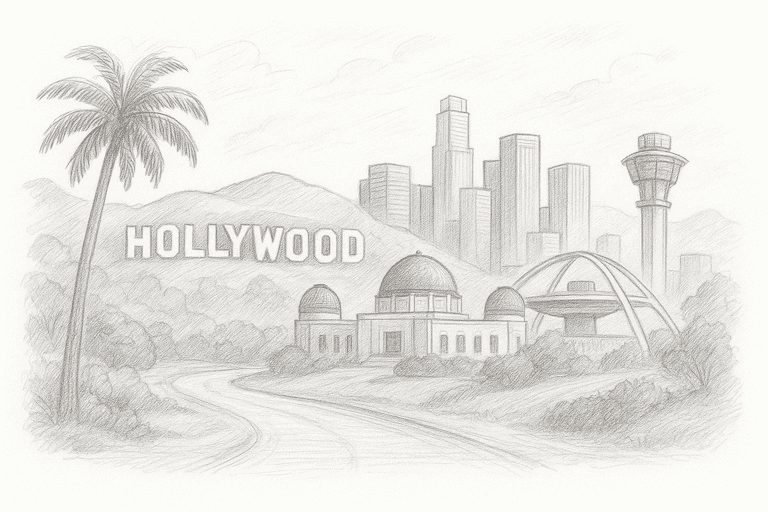
Los-Angeles
LA’s Sunlit Coastal Rush
Golden sunlight spills over palm-lined streets as ocean breeze carries the scent of tacos and surf wax along Venice Beach.
Spring and fall shine—wander Santa Monica Pier, explore Griffith Observatory, and use a TAP card to move easily through Los Angeles.
Discover now and begin your LA journey.


01 · Overview
Learn about Los-Angeles
Los-Angeles Overview
Los Angeles: A Practical Introduction to the City of Angels
History
Los Angeles began as a small Spanish colonial pueblo in 1781 and grew through Mexican rule, the arrival of transcontinental railroads, and 20th-century booms in oil, aerospace, and film. Its history is a patchwork of Indigenous, Spanish, Mexican and American influences that still show in the city's architecture, place names, and institutions. (en.wikipedia.org)
Current status
Today Los Angeles is California’s largest city and the commercial and cultural hub of Southern California, defined less by a single downtown than by many distinct neighborhoods and industry centers. The city actively manages tourism and visitor growth through city programs and a tourism master plan aimed at sustainable development. (en.wikipedia.org)
Local culture
LA’s culture is shaped by waves of immigration, a huge creative economy, and strong neighborhood identities—from the Mexican-American traditions of East LA to the Korean, Filipino, Armenian, and many other communities across the metropolis. A car-forward layout, outdoor-oriented lifestyle, and a steady stream of new creative projects mean neighborhoods change fast; the best way to understand LA is by spending time in its smaller pockets rather than treating it as a single sightseeing circuit. (en.wikipedia.org)
Food
Food in Los Angeles is an extension of its diversity: excellent Mexican food, a robust street-taco scene, vibrant Korean and Southeast Asian options, and inventive fusion restaurants coexist with farmers’ markets and a serious fine-dining scene. Much of LA’s character is discoverable through food—local taquerias, family-run bakeries, and neighborhood food halls offer a more accurate snapshot of the city than any single landmark. (visitla.org)
Attractions
Hollywood and the entertainment districts
Hollywood remains a symbolic center for film and television: studios, the Walk of Fame, and museum exhibits speak to LA’s role in global entertainment, though many visitors find the studio tours and smaller neighborhood cinemas more rewarding than the busiest tourist strips. Plan visits to a specific studio tour or a historic theater for a clearer glimpse behind the scenes. (en.wikipedia.org)
The Getty and museum row
The Getty Center and nearby museum offerings combine architecture, city views, and strong art collections; they’re places where the setting matters as much as the holdings, and they reward midweek mornings when crowds are thinner. Reserve timed entry where required and allow time for the gardens and terraces. (visitla.org)
Beaches and coastal neighborhoods
Santa Monica, Venice, and Malibu each offer distinct beachside moods: Santa Monica has tourist infrastructure and a classic pier, Venice is bohemian and street-art-forward, and Malibu feels like a quieter coastal escape. If you want fewer crowds, head early or explore lesser-known coves and beachfront neighborhoods. (en.wikipedia.org)
Downtown and historic LA
Downtown Los Angeles (DTLA) mixes restored historic districts, contemporary high-rises, and cultural institutions—Olvera Street and the El Pueblo area tell the city’s origin story while modern food halls and museums demonstrate DTLA’s recent revival. Walking between neighborhoods and using short transit or rides for longer hops makes the most of a downtown visit. (lacity.gov)
Neighborhood exploration
Some of the city’s truest experiences are neighborhood-level: try Koreatown for late-night dining, Silver Lake and Echo Park for indie coffee shops and small galleries, and Boyle Heights or Highland Park for authentic local food and community-focused events. These areas show how LA’s identity is assembled from many local scenes rather than a single skyline. (en.wikipedia.org)
Final tips (practical tone)
Expect travel between areas to take time and plan around transit or parking; pick a few neighborhoods to explore deeply rather than trying to cover everything in one trip. Check museum and attraction websites for timed entries and current operations before you go. (tourism.lacity.gov)
Places to Go
Griffith Observatory
Getty Center
Santa Monica Pier
Hollywood Walk of Fame / TCL Chinese Theatre
The Broad
Things to Do
Visit Griffith Observatory and Griffith Park
See the Getty Center (museum + gardens)
Santa Monica Pier & Beach
Walk Hollywood Boulevard (Walk of Fame) and see TCL Chinese Theatre
Stroll Venice Beach Boardwalk and Abbot Kinney
Blogs to Read
02 · Find
Explore Local

We haven't mapped neighborhoods for Los-Angeles yet.
03 · Plan
Build Itinerary
Your trips
Your next trip starts here. Make a plan and find it here when you return.
Language Guide
04 · Travel Tips
Travel Tips
Los Angeles — Practical Travel Tips
Local customs
- Tipping: expect ~15–20% at restaurants, $1–2 for cafe counter service or valet/parking attendants; tip drivers and hotel staff separately.
- Casual dress: Angelenos dress casually; layers are useful (coastal breeze, warmer inland).
- Be punctual for tours/reservations; many services run on tight schedules.
- Respect private property and residential streets (many neighborhoods enforce parking rules).
Transportation options
- Car: most convenient for wide-ranging sightseeing; allow extra time for traffic and parking costs that vary by neighborhood and time of day. (losangeles.com)
- Rideshare/taxi: widely available and practical for short hops or when parking is difficult. (losangeles.com)
- Metro rail & buses: useful for some corridors (downtown, Hollywood, Koreatown, parts of Westside); buy/use a TAP card or contactless payment. Base fares and fare rules are on Metro. (metro.net)
- LAX access: Metro/people-mover and FlyAway buses provide alternatives to driving; terminals connect via shuttle to the LAX/Metro Transit Center. (metro.net)
- Bikes & scooters: available in many neighborhoods — watch for bike lanes and local rules; don’t assume safe infrastructure everywhere.
Safety
- General: use common-sense precautions — keep valuables out of sight in parked cars, stay alert at night, and use well-lit, populated routes. (lapdonline.org)
- Transit at night: avoid empty cars/platforms; sit near operators or other passengers and report concerns to staff. (metro.net)
- Traffic: driving can be aggressive; keep right except to pass on freeways, and expect heavy congestion during morning/evening rush hours. (lonelyplanet.com)
- Emergency numbers: call 911 for emergencies; non-emergency police dispatch and local station info are available on LAPD pages. (lapdonline.org)
Insider tips
- Group activities geographically: cluster attractions (e.g., Getty + Westside; Griffith Observatory + Hollywood) to avoid cross-city drives. (lonelyplanet.com)
- Peak times: museums and beaches are busiest late morning–afternoon; go early or later in the day for easier parking and shorter lines.
- Parking apps and signs: check posted signs and use parking apps to avoid tickets and tow zones — rules vary block-by-block. (ladot.lacity.gov)
- Plan for microclimates: bring a light jacket near the coast even on warm inland days; sunscreen is useful year-round.
- Food: neighborhoods (Koreatown, Boyle Heights, Thai Town, Grand Central Market) offer focused food scenes — walk a single neighborhood to sample several places.