Madeira
Cliffs, Levadas, Eternal Spring
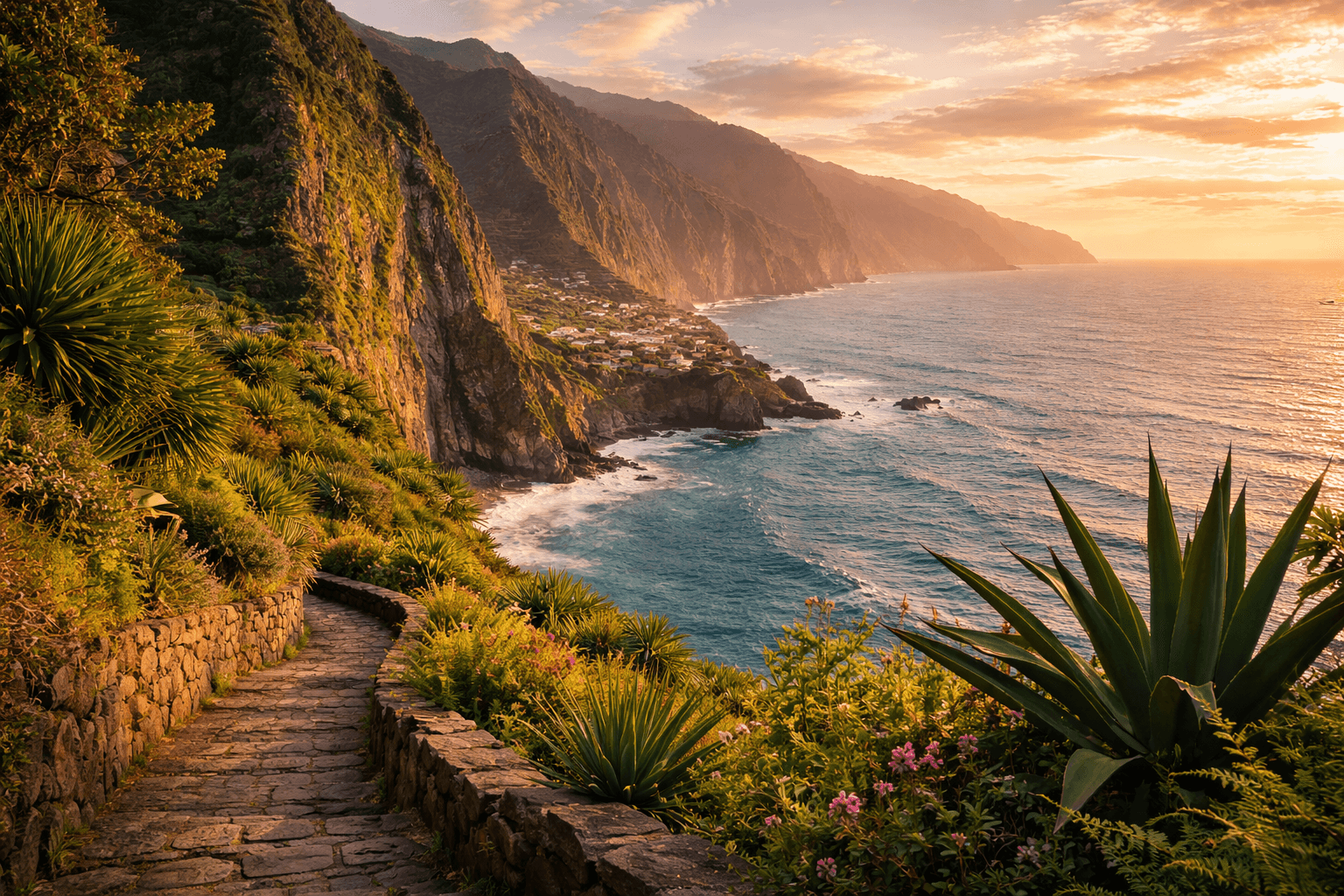
Salt air lifts off sheer cliffs as waves crash below and cloud shadows slide across emerald terraces.
Year-round mild weather shines—walk levada trails, watch sunsets at Cabo Girão, taste fresh espada fish; pack layers for microclimates.
Start your journey now and find Madeira’s easy, ocean-fed calm.
01 · Overview
Learn about Madeira
Madeira Overview
Madeira: Atlantic Garden of Mild Climates and Dramatic Coasts
History
Madeira’s recorded history begins in the early 15th century when Portuguese sailors discovered and colonized the islands, transforming dense laurel forests into terraced farmland and introducing sugar production that shaped its early economy. Over centuries the islands became a strategic stop for Atlantic navigation, later cultivating wine, horticulture and a distinctive identity that blends Portuguese traditions with maritime influences.
Current status
Today Madeira is an autonomous region of Portugal with a modern service economy built around tourism, agriculture (notably bananas and flowers) and its famous fortified wine. Funchal, the regional capital, is a compact, walkable city that serves as the cultural and logistical hub for exploring the islands, while much of the interior remains surprisingly green and rural.
Local culture
Madeirans balance a relaxed island pace with strong community traditions: religious festivals, folk dances like the bailinho and craft markets are common, and there’s a palpable pride in local agriculture and seafaring heritage. English is widely understood in tourist areas, but learning a few Portuguese phrases and the local courtesy goes a long way toward friendlier interactions.
Food
Madeiran cuisine emphasizes fresh, simply prepared ingredients: espetada (skewered beef), limpets (lapas) grilled with garlic butter, and hearty soups like caldo verde reflect the island’s land-and-sea resources. The regional wine — Madeira — ranges from dry to lusciously sweet and is a cornerstone of both local meals and export reputation; pastries such as bolo do caco (garlic flatbread) and bolo de mel (molasses cake) are delicious regional staples.
Attractions
Laurissilva Forest
The UNESCO-listed Laurissilva is an ancient laurel forest that blankets much of the island’s interior, offering a cool, mossy counterpoint to Madeira’s sunlit terraces. Walking the levadas—narrow irrigation channels with adjacent paths—gives access to waterfalls, viewpoints and a sense of the island’s botanical richness in a way few other places can match.
Cabo Girão and the cliffs
Cabo Girão features some of Europe’s highest sea cliffs with panoramic views over dramatic drop-offs to the Atlantic and the terraced coast below. A glass skywalk at the viewpoint makes the scale of the cliffs vividly tangible and is ideal for photographers seeking sweeping coastal vistas.
Funchal’s old town and markets
Funchal’s historic center mixes colonial architecture with lively markets like the Mercado dos Lavradores, where colorful stalls sell fruit, fish and flowers and where you can sense daily island life. The city’s painted-door project, modern museums and waterfront promenade make Funchal a pleasant base for both cultural wandering and practical services.
Pico do Arieiro and highland drives
Rising above 1,800 meters, Pico do Arieiro provides alpine-like panoramas, dramatic ridgelines and sunrise routes that contrast with Madeira’s coastal scenery. Well-maintained roads and short hikes open up vistas across jagged peaks and cloud-filled valleys; the terrain rewards early starts and layered clothing.
Botanical gardens and floral displays
Madeira’s temperate climate supports an astonishing variety of flowers and cultivated gardens, with several botanical gardens near Funchal showcasing endemic species and global collections. These gardens are peaceful places to learn about the island’s horticultural history and to enjoy planned displays that change through the seasons.
Whale- and dolphin-watching
The warm Atlantic currents around Madeira attract cetaceans year-round, making boat trips for whale- and dolphin-watching a popular activity. Tours range from small, quiet vessels suited for photography to larger boats and can offer memorable encounters when sea conditions are favorable.
Practical note
Madeira rewards slow, observant travel: combine a few coastal highlights with a levada walk and at least one highland sunrise for the fullest sense of the island’s variety. Check opening times and seasonal access for mountain roads and guided tours before you go.
Places to Go
Levada das 25 Fontes (Rabaçal)
Pico do Arieiro
Cabo Girão Skywalk (Miradouro do Cabo Girão)
Monte Palace Tropical Garden
Museu CR7 (Cristiano Ronaldo Museum)
Things to Do
Walk a levada — Levada das 25 Fontes (Rabaçal)
Hike the ridge — Pico do Arieiro to Pico Ruivo (PR1)
Visit the Cabo Girão skywalk
Ride the Funchal cable car and explore Monte + Monte Palace Tropical Garden
See local culture — Mercado dos Lavradores and/or Museu CR7 (Funchal)
Blogs to Read
Madeira Travel Guide (2026): Best Levada Walks, Funchal & Local Tips
A comprehensive, locally-maintained guide covering levada hikes (by difficulty), Funchal highlights, food recommendations and multi-day itineraries — useful for planning routes and understanding on-the-ground conditions. (madeirainfo.com)
Madeira Travel Guide 2026: Ultimate Tips, Itineraries & Where to Stay
Practical, up-to-date guides focused on where to stay, best drives, essential levadas and traditional Madeiran food spots, written with local insight and suggested itineraries. (olamadeira.pt)
Marvellous Madeira — practical travel guides for Madeira
An independent blog offering candid, practical posts on levadas, towns, food and tips from someone who explores the island regularly — good for honest, experience-driven advice. (marvellousmadeira.com)
Guia Ilha da Madeira — Levadas, attractions, prices and honest tips
A long-running island guide in multiple languages with detailed posts on walks (including easy levadas), botanical gardens, coastal viewpoints and up-to-date practical information. (guiailhadamadeira.com)
Levada Walks in Madeira: What Nobody Tells You Before Your First Hike
A focused, experienced-walker’s guide to levada hikes covering safety tips, trail choices, seasons and what to expect on the paths and tunnels — ideal if hiking is a priority. (webcammadeira.com)
02 · Find
Explore Local

We haven't mapped neighborhoods for Madeira yet.
03 · Plan
Build Itinerary
Your trips
Your next trip starts here. Make a plan and find it here when you return.
Language Guide
04 · Travel Tips
Travel Tips
Madeira — Practical Travel Tips
Local customs
- Greet shopkeepers and service staff with a polite "Bom dia" (good morning) or "Boa tarde" (good afternoon). English is common in tourist areas, but a few Portuguese phrases go a long way.
- Dress is casual but neat. Bring a light layer for evenings and churches (shoulders/knees covered when visiting religious sites).
- Punctuality is relaxed for social gatherings; business appointments expect timeliness.
- Tipping: not mandatory. Rounding up or leaving 5–10% in restaurants is appreciated for good service.
- Respect nature: Madeira’s landscapes are protected; follow marked trails and don’t pick plants or disturb wildlife.
Transportation
- Funchal is the transport hub: local buses (EM) cover the city and island routes; bring cash or a rechargeable card where available.
- Taxis are widely available; confirm the meter is used or agree a fare before starting. Ride-hailing availability varies.
- Renting a car gives the most flexibility for rural areas and viewpoints—roads are steep and narrow in places; choose a smaller car and ensure insurance covers mountain driving.
- Driving tips: expect sharp bends, single-lane tunnels, and limited shoulder space. Use low gears downhill and avoid sudden braking.
- Levadas (irrigation paths) are best accessed by parking near trailheads; some require sturdy shoes and a torch if tunnels are present.
- Cable cars and toboggan rides (Monte to Funchal) are short, tourist-focused experiences—buy tickets at official stations.
Safety
- Madeira is generally safe; standard urban precautions apply (watch belongings in crowded areas and on popular trails).
- Hiking risk: check trail difficulty before setting out, carry water, sun protection, a map or GPS, and a charged phone. Some levada walks have narrow paths and exposed sections.
- Weather can change quickly in the mountains—carry a waterproof layer and avoid high trails in heavy rain or fog.
- Sea safety: currents can be strong; swim at monitored beaches or natural pools and heed local warnings.
- Emergency number in Portugal: 112.
Practical & Insider tips
- Pack layers: microclimates mean sun and cool wind can coexist; mornings often clear into warm afternoons.
- Cash and cards: cards accepted widely, but some rural vendors prefer cash—carry small euros for markets and remote services.
- Try local food: espetada (meat skewers), bolo do caco (flatbread), and fresh black scabbardfish; sample Madeira wine in a small tasting room rather than busy tourist shops.
- Time your levada walks early morning or late afternoon to avoid midday heat and tour-group congestion.
- Photography: sunrise from west-facing viewpoints (Cabo Girão, Paúl da Serra at dawn) and sunset from Funchal harbour areas are reliable.
- Markets: visit Mercado dos Lavradores in Funchal for produce and local crafts—go early for best selection.
- Respect quiet hours in residential areas (often after 22:00); noise can be more noticeable in narrow streets.
- Reusable water bottle: tap water is generally safe; refilling reduces plastic waste on the island.
Quick checklist
- Sturdy walking shoes, layered clothing, rain shell
- Valid ID/passport and travel insurance (covering hiking)
- Small cash in euros, card that works internationally
- Phone with offline maps or downloaded trail info
Enjoy the island’s walks, viewpoints, and food—give extra time for unexpected stops; Madeira rewards slow travel.