Rome
Golden Ruins, Living Streets
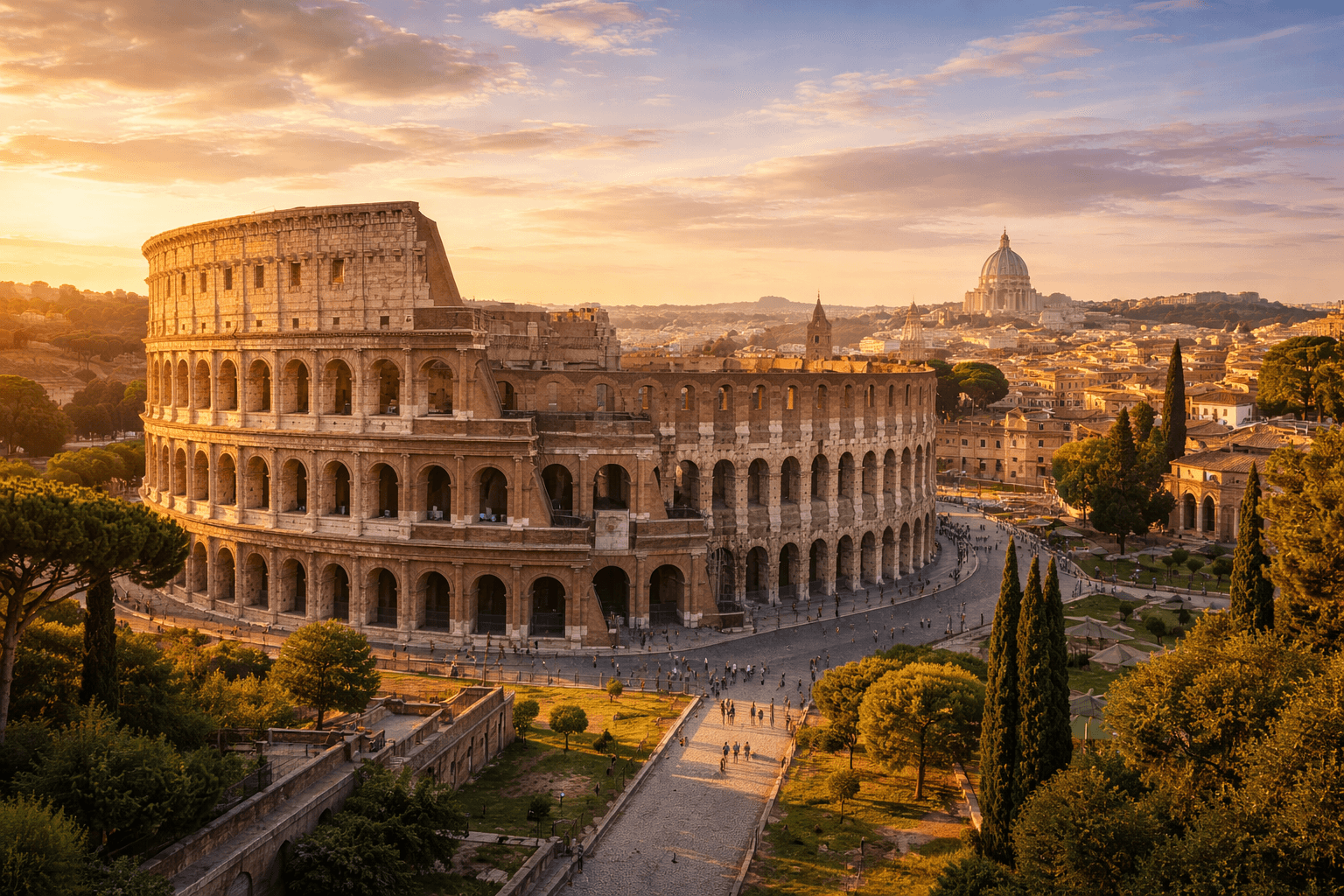
Warm light washes over ancient stone as footsteps echo across the Forum and espresso steam curls from a nearby bar.
Spring and early fall shine—wander Trastevere, step inside the Colosseum, and book timed tickets to skip lines.
Discover now and begin your Rome story.
01 · Overview
Learn about Rome
Rome Overview
Rome: A Concise Introduction to the Eternal City
History
Rome's history stretches from a handful of hilltop settlements to the centre of an empire that shaped Europe and the Mediterranean. The city's streets are a palimpsest: temples, churches, and civic ruins sit under and alongside Renaissance palazzi, Baroque fountains, and modern trams, so every walk can feel like stepping through layered time.
Current status
Today Rome is both a national capital and a lived-in city: government institutions and international visitors concentrate in parts of the center, while neighborhoods like Testaccio, Pigneto, and Monteverde retain residential rhythms and active markets. Crowds cluster around major sights, but with a little detour you find quieter piazzas, working bakeries, and the steady life of a city that functions beyond its tourist postcards.
Local culture
Romans move at a deliberate, slightly theatrical pace—there’s a performative warmth in conversation and a practical stubbornness in daily life. Social life centers on cafes, the neighborhood bar, and the piazza; relationships run deep and local knowledge matters, so a brief effort to ask, listen, and adapt will be rewarded with better food, directions, and stories.
Food
Roman food is straightforward, seasonal, and anchored in a few brilliant classics: carbonara, cacio e pepe, and amatriciana are simple pasta-building blocks done extremely well here. Markets, small trattorie, and street-food counters serve the best versions; skip anything that looks like a tourist menu of endless choices and favor places where the daily special is written on a chalkboard.
Attractions
The Colosseum and Roman Forum
The Colosseum remains the city's emblem: an enormous, tactile ruin whose scale is easier to feel in person than describe. Nearby, the Forum and Palatine Hill offer a compact route through republican and imperial Rome, where you can read the city’s political and civic story across stone and arch.
Vatican City and St. Peter’s Basilica
The Vatican is as much a museum complex as a spiritual center, with the Sistine Chapel and the Vatican Museums housing masterpieces collected over centuries. St. Peter’s Basilica dominates the skyline on the west bank of the Tiber; visiting early or late in the day helps avoid the thickest crowds and makes the climb up the dome worthwhile for the view.
Pantheon and Centro Storico
The Pantheon—an intact Roman temple turned church—is a short, atmospheric stop surrounded by narrow streets and lively squares. The Centro Storico rewards slow walking: small churches, artisan shops, and espresso pulls at neighborhood bars give a fuller picture of daily Roman life beyond the monuments.
Trastevere and the Tiber riverside
Trastevere offers cobbled lanes, ivy-draped facades, and an evening energy that balances tourist and local faces; it’s where many Romans eat and linger. Walk the riverside paths toward Isola Tiberina for a pleasant, low-key stretch that feels distinctly Roman and less staged than central piazzas.
Baths of Caracalla and Appian Way
The Baths of Caracalla are expansive, ruinous, and surprisingly quiet, a reminder of the public life Romans engineered for centuries. East of the center the Appian Way lets you step onto an ancient road beneath pines and cypress—a good escape for walking or cycling away from the dense heart of the city.
Practical note
Rome rewards short, focused plans: choose a neighborhood or two to explore deeply each day rather than trying to see everything. Check opening times and book tickets for the busiest sites ahead, and leave room for wandering—some of Rome’s best moments aren’t on a map.
Places to Go
Colosseum
Vatican Museums & Sistine Chapel
Pantheon (Basilica of Santa Maria ad Martyres)
Trevi Fountain (Fontana di Trevi)
Spanish Steps (Piazza di Spagna)
Things to Do
Visit the Colosseum (and nearby Roman Forum / Palatine Hill)
Tour the Vatican Museums and Sistine Chapel, then St. Peter’s Basilica
Stand under the Pantheon dome
Throw a coin into the Trevi Fountain and explore the surrounding lanes
Climb the Spanish Steps and walk Piazza di Spagna
Blogs to Read
Rome Neighborhoods Guide: Complete Guide to Rome's 19 Districts
Overview of Rome’s main neighborhoods with practical tips on what to see, where to eat, and which district suits different traveler types — useful for choosing where to stay and planning local experiences. (visitrome.com)
33+ Epic Hidden Gems in Rome (Off the Beaten Path!)
Roundup of lesser-known sights, quirky streets, and local spots across Rome with photos and directions — good for travelers who want alternatives to the major tourist sites. (ourescapeclause.com)
Rome Neighborhoods Guide
An expat’s detailed breakdown of Rome’s neighborhoods (Trastevere, Testaccio, Monti, Prati, etc.), including atmosphere, dining notes, and who each area suits — helpful for getting a lived-in perspective. (anamericaninrome.com)
Rome Off the Beaten Path: Non-Touristy Things to Do
Personal recommendations for non-touristy experiences, hidden gems, and local neighborhoods with practical tips and walking ideas — useful for travelers seeking a slower, local-focused visit. (jillonjourney.com)
40 Hidden Gems in Rome: Non-Touristy Things to Do (Map + Local Tips)
Vegetarian/vegan-friendly take on Rome’s offbeat sights and neighborhoods with a mapped list of non-touristy attractions and food tips — useful if you want plant-forward dining alongside hidden gems. (veggiewayfarer.com)
02 · Find
Explore Local

We haven't mapped neighborhoods for Rome yet.
03 · Plan
Build Itinerary
Your trips
Your next trip starts here. Make a plan and find it here when you return.
Language Guide
04 · Travel Tips
Travel Tips
Rome — Practical Travel Tips
Local customs
- Greet with a simple "Buongiorno" (good morning) or "Buonasera" (good evening). A polite "per favore" and "grazie" go a long way.
- Dress modestly when visiting churches (shoulders and knees covered). Most basilicas allow entry only if dressed appropriately.
- Mealtime pace: lunch and dinner can be relaxed. Expect longer service at sit-down restaurants; tipping is small (round up or leave 5–10% for good service).
- Avoid loud phone calls on public transport and in small restaurants; Italians value conversational volume and respect for others.
- When ordering coffee at the bar, espresso at the counter is cheaper than table service. Say whether you want it "al banco" (at the bar) or at a table.
Transportation
- Metro and buses cover central Rome; buy tickets (BIT or daily passes) before boarding and validate them in the machine; inspectors check frequently and fines are steep.
- Trains from Fiumicino airport: Leonardo Express runs non-stop to Termini (about 30 min). Regional trains are cheaper but check stops and platforms.
- Taxis are metered; use official white taxis from ranks or call an app-based licensed service. Agree on fares only if meter unavailable.
- Walking is often fastest in the historic centre — streets are compact and many attractions are close. Wear comfortable shoes; cobblestones are common.
- Scooter and e-bike services exist but watch for traffic rules and pick safe parking; helmet use is recommended even if not enforced.
Safety
- Pickpocketing is the most common crime: keep valuables in front pockets or a zippered bag, especially on buses, metros, and near major sites (Colosseum, Vatican, Termini).
- Be cautious with strangers offering petitions or friendship bracelets — they can be distractions for theft.
- Night: stick to well-lit, active streets; some peripheral neighborhoods are quieter and less tourist-oriented after dark.
- Water: Rome’s tap water (acqueduct fountains, “nasoni”) is safe to drink; carry a refillable bottle.
- Emergency numbers: 112 is the EU general emergency number.
Insider tips
- Visit popular sites early morning or late afternoon to avoid peak crowds and hottest hours; reserve timed entries for the Vatican and Colosseum when possible.
- Try neighborhood trattorie in Trastevere, Testaccio, or Prati for more authentic meals and better value than the main tourist drag.
- Gelato: look for places that display real fruit or list ingredients; long lines don’t always mean best quality.
- Museum days: some museums close one weekday – check opening days in advance and build in a rest afternoon.
- Cash vs. card: cards are widely accepted, but small vendors, markets, and some cafés prefer cash. Keep some euros on hand.
- Siesta: many small shops close around midday (roughly 1–4pm), especially outside the very centre; plan errands accordingly.
- Language: English is common in tourist areas, but using a few Italian phrases opens easier service and friendlier responses.
Safe travels — enjoy the layers of history, food, and neighborhood rhythms that make Rome practical to explore when you plan a bit ahead.