Seville
Flamenco Heat, Golden Courtyards
Warm air hums with guitar strings as orange blossoms scent tiled courtyards and footsteps echo through sunlit alleys.
Spring and early fall shine—wander the Alcázar, climb La Giralda, watch flamenco in Triana, and rest midday to beat the heat.
Start your journey now and feel Seville’s fire.
01 · Overview
Learn about Seville
Seville Overview
Seville: Slow Sunlight, Orange Trees, and City-Sized History
History
Seville's story is one of successive empires and cultural crosscurrents. From Roman foundations through a flourishing Islamic period and into a Golden Age as Spain's Atlantic gateway, the city wears its past visibly: narrow medieval lanes, Renaissance palaces, and baroque churches layered on top of each other.
Current status
Today Seville is a lively regional capital balancing tourism with local rhythms: siestas, late dinners, and festivals that draw both Spaniards and visitors. Development has focused on restoring historic neighborhoods while expanding cultural institutions, making it easy to walk between major sights and quieter residential quarters.
Local culture
Sevillan culture favors presence over pace — long conversations on plazas, flamenco that is intimate rather than staged, and weekly markets where neighbors catch up. Social life centers on outdoor squares, rooftop terraces, and tapas bars; people notice and respond to the small courtesies of daily ritual.
Food
Seville’s food is generous and seasonal, built around Andalusian staples like olive oil, tomatoes, and ham. Tapas culture here is practical and social: small plates shared slowly, from simple olives and fried anchovies to more elaborate regional dishes such as salmorejo and stewed oxtail.
Attractions
The Royal Alcázar is a compact palace where Mudéjar, Gothic, Renaissance, and Baroque styles mingle in courtyards and gardens. Its patios and tiled rooms reward slow exploration and are best appreciated with time to linger rather than rush through.
The Seville Cathedral and Giralda tower dominate the skyline with grand Gothic space and the former minaret turned bell tower. Climbing the Giralda’s gentle ramps provides a calm ascent and one of the clearest views across the city’s rooftops.
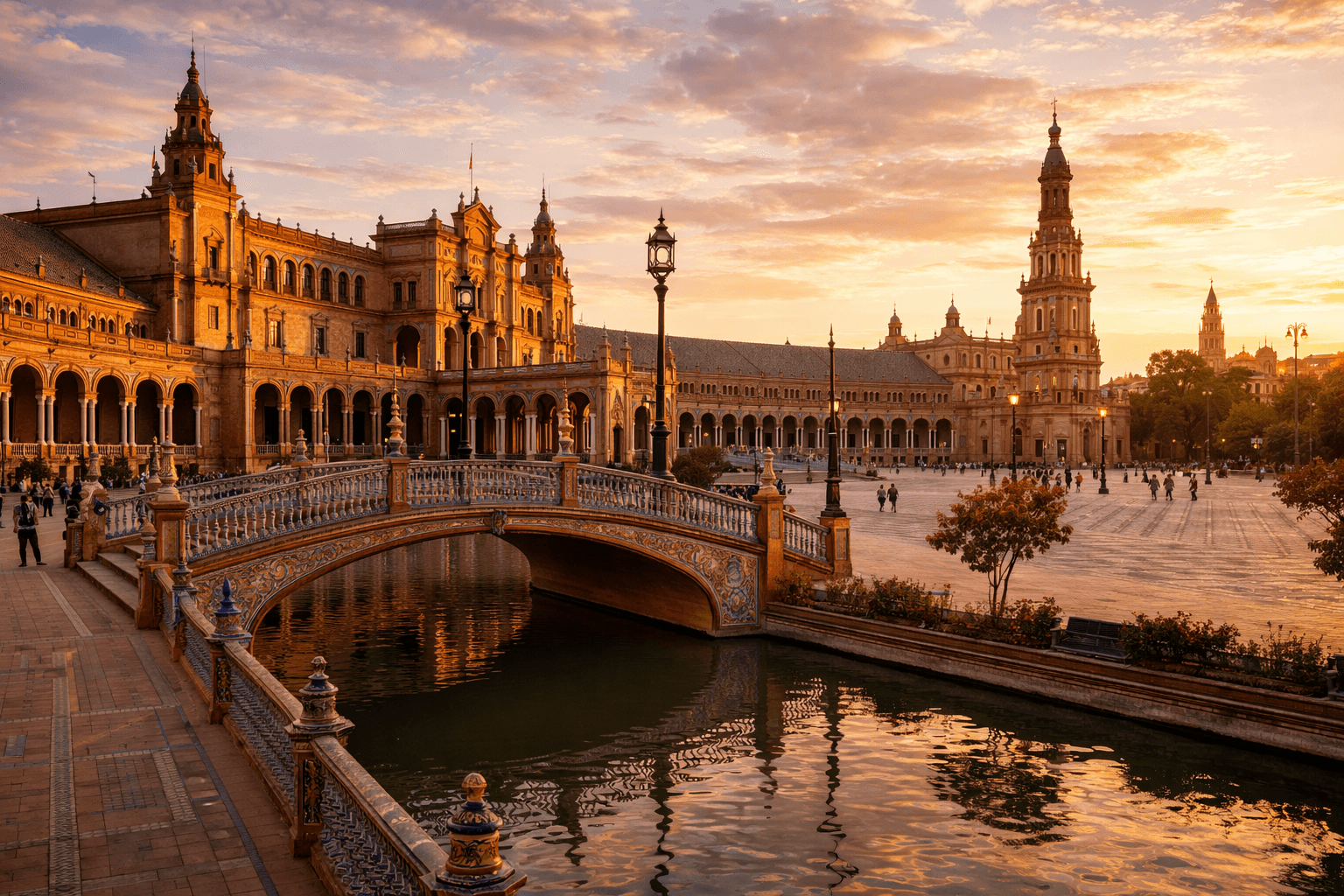
Plaza de España is an early-20th-century civic stage framed by a semicircular building, canal, and tiled alcoves representing Spain’s provinces. It’s a pleasing place for a stroll or rowboat, equally useful for people-watching and catching late-afternoon light for photographs.
The Triana neighborhood, across the river, preserves Seville’s ceramic and flamenco traditions in a more working-class, authentic atmosphere. Its riverside paseo, pottery shops, and intimate bars offer a different tempo from the tourist routes near the cathedral.
Maria Luisa Park provides broad, shaded avenues, tiled benches, and pockets of formal planting that contrast with the compact alleys elsewhere in the city. It’s a practical spot to pause between visits or to picnic in the late afternoon.
Places to Go
Royal Alcázar of Seville (Real Alcázar)
Seville Cathedral (Cathedral of Saint Mary of the See) & La Giralda
Plaza de España
Metropol Parasol (Las Setas de la Encarnación)
General Archive of the Indies (Archivo General de Indias)
Things to Do
Visit the Real Alcázar
Seville Cathedral and climb the Giralda
Stroll Plaza de España and María Luisa Park
Climb/visit Metropol Parasol (Las Setas)
Evening flamenco and tapas in Triana or Santa Cruz
Blogs to Read
Seville Travel Guide (Updated 2026)
A comprehensive, regularly updated city guide covering top sights (Alcázar, Cathedral, Plaza de España), neighborhoods, practical tips on getting around, budgets, and food recommendations — useful for planning an efficient multi-day itinerary and money-saving choices.
My Seville Superlatives: The Best of the Andalusian Capital
Written by a long-term Seville expat, this post highlights local favourites, neighborhood tips, where to eat and when (siesta culture), and hidden gems off the tourist track — good for authentic, lived-in advice and neighbourhood-specific recommendations.
3 Days in Sevilla: The Perfect Itinerary by a Local Food Guide
A practical 3-day itinerary focused on food and neighborhood exploration from a local tapas tour operator; includes where to eat, suggested timing to avoid crowds, and walking routes that combine major sights with lesser-known culinary stops.
Things To Do In Seville Spain: A Complete City Guide
A readable, photo-rich travel blog post covering must-see attractions, food tips, day trips, and suggested itineraries; useful for travelers who want a clear, practical day-by-day plan plus dining suggestions.
The Best Places To Buy Souvenirs In Seville, Spain
A focused guide to markets, shops, and neighbourhoods for authentic shopping (Triana market, craft shops, local sherry producers), helpful for travelers wanting to bring back quality local goods and avoid tourist traps.
02 · Find
Explore Local

We haven't mapped neighborhoods for Seville yet.
03 · Plan
Build Itinerary
Your trips
Your next trip starts here. Make a plan and find it here when you return.
Language Guide
04 · Travel Tips
Travel Tips
Seville — Practical travel tips
Local customs
- Greet with a light cheek kiss (right cheek first) or a handshake in formal situations.
- Mealtimes are later: lunch ~2–4pm, dinner often after 9pm; many restaurants open late.
- Siesta culture still affects small shops and businesses — expect closures mid-afternoon in neighborhoods.
- Dress modestly for churches (shoulders and knees covered) and keep voices low inside religious sites.
- Tipping: rounding up or leaving 5–10% in restaurants is appreciated but not mandatory; small change for café/bar service is common.
Transportation options
- Walkable centre: the historic core is compact; plan on walking for most sightseeing.
- Bus network (TUSSAM) and a single metro line cover wider areas; buy a rechargeable travel card for convenience.
- Tram/MetroCentro serves central points; schedules vary by season.
- Airport (San Pablo, SVQ) ~10 km from centre: airport express bus (EA) and regular airport bus routes connect to main stations; taxis and ride-hailing (Cabify/Uber availability varies) are alternatives with fixed/regulated airport fares.
- Bicycle and e-scooter rentals are common; use bike lanes and lock bikes securely.
Safety
- Seville is generally safe; usual urban precautions apply: watch for pickpockets in crowded tourist areas, markets, and on public transport.
- Keep valuables in a front pocket or a cross‑body bag; avoid showing large sums of cash or expensive gear in quiet streets at night.
- Be cautious with stranger distractions (petty theft scams): if someone creates a diversion, step back and secure your bag.
- Night travel: main districts are fine, but prefer lit streets or a taxi late at night; keep an eye on opening hours for public transport.
Insider tips
- Heat: summers get very hot — plan outdoor sightseeing for morning or late afternoon; carry water and wear sun protection.
- Book major sights (Alcázar, Cathedral, Giralda) in advance to avoid long lines and timed-entry constraints.
- Semana Santa and Feria de Abril are culturally rich but make the city extremely busy; book lodging and transport well ahead if traveling during those weeks.
- Siesta-adjusted schedules: buy groceries or visit small shops in the morning or evening, not mid-afternoon.
- Tapas culture: order multiple small dishes to share rather than a single main; many great bars are off the main tourist streets — ask locals for recommendations.
- Try local timing: afternoon café breaks and a late paseo (evening stroll) are customary and pleasant ways to experience the city.