Shizuoka
Tea Fields, Sea Air, Fuji Calm
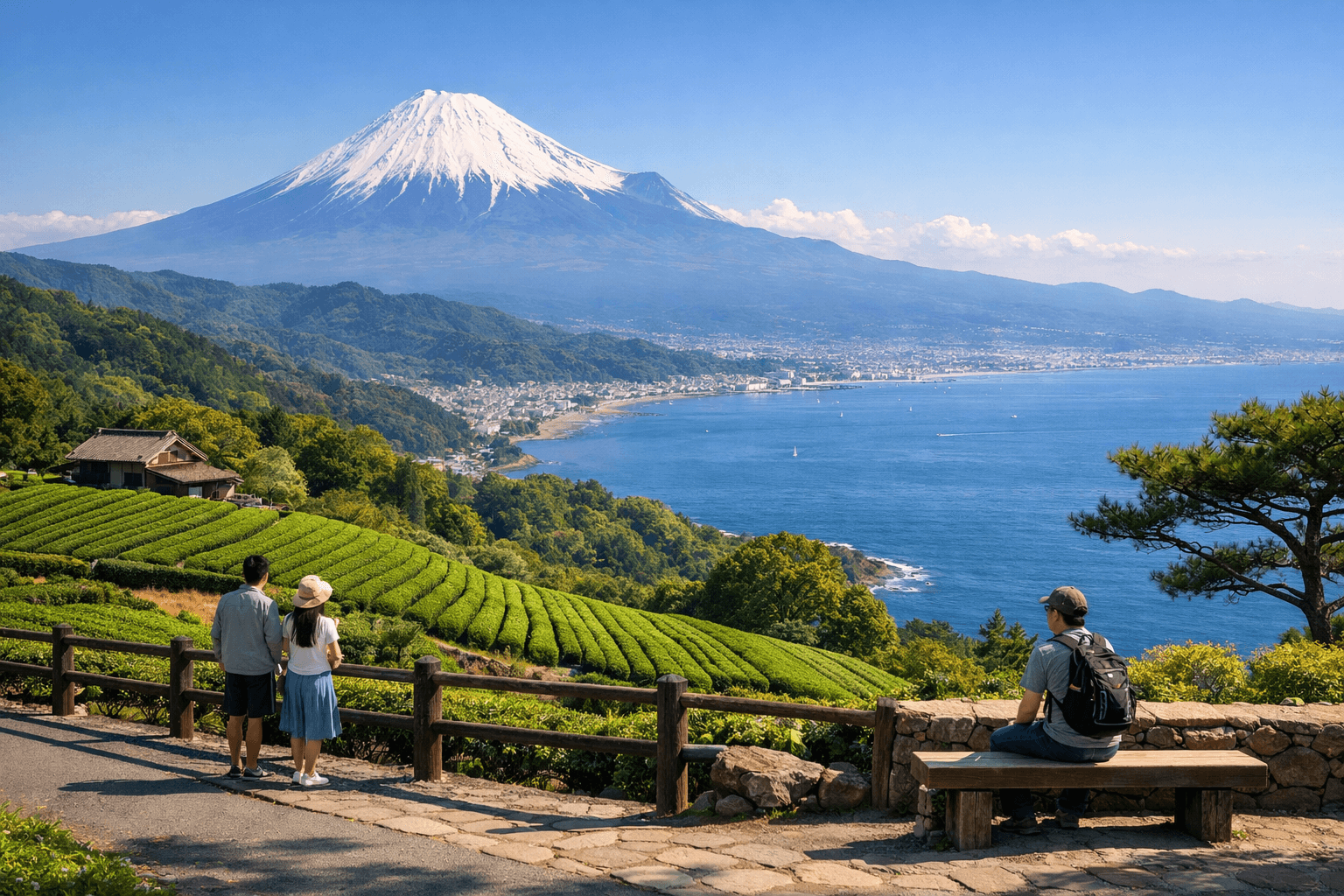
Morning mist lifts from emerald tea fields as waves roll in from Suruga Bay and Mount Fuji sharpens against the sky.
Spring and autumn shine—ride coastal trains, taste fresh seafood, stroll Miho no Matsubara, and savor views from Nihondaira.
Plan your visit now and discover Shizuoka’s quiet rhythm.
01 · Overview
Learn about Shizuoka
Shizuoka Overview
Shizuoka: Quiet Gateway to Mount Fuji and Japanese Countryside
History
Shizuoka’s history is rooted in strategic geography — positioned on the Tokaido corridor between Edo (Tokyo) and Kyoto, it has long been a staging point for travel, trade, and governance. The city grew around Sunpu Castle where Tokugawa Ieyasu retired in the early 17th century, and remnants of that era still shape the urban layout and museums.
Current status
Today Shizuoka feels less like a tourist spectacle and more like a working regional capital: mid-sized, with a calm riverfront, compact downtown, and excellent transport links. It’s a practical base for exploring the Prefecture — from tea terraces to coastal views and the western approach to Mount Fuji — without the crowds of nearby Hakone or Kawaguchiko.
Local culture
Local life in Shizuoka blends coastal fishing traditions with inland agriculture; you’ll see fishermen’s markets and tea farmers side by side. Community festivals remain important, especially summer matsuri and autumn events that celebrate fishing, tea harvests, and the area’s craft heritage.
Food
Shizuoka’s food scene is straightforward and seasonally honest: fresh seafood from Suruga Bay, simple izakaya cooking, and the prefecture’s famed green tea featured everywhere from dessert to savory pairings. Don’t overlook local specialties like sakura shrimp and aonori (green seaweed) — they show up in snacks, rice dishes, and casual restaurants across the city.
Attractions
Sunpu Castle Park
Sunpu Castle Park preserves the site of Ieyasu’s retirement residence and offers pleasant gardens and museum displays that orient you to the city’s feudal past. It’s a relaxed place to walk, and the park’s scale makes it easy to visit without committing a half day.
Nihondaira and Kunozan Toshogu
The Nihondaira ridge gives one of the clearest, least crowded views of Mount Fuji when conditions cooperate, and the nearby Kunozan Toshogu shrine provides ornate architecture set among cedar trees. Visiting both together makes for a scenic, culturally rich few hours outside the urban center.
Sumpu Railway & Local Markets
A short exploration of the city’s smaller museums and the fish markets on the Suruga coast shows why locals shop and eat where they do: freshness, practicality, and regional pride. These spots give a quick, authentic impression of daily life in Shizuoka without tourist trappings.
Tea Terraces and Rural Drives
The tea fields around Shizuoka are the reason the prefecture is synonymous with green tea in Japan; a drive through terraced fields offers photographic vistas and chances to visit small producers. Many farms welcome visitors for short tastings or to buy freshly processed leaves — a direct way to connect with local agriculture.
Miho no Matsubara
Miho no Matsubara’s pine-lined beach and the view of Mount Fuji across the bay are historically and aesthetically significant, referenced in classical poetry and art. It’s a calm, reflective spot best visited in the soft light of morning or late afternoon rather than the tourist-heavy midday hours.
Practical note
Shizuoka rewards a relaxed pace: pick two or three zones to explore in depth rather than trying to see everything. Check opening hours and transport connections in advance, especially if you plan to visit tea farms or shrines outside the city center.
Places to Go
Nihondaira (Nihondaira Plateau / Yume Terrace)
Kunōzan Tōshō-gū
Sumpu Castle Park (Sunpu Castle Park)
Things to Do
Nihondaira Plateau and Yume Terrace
Kunōzan Tōshō-gū (via Nihondaira Ropeway)
Sumpu (Sunpu) Castle Park
Miho no Matsubara (Miho Pine Grove)
Shimizu Port and S-Pulse Dream Plaza
Blogs to Read
Captivating Views of Mt. Fuji and more in Shizuoka: Nihondaira and Miho-no-Matsubara
Japan National Tourism Organization (JNTO) blog covering Nihondaira and Miho-no-Matsubara: what to see, best viewpoints of Mount Fuji, practical access tips, and cultural background—useful for first-time visitors wanting reliable, concise sightseeing information.
6 Great Shizuoka Green Tea Destinations
Local tourism blog from Explore Shizuoka highlighting major tea-producing sites (Makinohara, Obuchi Sasaba, etc.), recommended farms and viewing spots, and why each is worth visiting—good for travelers focused on tea experiences and photo locations.
Discover Shizuoka’s Green Tea on a Guided Bike Tour to a Green Tea Farm
First‑person style post on a guided bike tour to rural tea farms, describing the on-farm experience, interactions with producers, and practicalities (timing, what to expect)—handy if you want an active, local-led tea experience.
From Leaf to Cup: Explore Shizuoka's Tea Culture Through Unique Experiences
Live Japan guide that explains Shizuoka’s tea culture, hands-on tea activities, visitor-friendly tea houses and accessible itineraries—useful for planning tastings and understanding which experiences suit non-Japanese speakers.
Shizuoka Green Tea Fields: Matcha and Mount Fuji
Longer-form travel blog describing notable tea-field viewpoints around Shizuoka City, photo tips for capturing Mount Fuji with tea terraces, and nearby attractions—good for photographers and travelers seeking specific scenic spots.
02 · Find
Explore Local

We haven't mapped neighborhoods for Shizuoka yet.
03 · Plan
Build Itinerary
Your trips
Your next trip starts here. Make a plan and find it here when you return.
Language Guide
04 · Travel Tips
Travel Tips
Shizuoka — compact travel tips
Local customs
- No tipping: restaurants, taxis, ryokan and guides do not expect tips; it can cause confusion. (opentravelguide.com)
- Table manners: slurping noodles and green tea is normal; avoid leaving large amounts of food at traditional meals. (opentravelguide.com)
- Onsen etiquette: wash thoroughly before entering, keep towels out of the water, and follow any mixed‑sex or tattoo rules at the facility. (en.wikipedia.org)
- Quiet in transit: speak quietly on trains and avoid phone calls on local trains. (opentravelguide.com)
Transportation options
- By Shinkansen: Tokaido Shinkansen stops at Shizuoka Station — fastest from Tokyo (~50–60 min by Hikari). Use JR for long hops. (japan-guide.com)
- Local trains: JR Tokaido Line connects Shimizu, Mishima and local towns; non‑Shinkansen services are frequent for short hops. (japan-guide.com)
- Buses & local transit: Shizutetsu operates city buses, a Sunpu loop, airport shuttles and express routes; buses reach attractions not on rail. Consider a day pass if you’ll take many hops. (visit-shizuoka.com)
- Airport access: Mt. Fuji Shizuoka Airport (FSZ) is ~30 km west; express buses and local connections link to Shizuoka city. (japan-guide.com)
- To Mount Fuji: express and climber buses run from Shizuoka, Mishima and Shin‑Fuji stations to Fujinomiya/Kawaguchiko routes; check seasonal schedules. (bus.fujikyu.co.jp)
- Practical cards: use an IC card (Suica/Pasmo/etc.) for convenience on trains, buses, and many shops. (studyinshizuoka.jp)
Safety
- Overall: Shizuoka is generally safe, but petty theft (bicycles, car‑breaks) and scams occur—lock bikes and avoid leaving valuables visible. Local police publish crime reports. (city.shizuoka.lg.jp)
- Natural hazards: the prefecture is earthquake- and tsunami‑prone in places; know evacuation routes and follow local alerts. Carry a basic emergency kit if you plan outdoor trips. (pref.shizuoka.jp)
- Night safety: city center and train stations are safe at night, but stay aware of surroundings and watch personal belongings on crowded trains. (city.shizuoka.lg.jp)
- Health: bring any prescription medicines with original labels; pharmacies may close early in smaller towns. Carry cash for small clinics.
Insider tips
- Tea culture: visit a tea plantation or shop in the city to sample freshly steamed sencha and learn brewing differences — Shizuoka is Japan’s largest tea producer. (japan.travel)
- Seafood: Shizuoka’s tuna (maguro) and local seafood are top picks — try early‑hour markets or specialty restaurants near the port. (japan.travel)
- Views of Mt. Fuji: choose a clear morning and head to Miho no Matsubara or Nihondaira for classic vistas; weather changes quickly, so plan flexibility. (global.jr-central.co.jp)
- Biking: the city and coastal areas are bike‑friendly; lock bicycles and park in designated spots. (studyinshizuoka.jp)
- Cash vs card: cards are widely accepted in larger shops and restaurants, but carry some yen for markets, small eateries, and rural buses.
- Language: English signage exists at major stations and attractions, but have addresses written in Japanese for taxis and offline maps for rural areas.
(Concise guide—adjust plans by checking seasonal schedules and local notices.)