
Introduction
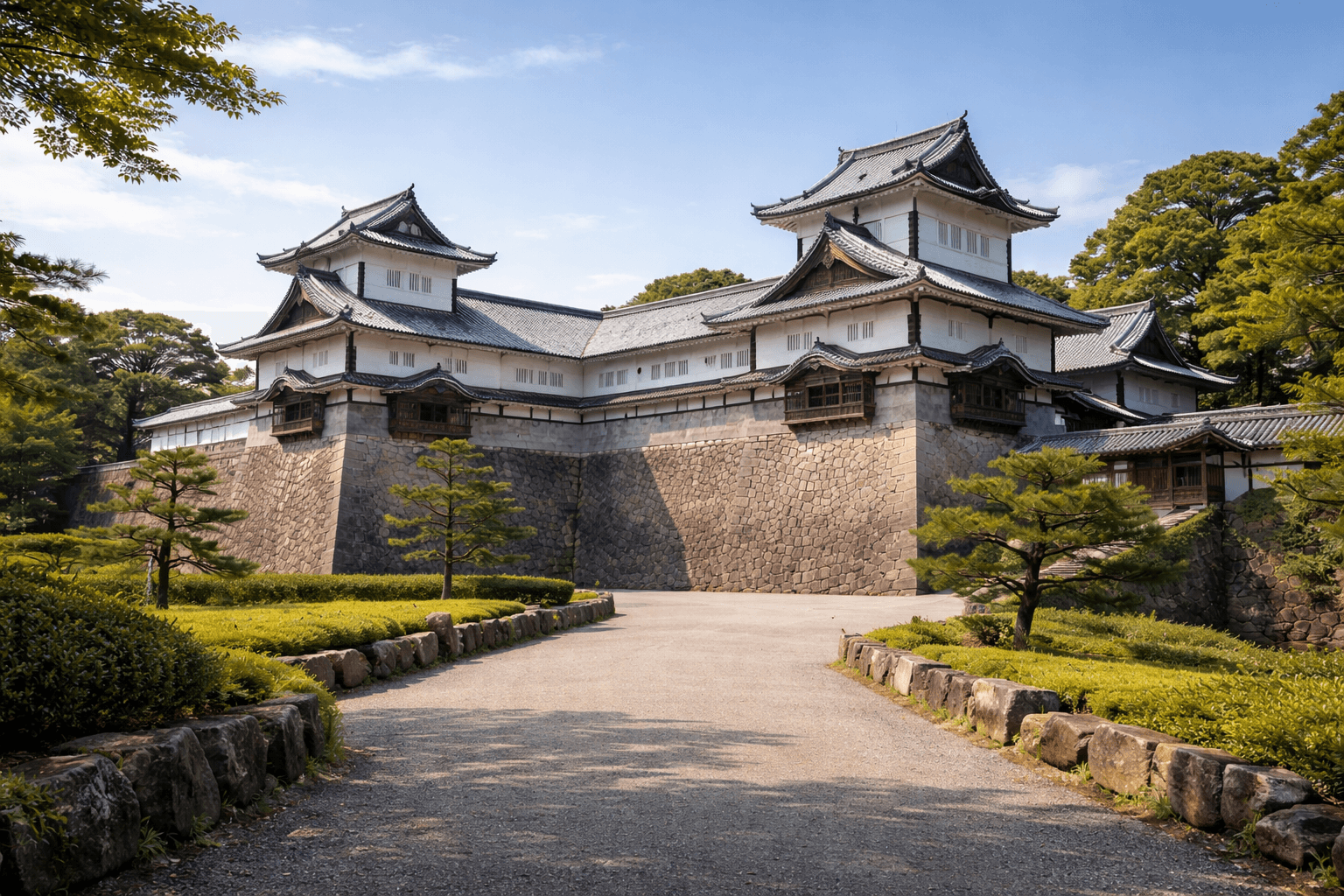
Kanazawa Castle is a historic castle complex in the center of Kanazawa city, Ishikawa Prefecture. Once the seat of the powerful Maeda clan during the Edo period, today the site combines restored castle structures, large stone walls, gates, and expansive gardens. It sits adjacent to Kenrokuen Garden and forms a cultural heart of the city. The castle appeals to history lovers, architecture and garden enthusiasts, families, and anyone planning a half‑day to full‑day exploration of central Kanazawa.
Why Visit
- Walk among reconstructed turrets and impressive stonework that reveal feudal Japan’s defensive architecture.
- Experience the contrast and connection with Kenrokuen—one of Japan’s most celebrated landscape gardens—right next door.
- Enjoy accessible, well‑interpreted exhibits about the Maeda clan and local history.
- Great for photography: seasonal colors, reflective moats, and classic wooden architecture.
Main Areas & What to See
-
Higashi Chaya District (nearby context)
- What it is: A preserved teahouse neighborhood close to the castle area.
- Why it matters: Shows Kanazawa’s arts culture and provides context for the city’s Edo‑era life.
- Do this: Combine a stroll here with your castle visit to feel the historical continuity.
-
Castle Grounds and Stone Walls (Ishigaki)
- What it is: Extensive stone ramparts and moats surrounding the castle compound.
- Why it matters: The craftsmanship of the stonework and the scale of the defenses are central to understanding the site.
- Do this: Walk the perimeter paths early or late for best light; look for varied masonry techniques.
-
Hishi Yagura (Diamond Turret) and Other Reconstructed Buildings
- What it is: Restored wooden structures and turrets reconstructed using traditional methods.
- Why it matters: They illustrate castle architecture and the ongoing preservation efforts.
- Do this: Step inside where allowed to see displays, and note rooflines and joinery details.
-
Gojikken Nagaya (Storehouse Gallery)
- What it is: Long storehouse with exhibits about the castle’s history and restorations.
- Why it matters: Provides historical context and artifacts related to the Maeda domain.
- Do this: Spend 15–30 minutes reading displays to enrich your visit.
-
Castle Park and Viewing Points
- What it is: Open lawns, pathways and vantage points over moats and gardens.
- Why it matters: Offers photo opportunities and places to rest between sights.
- Do this: Pause at lookout spots where you can frame the castle against Kenrokuen or seasonal foliage.
Best Time to Visit
- Time of day: Early morning (around opening) or late afternoon for softer light and fewer crowds. Midday is busiest.
- Crowd considerations: Weekends and national holidays attract more visitors; weekday mornings are calmest.
- Atmosphere differences: Morning feels peaceful and contemplative; late afternoon brings warmer tones and pleasant strolls as gardens and paths cool.
Seasonal Highlights
- Spring: Cherry blossoms near the grounds create classic, photogenic scenes.
- Summer: Lush green lawns and shade; humid afternoons—plan for water and sun protection.
- Autumn: Strong draw—maples and ginkgo around the castle and Kenrokuen turn vivid reds and golds.
- Winter: Snow on rooflines and stone walls can be very atmospheric; fewer crowds but colder conditions.
- Special events: Seasonal illumination, garden events, or cultural demonstrations sometimes coincide with holidays—check local listings when planning.
Practical Tips
- Cultural etiquette: Remove shoes if entering buildings that require it; speak softly and respect exhibit spaces.
- Photography: Allowed in most outdoor areas; be mindful of signs in indoor exhibits—flash and tripods may be restricted.
- Payment & access: Entrance to the castle grounds is typically free; some buildings or exhibits may charge a small fee. Major credit cards are less widely accepted at small vendors—carry some cash (yen).
- Timing: Plan 1–2 hours for the castle grounds alone; 3–4 hours if you include Kenrokuen and nearby museums.
- Facilities: Restrooms and a small visitor center are on site; vending machines and cafés are nearby but limited inside the historic compound.
Getting There
- Nearest station: Kanazawa Station. From the station it’s about a 20–25 minute walk; a taxi takes roughly 5–10 minutes depending on traffic.
- Bus: Local loop buses (Kanazawa Loop or similar city buses) stop close to the castle/Kenrokuen area—travel time ~10 minutes from the station.
- Typical travel time from city center: The castle sits in central Kanazawa—expect under 30 minutes from most central points on foot or a short bus/taxi ride.
Is It Worth It?
Yes — Kanazawa Castle is worth visiting for its well‑preserved atmosphere, approachable historical interpretation, and perfect pairing with Kenrokuen Garden. For first‑timers it’s an essential stop to understand Kanazawa’s feudal past; for repeat visitors it rewards slower exploration, seasonal photography, and visits to smaller exhibits. If you have limited time, prioritize Kenrokuen and a short walk through the castle grounds; if you enjoy architecture and history, allow extra time to absorb the details.