
Introduction
Nodaya Tea House (Nodaya Chaya) is a preserved traditional teahouse in Kanazawa’s historic tea‑house district. Housed in a wooden, Edo‑period style building, it offers visitors a close look at the architecture, rituals, and atmosphere of Japan’s tea culture. The site is valued for its authenticity, intimate interiors, and opportunities to taste matcha or observe tea‑ceremony elements without requiring prior reservation.
This place appeals to cultural travelers, food and tea enthusiasts, photographers seeking atmospheric interiors, and visitors who want a quieter, more focused cultural experience than the larger museums nearby.
Why Visit
- Experience a genuine teahouse interior and traditional architecture.
- Taste quality matcha and simple wagashi (Japanese sweets) in historic surroundings.
- Learn about Japanese tea etiquette and the aesthetics of the tea ceremony in an accessible setting.
- Escape the city bustle for a short, contemplative stop while exploring Kanazawa’s historic districts.
Main Areas & What to See
Entrance and Exterior
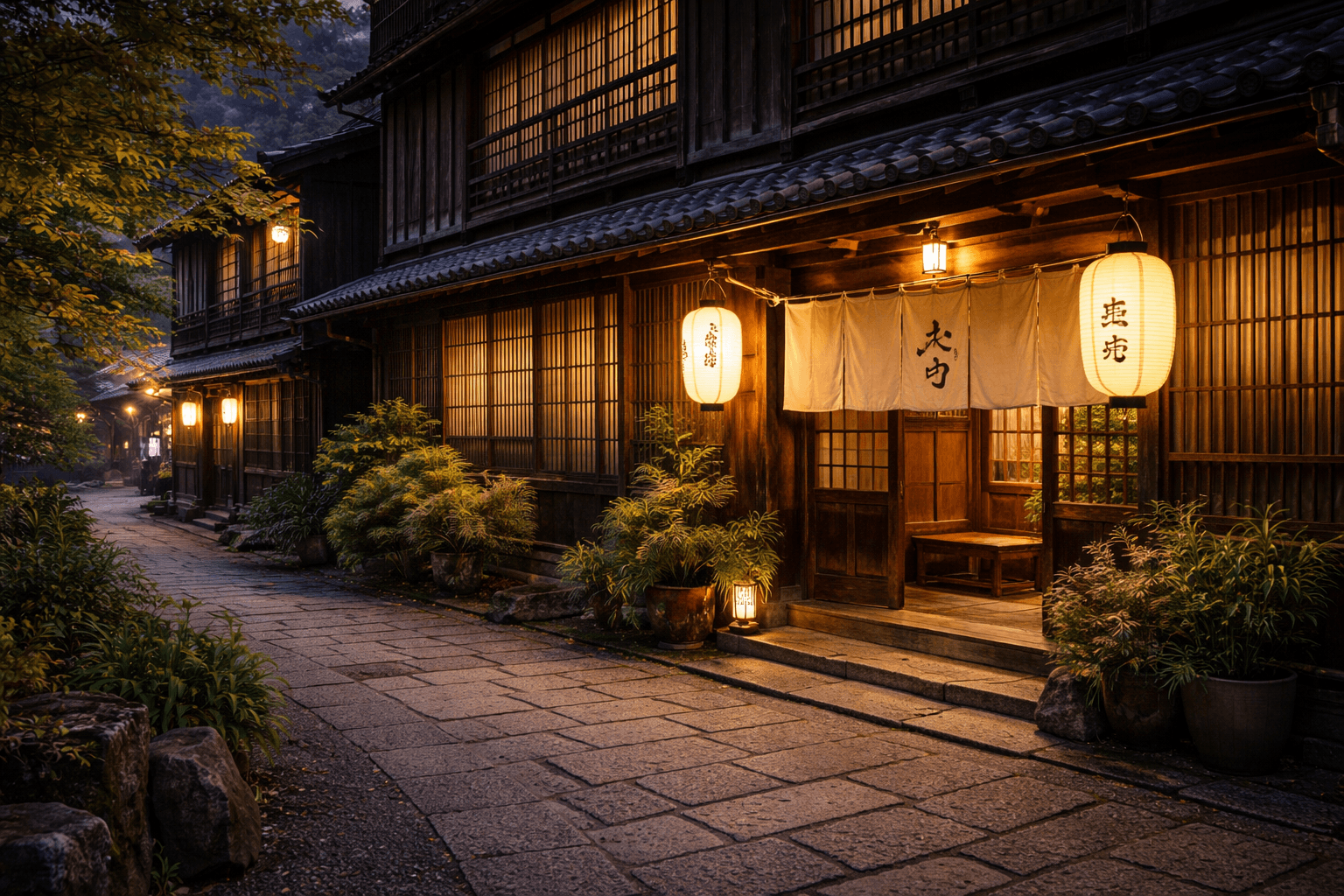
- What it is: Wooden façade with noren (fabric curtain) and a narrow gateway typical of chaya buildings.
- Why it matters: The exterior sets the tone — restrained, elegant, and intentionally private, reflecting the teahouse tradition.
- What to notice/do: Pause to observe the craftsmanship of latticework and rooflines; respectful silence here preserves the mood.
Reception & Small Gallery
- What it is: Compact reception area where staff explain offerings and prices.
- Why it matters: Many teahouses in Kanazawa interpret their history here and sometimes display tea utensils or photographs.
- What to notice/do: Ask about available tastings or short demonstrations; staff may point out unique tea bowls or seasonal sweets.
Tatami Tea Room(s)
- What it is: Low, tatami‑floored rooms arranged for tea service and small groups.
- Why it matters: These are the heart of the experience — the spatial proportions, lighting, and alcove (tokonoma) reflect wabi‑sabi aesthetics.
- What to notice/do: Take in the simple decoration, the scroll or ikebana in the tokonoma, and the measured movements of staff during service.
Matcha & Wagashi Service
- What it is: Matcha prepared to order and served with a small seasonal sweet.
- Why it matters: The pairing shows how bitterness and sweetness balance in Japanese tea culture.
- What to notice/do: Try both whisked matcha and any seasonal specialties; follow local etiquette (see Practical Tips).
Best Time to Visit
- Time of day: Mid‑morning or mid‑afternoon for best light and a calmer atmosphere; mornings shortly after opening are often quiet.
- Crowd considerations: Weekends and holidays draw more visitors to the historic district; arrive early to avoid the peak between 11:30–14:00.
- Atmosphere differences: Early visits feel meditative and slightly cooler in tone; afternoons can be livelier with more tourists and groups.
Seasonal Highlights
- Spring: Light, floral wagashi and gentle natural light through shoji screens; cherry blossom season brings more visitors to Kanazawa.
- Summer: The interior provides cool respite; tea sweets often use seasonal fruits or chilled textures.
- Autumn: Warm wood tones and autumnal sweets complement the foliage in nearby streets and gardens.
- Winter: A quieter, intimate experience; tea may be paired with richer sweets to suit colder weather.
Practical Tips
- Cultural etiquette: Remove shoes if asked, speak softly, and accept bowls with both hands. It’s polite to bow briefly when thanked.
- Photography: Interior photos are often allowed but be discreet; check staff for any restrictions, especially during demonstrations or private services.
- Payment & access: Many small teahouses accept cash; some take cards but carry cash to be safe. The building may have narrow steps and low doorways — not fully accessible for large wheelchairs.
- Timing: A straightforward tea service usually takes 20–40 minutes; allow 30–60 minutes if you plan to linger or combine with nearby sightseeing.
Getting There
- Nearest station: Kanazawa Station is the primary access point.
- Typical travel time: From Kanazawa Station, Nodaya is about a 15–25 minute bus ride or roughly a 20–30 minute walk, depending on which tea‑house district entrance you use. Taxis are short (10–15 minutes) and convenient if you prefer.
Is It Worth It?
Yes — for travelers interested in Japanese aesthetics, tea culture, or historic architecture, Nodaya offers a compact, authentic experience that complements visits to Kenrokuen Garden and Kanazawa’s chaya districts. If you’re short on time or uninterested in tea, it’s a pleasant stop but not essential; for most visitors it provides a memorable, quietly elegant pause in a busy sightseeing day.