
Introduction
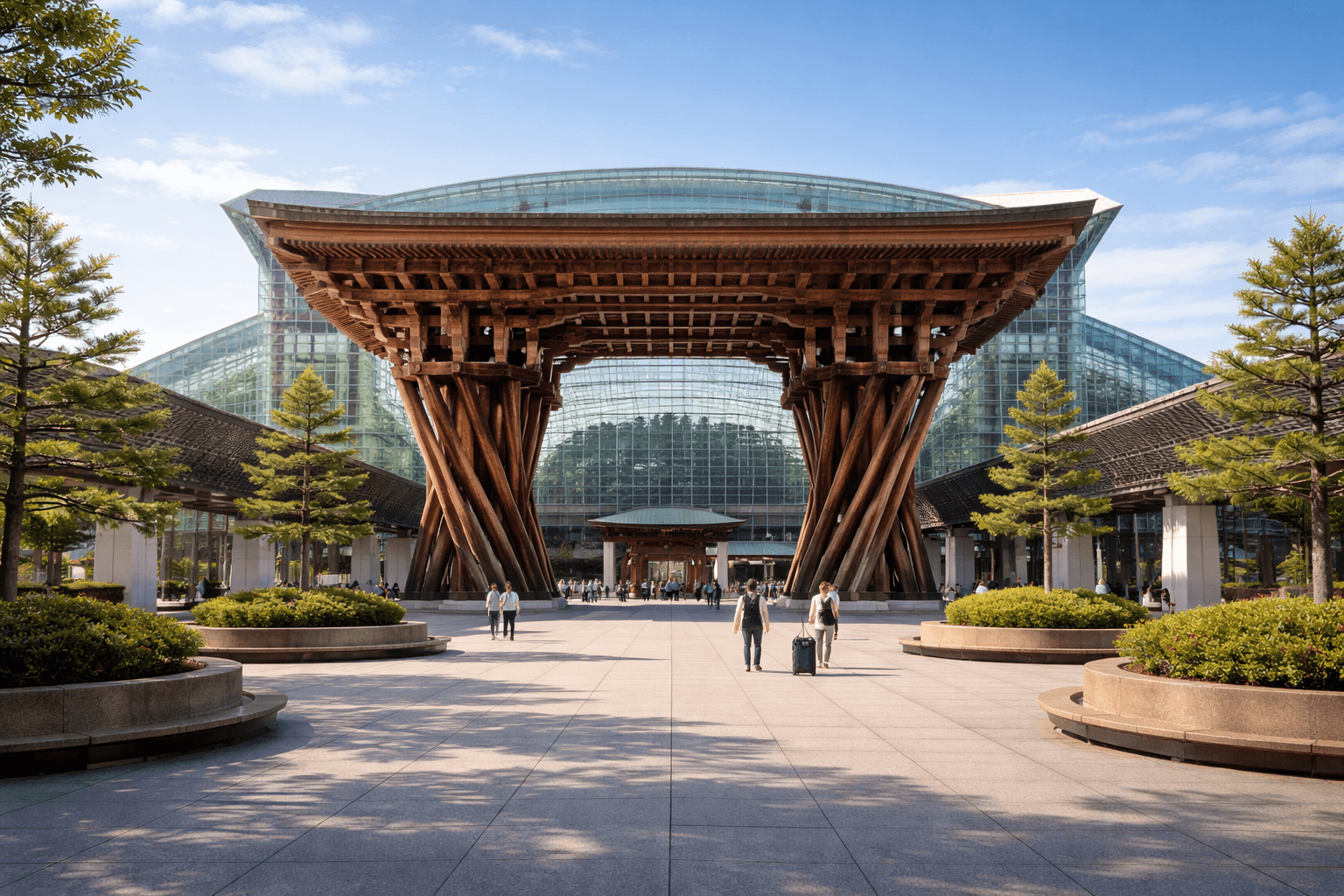
Kanazawa Station is the main rail gateway to Kanazawa city in Ishikawa Prefecture. More than just a transport hub, its striking modern architecture — most famously the glass Motenashi (Hospitality) Dome and the wooden Tsuzumi-mon gate — has become an iconic meeting point and photo spot. It sits at the edge of Kanazawa’s compact central district and is the logical starting (or ending) point for visiting Kenrokuen Garden, the castle area, museums, and traditional neighborhoods.
This place appeals to: first-time visitors arriving by train, architecture and design fans, photographers, families meeting for day trips, and anyone planning onward sightseeing around central Kanazawa.
Why Visit
- Architectural interest: dramatic modern design blended with traditional motifs.
- Practical hub: convenient services, lockers, tourist information, and transit connections.
- Photo opportunity: the Motenashi Dome and Tsuzumi-mon gate are unique and easily accessible.
- Gateway to nearby attractions: short tram/bus rides or pleasant walks to Kenrokuen, Higashi Chaya, and Omicho Market.
Main Areas & What to See
Tsuzumi-mon Gate
- What it is: A large wooden gate modeled on traditional tsuzumi drums.
- Why it matters: It symbolizes regional craft and hospitality and serves as Kanazawa’s emblematic welcome.
- What to notice/do: Photograph from the plaza at sunrise or after dusk when lights highlight the timber. The space beneath is often used for arrivals and meetups.
Motenashi (Hospitality) Dome
- What it is: A sweeping glass-and-steel dome covering the station plaza.
- Why it matters: Combines contemporary design with a feeling of openness; offers shelter and visual drama.
- What to notice/do: Look up at the lattice structure, and use the dome as a staging point for maps, taxis, or walking routes.
Interior Concourse & Shops
- What it is: The station concourse contains shopping, restaurants, convenience stores, and a tourist information desk.
- Why it matters: Great place to pick local souvenirs (gold leaf items, snacks), buy a bento, or get maps and advice.
- What to notice/do: Visit the tourist counter for day-trip recommendations and check for local specialty foods in kiosks.
Transit Platforms & Tourist Services
- What it is: Shinkansen platforms (Hokuriku Shinkansen), JR local lines, plus bus and tram terminals.
- Why it matters: Key starting point for onward travel across the Hokuriku region.
- What to notice/do: Allow extra time to navigate luggage and ticket gates; coin lockers are available but can fill up on busy days.
Surrounding Streets & Access to Central Kanazawa
- What it is: Streets directly outside the station lead to the castle/park area, museums, and downtown.
- Why it matters: Walking routes bring you quickly into the heart of Kanazawa’s historic quarter.
- What to notice/do: Walk (about 20–30 minutes) or take a short tram/bus ride to Kenrokuen Garden and the castle.
Best Time to Visit
- Time of day: Early morning (shortly after station opening) for quieter photos and easy ticketing; late afternoon into early evening for attractive lighting on the dome and gate.
- Crowd considerations: Arrivals spike with first and late-morning Shinkansen services; weekends and Japanese holiday periods (Golden Week, Obon, New Year) are busiest.
- Atmosphere differences: Mornings feel functional and calm; late afternoon the plaza livens with tourists and commuters returning home.
Seasonal Highlights
- Spring: Cherry blossoms along nearby parks create pretty approaches to the station; pleasant temperatures for walking.
- Summer: Festivals in the city bring additional visitors; the station remains a busy transit hub. Watch for sudden rain — the dome gives shelter.
- Autumn: Crisp light and autumn foliage in nearby Kenrokuen make the station a convenient launch point for day trips.
- Winter: Snowfall softens the architecture — the station stays warm and well-served, with fewer tourists on weekday mornings.
Practical Tips
- Cultural etiquette: Keep to the left on escalators and moving walkways where indicated; speak quietly inside the station; queue politely at ticket machines and platform lines.
- Photography: Public photography around the plaza and exterior is fine; be respectful of people in the frame and avoid tripod obstruction during busy times.
- Payment & access: Major cards are widely accepted at shops; have some cash for small vendors and coin lockers. Station has elevators and ramps for luggage and accessibility needs.
- Timing & lockers: Allow 30–60 minutes to explore the station itself; use coin lockers (small/large) for sightseeing — expect turnover on busy days.
- Language help: Tourist information counters typically have English materials and can advise on trains, buses, and local maps.
Getting There
- Nearest station/access point: Kanazawa Station is the destination; arrival by Hokuriku Shinkansen (from Tokyo) and JR local lines are the most common.
- Typical travel times: From Tokyo (Tokyo Station) by Hokuriku Shinkansen: about 2.5–3 hours. From nearby attractions: Kenrokuen Garden and Kanazawa Castle are roughly a 15–25 minute walk or 5–10 minutes by tram/bus from the station.
Is It Worth It?
Yes — especially as a practical and photogenic gateway. If you’re arriving or departing by rail, the station is worth a short stay to appreciate its architecture, grab local food or souvenirs, and plan your route. If you live nearby, it is a useful meeting point rather than a full-day attraction; combine a quick station visit with nearby Kenrokuen, Omicho Market, or the tea districts for the best experience.