
Introduction
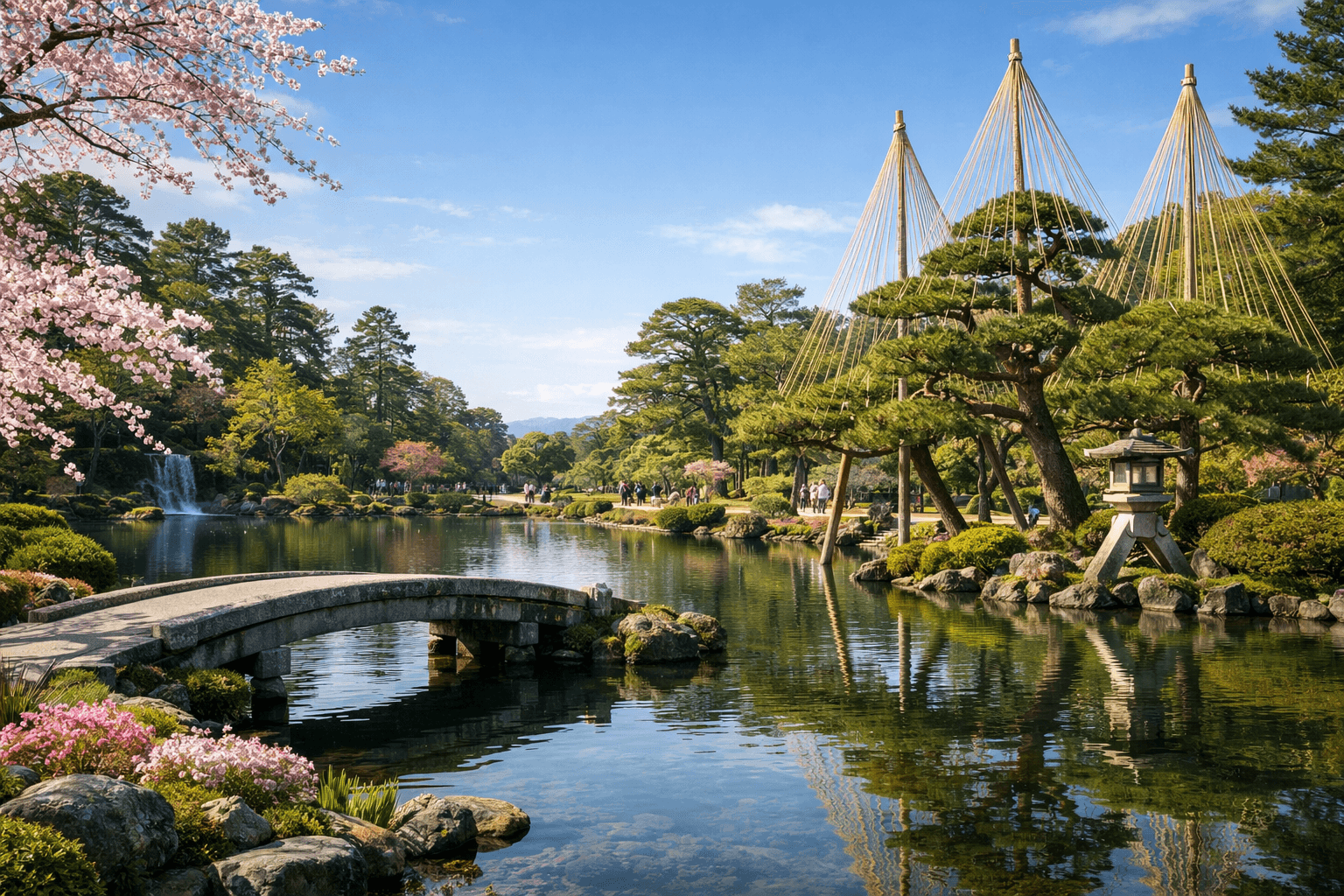
Kenroku-en is one of Japan’s most celebrated landscape gardens, located in central Kanazawa. Created and refined by the Maeda clan over several centuries, it showcases classical Japanese garden design: ponds, teahouses, winding paths, carefully pruned trees, and seasonal views meant to evoke harmony and quiet reflection. It appeals to history and design lovers, photographers, families, and travelers seeking a calm, culturally rich outdoor experience.
Why Visit
- A textbook example of Japanese strolling garden design, blending six classical garden attributes (spaciousness, serenity, artificiality, antiquity, abundant water, and broad views).
- Gorgeous, photogenic views in all seasons—each visit feels different.
- Easy to combine with nearby cultural sites (Kanazawa Castle, museums, tea districts).
- Calm, walkable layout suitable for relaxed exploration.
Main Areas & What to See
-
Kasumiga-ike (Kasumi Pond)
- What it is: The large central pond anchoring the garden.
- Why it matters: Many of the garden’s signature reflections and framed views are arranged around this water feature.
- What to notice/do: Walk the paths that circle the pond, pause at vantage points for reflections of bridges, lanterns, and maples.
-
Kotoji-toro (Two-legged Stone Lantern)
- What it is: The iconic two-stepped stone lantern on the pond’s edge.
- Why it matters: A symbol of Kenroku-en—one of the most photographed spots in Kanazawa.
- What to notice/do: Visit early or late in the day for softer light and fewer people for photos.
-
Yūgao-teahouse and other teahouses
- What it is: Traditional teahouses set within the garden.
- Why it matters: Offer a sense of historical tea-culture and quiet viewpoints that are integral to garden design.
- What to notice/do: Respect interior rules—remove shoes where required and speak softly; some teahouses may be closed or used for events.
-
Karasaki Pine and Bales in Winter (Yukitsuri)
- What it is: A striking pine tree supported with ropes in winter.
- Why it matters: The yukitsuri method protects branches from heavy snow and is a distinctive seasonal sight.
- What to notice/do: If visiting in winter, look for the rope supports and the special light and shadow they create.
-
Stone bridges, winding paths, and small waterfalls
- What it is: The connective elements that shape the strolling-garden experience.
- Why it matters: They control rhythm and reveal layered views—important to experience slowly.
- What to notice/do: Walk deliberately, pause at turning points and next to water features to appreciate carefully framed vistas.
Best Time to Visit
- Time of day: Early morning (garden opening) or late afternoon are best for softer light and smaller crowds.
- Crowd considerations: Midday and weekends—especially during peak seasons—are busiest. Arrive early to avoid tour groups.
- Atmosphere differences: Morning feels quiet and meditative; late afternoon offers warmer light and a gentler pace as visitors thin out.
Seasonal Highlights
- Spring: Cherry blossoms and fresh greens—lively, fragrant, and popular for hanami-style photos.
- Early summer: Lush foliage and cool pond reflections; comfortable for long walks.
- Autumn: Maple and ginkgo color change—arguably the most dramatic, drawing many visitors for peak foliage.
- Winter: Snow-dusted trees and yukitsuri ropes create sculptural scenes; the garden takes on a serene, monochrome beauty.
- Special events: Seasonal illumination events and light-ups sometimes occur (check local schedules before visiting).
Practical Tips
- Cultural etiquette: Keep noise low, don’t climb on rocks or railings, and follow signs. Dispose of trash in designated bins or take it with you.
- Photography: Personal photography is welcome in outdoor areas; be mindful of other visitors and avoid blocking paths. Interior teahouses or special exhibits may restrict photography—obey posted rules.
- Payment & access: Entry typically requires an admission fee; ticketing and opening hours can change—confirm current details before your trip. Accessibility is varied—paths include steps and uneven surfaces; some routes are more stroller/wheelchair-friendly than others.
- Estimated visit duration: 1–2 hours for a relaxed walk; 2+ hours if you plan to linger at teahouses, photograph extensively, or combine with nearby attractions.
Getting There
- Nearest major access point: Kanazawa Station (the city’s transport hub).
- From Kanazawa Station: By bus, most city buses to the Kenrokuen area take about 7–10 minutes to the Kenrokuen-shita or Kankomae stops. Walking from Kanazawa Station to Kenroku-en takes roughly 20–25 minutes depending on pace. Many travelers combine the garden with Kanazawa Castle Park, which is adjacent.
Is It Worth It?
Yes—Kenroku-en is a highlight of Kanazawa and a must-see for first-time visitors interested in Japanese garden art and seasonal beauty. For repeat visitors, different seasons and quieter times of day continue to offer new perspectives. If your itinerary is tight, prioritize an early-morning visit or pair the garden with Kanazawa Castle and the nearby tea districts to get the most value from your time.