
Introduction
Myoryuji (commonly called the "Ninja Temple") is a small Edo-period temple in Kanazawa famous for its ingenious defensive design: hidden rooms, trapdoors, deceptive stairways and secret corridors built to evade shogunal building restrictions. The site is culturally significant as an example of Maeda clan-era architecture and engineering, and it offers a hands-on, guided experience rather than a self-guided shrine visit. It appeals to history buffs, architecture and design lovers, families with older children, and travelers who enjoy guided cultural experiences. (japan-guide.com)
Why Visit
- See rare, purpose-built architectural tricks (hidden passages, false rooms).
- Learn about Edo-era politics and how regional lords circumvented restrictions.
- Experience an intimate guided tour inside a working temple (not just exterior viewing).
- Compact visit that pairs well with nearby Kenrokuen, Nagamachi or chaya districts. (japan-guide.com)
Main Areas & What to See
-
Entrance & Reception
- What it is: Visitor check-in area where guides verify reservations and collect fees.
- Why it matters: Tours start promptly; staff provide language booklets for non-Japanese speakers.
- What to notice/do: Arrive 10 minutes early to complete check-in and shoe removal. (kanazawastation.com)
-
Main Halls and Audience Chamber
- What it is: The temple’s primary rooms, including decorated chambers used by the Maeda family.
- Why it matters: These spaces hide many of the temple’s mechanical and deceptive elements.
- What to notice/do: Pay attention to room layout and explanations in the provided booklet—photography is prohibited. (dannywithlove.com)
-
Hidden Stairs, Trapdoors and Corridors
- What it is: The engineered network that earned the temple its "ninja" nickname.
- Why it matters: They reveal how architecture became a defensive tool and an expression of local power.
- What to notice/do: Watch the guide’s demonstrations and read the English materials carefully to follow the logic behind each device. (japan-guide.com)
-
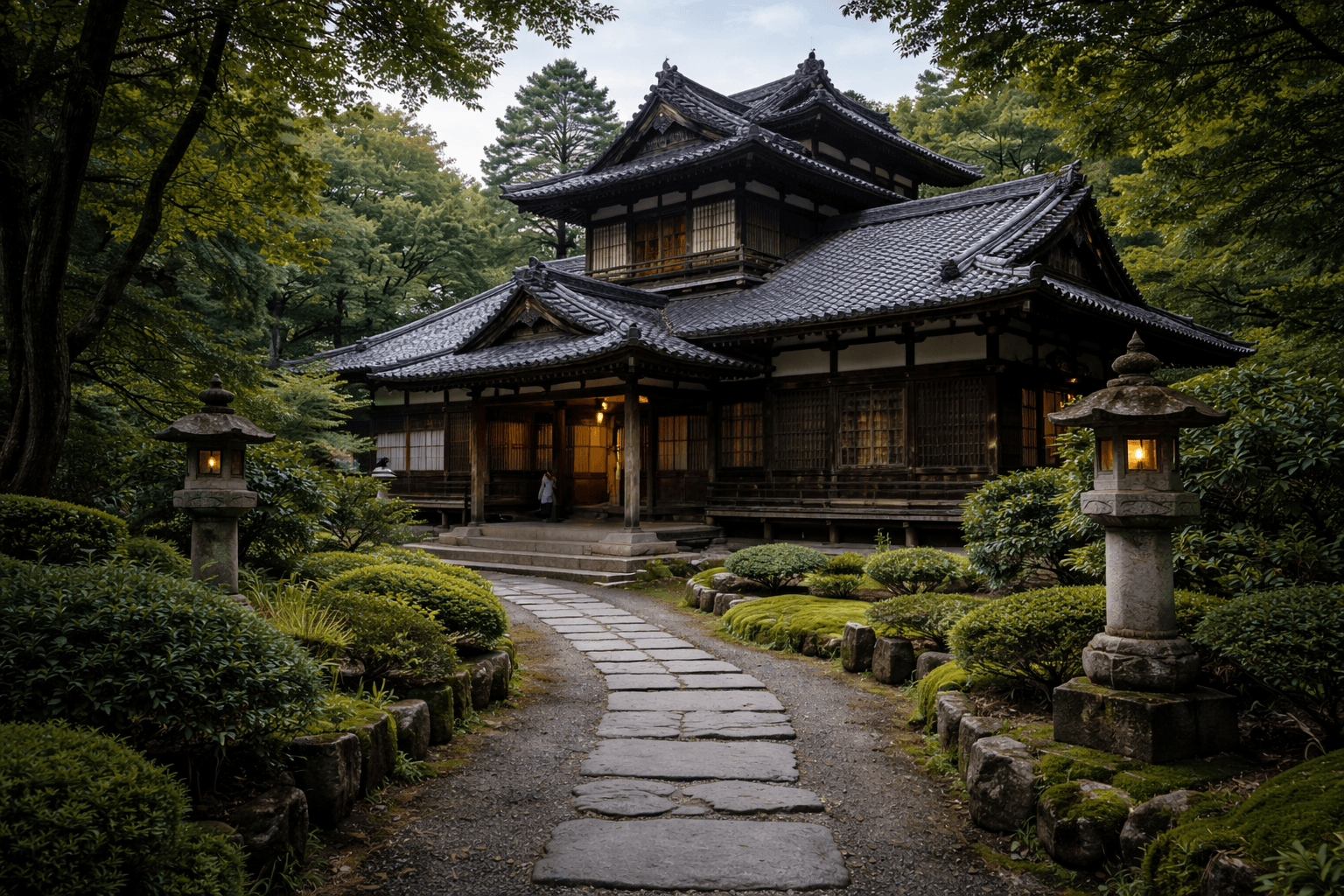
Rooflines and Exterior
- What it is: Exterior façade blending with temple town surroundings.
- Why it matters: The outwardly modest exterior contrasts with the complex interior—part of the design’s deception.
- What to notice/do: Photograph the exterior freely; interior photography is not allowed. (japan-guide.com)
Best Time to Visit
- Time of day: Morning tours are best (first slots) to avoid later crowds and to secure spaces if you didn’t book far in advance. (kanazawastation.com)
- Crowd considerations: Tours run frequently but groups are limited; weekends and Japanese holiday periods fill fast—book ahead. (visitkanazawa.jp)
- Atmosphere differences: Early visits feel quieter and more reflective; midday tours may feel brisker with larger groups. (kanazawastation.com)
Seasonal Highlights
- Spring: Pleasant weather for pairing the visit with Kenrokuen cherry blossoms.
- Summer: Hotter streets—temple interior is cooler but tours continue regularly.
- Autumn: Good foliage nearby; combine with neighborhood walks.
- Winter: Slightly shorter hours possible; check schedules around year-end closures. (visitkanazawa.jp)
Practical Tips
- Reservations: Advance booking by phone is required; English-speaking staff are available by phone but slots can fill quickly. Expect to provide group size, ages and nationality when booking. Arrive 10 minutes early. (visitkanazawa.jp)
- Fees & Payment: Admission is charged per person (typical adult fare ~1,000–1,200 JPY; discounts for schoolchildren). Pay in cash at the entrance—credit cards and electronic payments are generally not accepted. (visitkanazawa.jp)
- Photography: Strictly prohibited inside the temple—this is enforced. You may photograph the exterior. (kanazawastation.com)
- Accessibility: The interior has many steep, narrow stairs and low ceilings; not suitable for wheelchairs, strollers, or very young children (preschoolers typically not allowed). (japancheapo.com)
- Language: Tours are conducted in Japanese; non-Japanese visitors usually receive an English booklet or printed explanations to follow along. Do not expect live simultaneous English narration. (kanazawastation.com)
- Estimated visit duration: Plan for about 40 minutes for the guided tour; allow extra time for walking to/from nearby sights. (visitkanazawa.jp)
Getting There
- Nearest stops: Take the Kanazawa Loop Bus (Left or Right Loop) to Hirokoji bus stop; the temple is a short walk from there. Taxis from Kanazawa Station take about 10–15 minutes. (japan-guide.com)
- Typical travel time from city center: From Kanazawa Station, expect around 10–20 minutes by bus or taxi depending on traffic. (kanazawastation.com)
Is It Worth It?
Short answer: Yes, if you value guided, interpretive history and unique architecture. The temple’s compact but carefully explained interior is a rare, tactile look at Edo-era ingenuity. If you dislike guided-group tours, strict no-photo rules, or have mobility limitations, weigh those factors—otherwise this is a memorable 40-minute stop that pairs neatly with Kanazawa’s other heritage sites. (japan-guide.com)