
Introduction
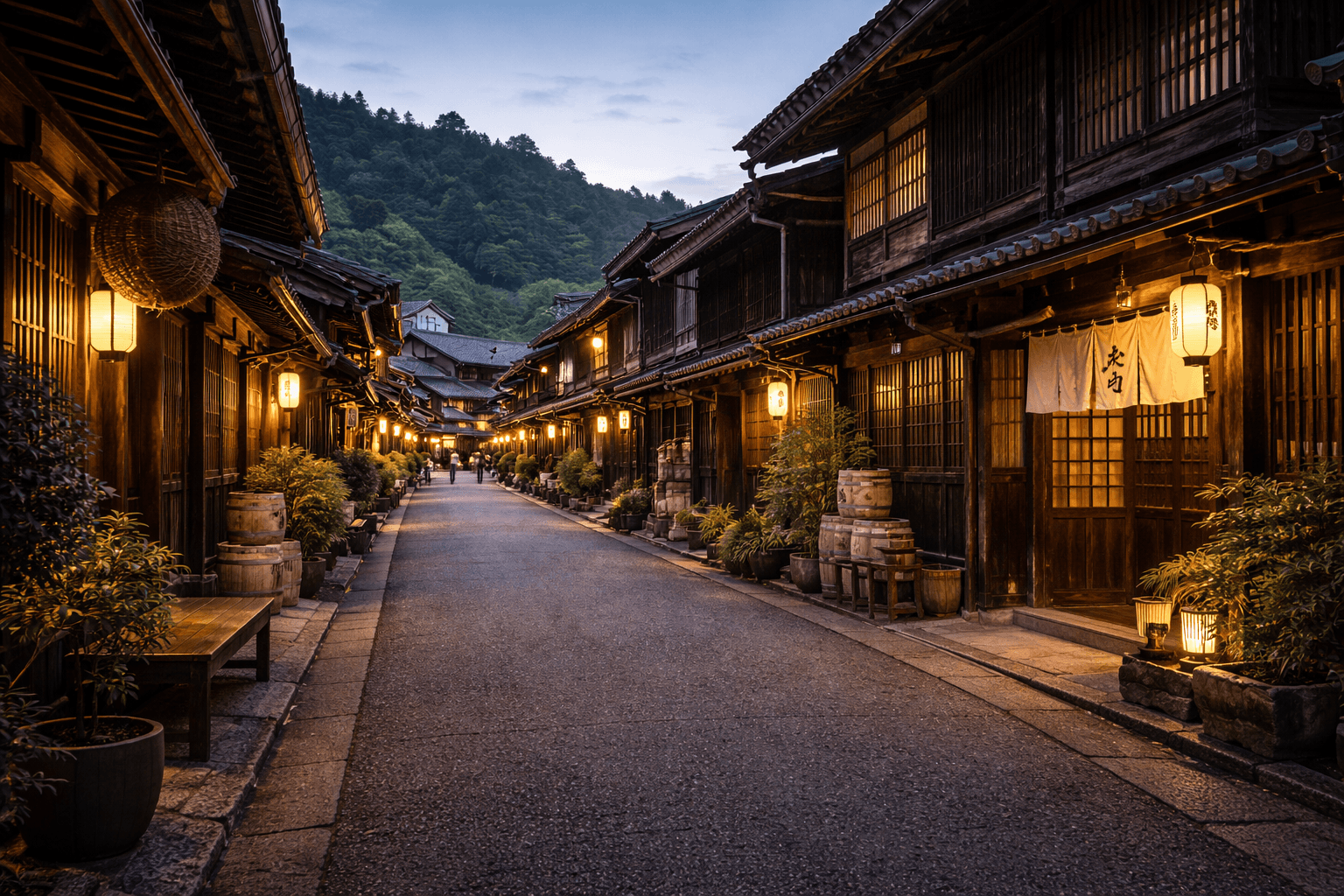
Takayama Old Town (commonly called Sanmachi-suji) is the well-preserved historic district in central Takayama city, famous for its Edo-period merchant houses, narrow lanes, sake breweries and traditional crafts. Though administratively in Gifu Prefecture, Takayama is a common day- or overnight visit for travelers based in Kanazawa. The district offers a concentrated, walkable slice of rural-Japan history and living culture.
This place appeals to history and architecture enthusiasts, photographers, food and sake lovers, and travelers who enjoy slow, pedestrian exploration of small-city Japan.
Why Visit
- Walkable cluster of restored Edo-era merchant houses and warehouses with authentic interiors.
- Intimate atmosphere for tasting local sake, Hida beef snacks, and artisanal crafts.
- Easy to combine with Takayama Morning Markets, museums and the nearby Hida Folk Village.
Main Areas & What to See
Sanmachi-suji (Main Old Street)
- What it is: Three parallel streets lined with traditional wooden machiya (merchant houses) dating from the 17th–19th centuries.
- Why it matters: These buildings give a rare, largely intact example of Edo-period townscape outside major cities.
- What to notice/do: Look for latticework facades, carved eaves, small family-run shops, and daytime sake tastings. Enter museum-style houses like the Takayama Jinya if you want interiors.
Sake Breweries (Kura)
- What it is: Small, centuries-old breweries tucked into the lanes.
- Why it matters: Takayama has a long brewing tradition; many breweries still operate on a family scale.
- What to notice/do: Stop for a tasting flight (ask about non-alcoholic options if needed), buy a limited-edition bottle, and watch the cedar ball (sugidama) that signals a new brew.
Takayama Morning Markets (Jinya-mae & Miyagawa)
- What it is: Two compact morning markets near the river and the old government outpost.
- Why it matters: Local farmers and artisans sell seasonal produce, pickles, crafts and snacks—great for sampling and small souvenirs.
- What to notice/do: Come early (see Best Time); try skewered Hida beef or fresh yams and speak with stallholders about local specialties.
Miyagawa River & Wooden Bridges
- What it is: A scenic stretch with low stone embankments and red wooden bridges framing the old town.
- Why it matters: The riverside offers quieter views and photo opportunities away from the narrow shopfronts.
- What to notice/do: Walk the embankment, notice seasonal decorations, and pause at cafes that overlook the water.
Crafts Shops & Workshops
- What it is: Boutiques selling lacquerware, woodworking, paper goods and rope-dyed textiles from the Hida area.
- Why it matters: The region’s craft traditions are alive and often sold directly by makers.
- What to notice/do: Look for demonstration hours or short workshops (book ahead for hands-on classes).
Best Time to Visit
- Time of day: Arrive early (8:00–9:30) to enjoy markets and quieter lanes; late afternoon (15:00–17:00) is pleasant as shops remain open but crowds thin.
- Crowd considerations: Midday and weekends are busiest, especially in high season. Early morning gives the most peaceful experience.
- Atmosphere differences: Morning = market activity and softness of light; midday = lively shoppers and fuller restaurants; evening = atmospheric lighting and calmer streets.
Seasonal Highlights
- Spring (March–May): Cherry blossoms and cool, comfortable weather. Takayama Spring Festival (Sanno Matsuri) is in April—floats and processions attract large crowds.
- Summer (June–August): Warm and humid; evenings are lively. July–August offers local festivals and night events in some years.
- Autumn (September–November): Clear skies and brilliant fall foliage; Takayama Autumn Festival in October is one of Japan’s most picturesque festivals with ornate floats.
- Winter (December–February): Snow transforms the wooden streets into a quiet, photogenic scene; some shops close on low-traffic weekdays—dress warmly.
Practical Tips
- Cultural etiquette: Speak softly, remove shoes where requested, and ask before photographing people inside shops or private courtyards.
- Photography rules: Exterior street photography is fine; interior museum or shrine spaces may restrict flash or tripods—obey posted signs.
- Payment & access: Many small shops and stalls prefer cash (yen). ATMs that accept international cards are available at Takayama Station and convenience stores. Some small businesses are cash-only.
- Timing & openings: Shops usually open between 9:00–17:00; breweries and restaurants may open later or close mid-afternoon—check ahead for specific places.
- Estimated visit duration: 2–4 hours for a relaxed walk with tastings and a market; half- to full-day if you add museums, a workshop or a meal of Hida beef.
Getting There
- Nearest station: Takayama Station is the main access point; the Old Town is a 10–15 minute walk (or short bus/taxi) from the station.
- Typical travel time from Kanazawa: Expect roughly 2.5–3 hours by train with at least one transfer (commonly via Toyama on the JR Takayama Line). Timetable and transfer options vary—check current schedules the day before travel.
Is It Worth It?
Takayama Old Town is worth visiting if you value authentic small-city streets, local food, and traditional crafts in an intimate setting. It pairs especially well as an overnight stop or a day trip from Kanazawa when you want a quieter, more rustic contrast to urban sightseeing. If your schedule is tight and you prefer modern urban attractions, prioritize carefully—Sanmachi-suji rewards slower, unhurried exploration rather than a quick drive-by.