
Introduction
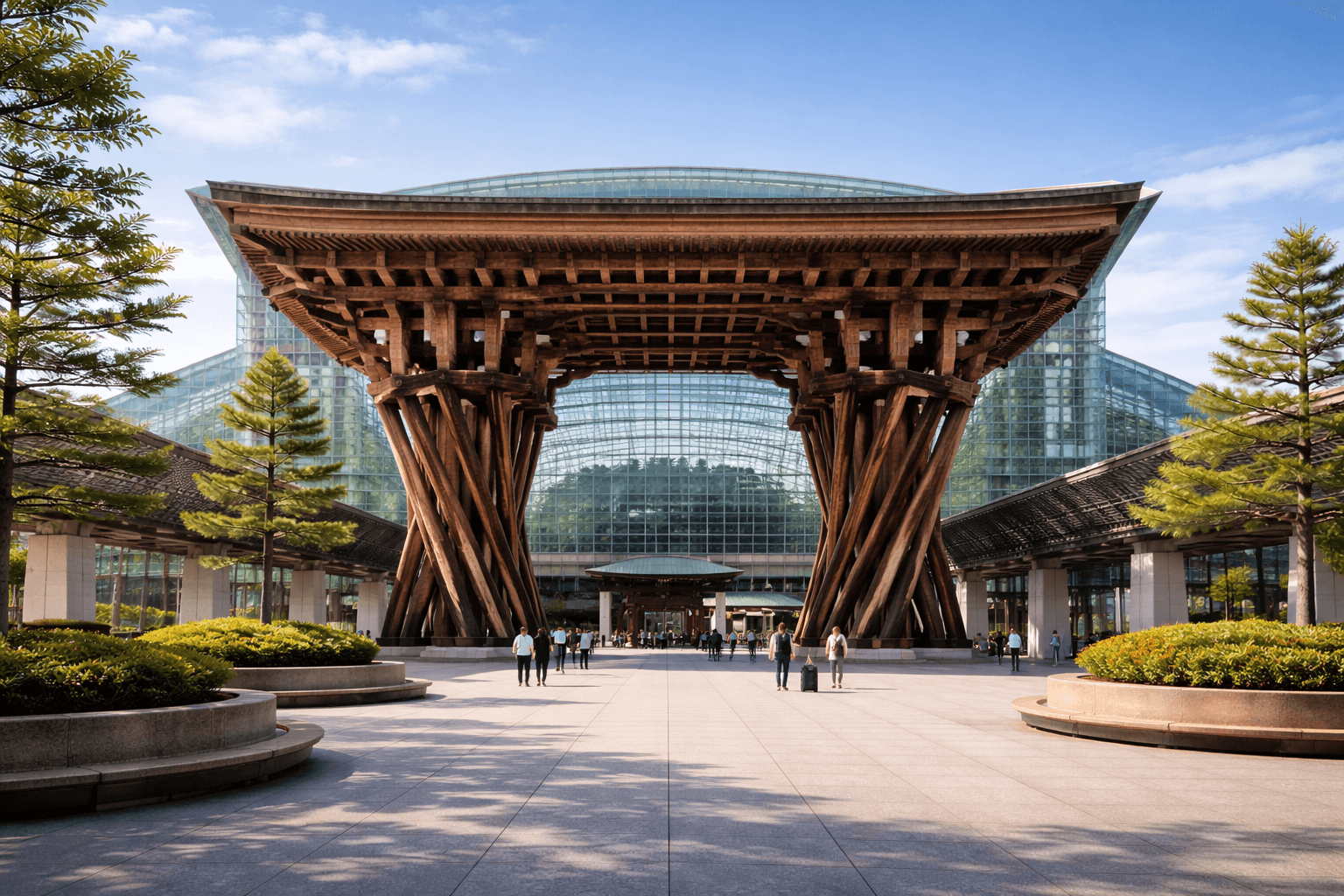
Tsuzumi-mon Gate is the striking wooden gateway that stands at the east (Oumi) entrance of Kanazawa Station. Designed to resemble traditional tsuzumi hand drums and framed by a vast glass dome, it has become a contemporary symbol of Kanazawa — a bridge between the city’s rich samurai and artisan past and its modern transport hub. The gate is both an architectural photo subject and a practical meeting point for travelers arriving by train.
This place appeals to: first-time visitors looking for an iconic Kanazawa photo, travelers using the station as a hub for regional sightseeing (Kenrokuen, Nagamachi), and design-minded visitors interested in modern takes on traditional Japanese motifs.
Why Visit
- Instant, iconic introduction to Kanazawa’s aesthetic fusion of old and new.
- Convenient meeting point and orientation for onward travel.
- Photogenic architecture at different times of day.
- Close access to station amenities, tourist information, buses, and taxis.
Main Areas & What to See
The Tsuzumi-mon Gate (wooden drums)
- What it is: Two large wooden pillars shaped like tsuzumi hand-drums supporting a wide roofed structure.
- Why it matters: It interprets local crafts and theatrical forms in civic architecture, giving a cultural welcome to visitors.
- What to notice/do: Walk beneath the gate to frame photos that include the drum shapes and the station’s glass dome; examine the woodwork and scale up close.
Motenashi (Welcome) Dome
- What it is: The expansive glass-and-steel dome that shelters the plaza in front of the station’s east exit.
- Why it matters: Creates a dramatic, light-filled public space and sets the gate against an airy backdrop.
- What to notice/do: Visit during daylight for reflections and shadow play; in the evening the dome and gate are illuminated for striking photos.
East Plaza (Station Forecourt)
- What it is: Open plaza with benches, signage, and a tourist information center.
- Why it matters: Practical hub for buses, taxis, luggage carts, and guided tours; good place to plan the next leg of your visit.
- What to notice/do: Pick up maps, buy local souvenirs from nearby kiosks, or use the plaza as a rendezvous before heading to Kenrokuen or the Higashi Chaya district.
Nearby Facilities inside Kanazawa Station
- What it is: Shops, restaurants, coin lockers, luggage delivery services, and JR ticket counters.
- Why it matters: Enables easy transitions — store luggage, sample local food (seafood, sweets), and purchase passes.
- What to notice/do: Use coin lockers for a light city walk; try a local bento or sweet at the station before exploring.
Best Time to Visit
- Time of day: Early morning (shortly after station opens) or late afternoon/early evening for softer light and fewer crowds. Night offers attractive illumination.
- Crowd considerations: Peak arrival times are early morning (commuters) and midday when tour groups arrive; weekends and holiday periods are busier.
- Atmosphere differences: Morning feels calm and functional; late afternoon and evening feel more cinematic as lights turn on beneath the dome.
Seasonal Highlights
- Spring: Mild weather makes walking around easy; cherry blossom season draws more visitors to the region (Kenrokuen) but the station itself stays manageable.
- Summer: Longer daylight, occasional heavy rain — the dome provides shelter; it can be humid and busier with domestic travel.
- Autumn: Crisp air and late-afternoon golden light—excellent for photography; nearby gardens show fall color.
- Winter: Snow on nearby streets contrasts nicely with the warm wood tones and lighting of the gate; fewer tourists on weekdays.
Practical Tips
- Cultural etiquette: Keep movement through the gate unobstructed; if taking photos of people ask permission. Speak softly in the plaza during crowded periods.
- Photography rules: Public photography is allowed; avoid using tripods in busy walkways and be mindful of blocking entrances. Indoor shops or staff may restrict photos—always ask.
- Payment, access, timing: The gate and plaza are public and free to visit 24/7. Station facilities have regular hours (shops and counters vary); bring cash and a card — small purchases may prefer cash.
- Estimated visit duration: 10–30 minutes if you’re stopping only for photos and orientation; 1–2 hours if using the station to eat, shop, pick up tourist info, or arrange transfers.
Getting There
- Nearest station: The gate is at the east entrance of Kanazawa Station (the city’s main rail hub).
- Typical travel time from the city center: If your accommodations are in central Kanazawa (Castle Park/Kenrokuen area), expect a 10–20 minute taxi or bus ride; walking from Kenrokuen is roughly 20–30 minutes depending on route and pace.
Is It Worth It?
Yes—Tsuzumi-mon Gate is a compact, worthwhile stop. It offers an immediate sense of Kanazawa’s character, useful station services, and reliable photo opportunities. For travelers with limited time, a short visit pairs perfectly with onward trips to Kenrokuen, museums, or the historic districts. If you’re after architecture or a convenient meeting point, it’s definitely worth a brief detour; repeat visitors may prefer to focus their time on neighborhoods and gardens but will still appreciate the gate as a practical transit landmark.