
Introduction
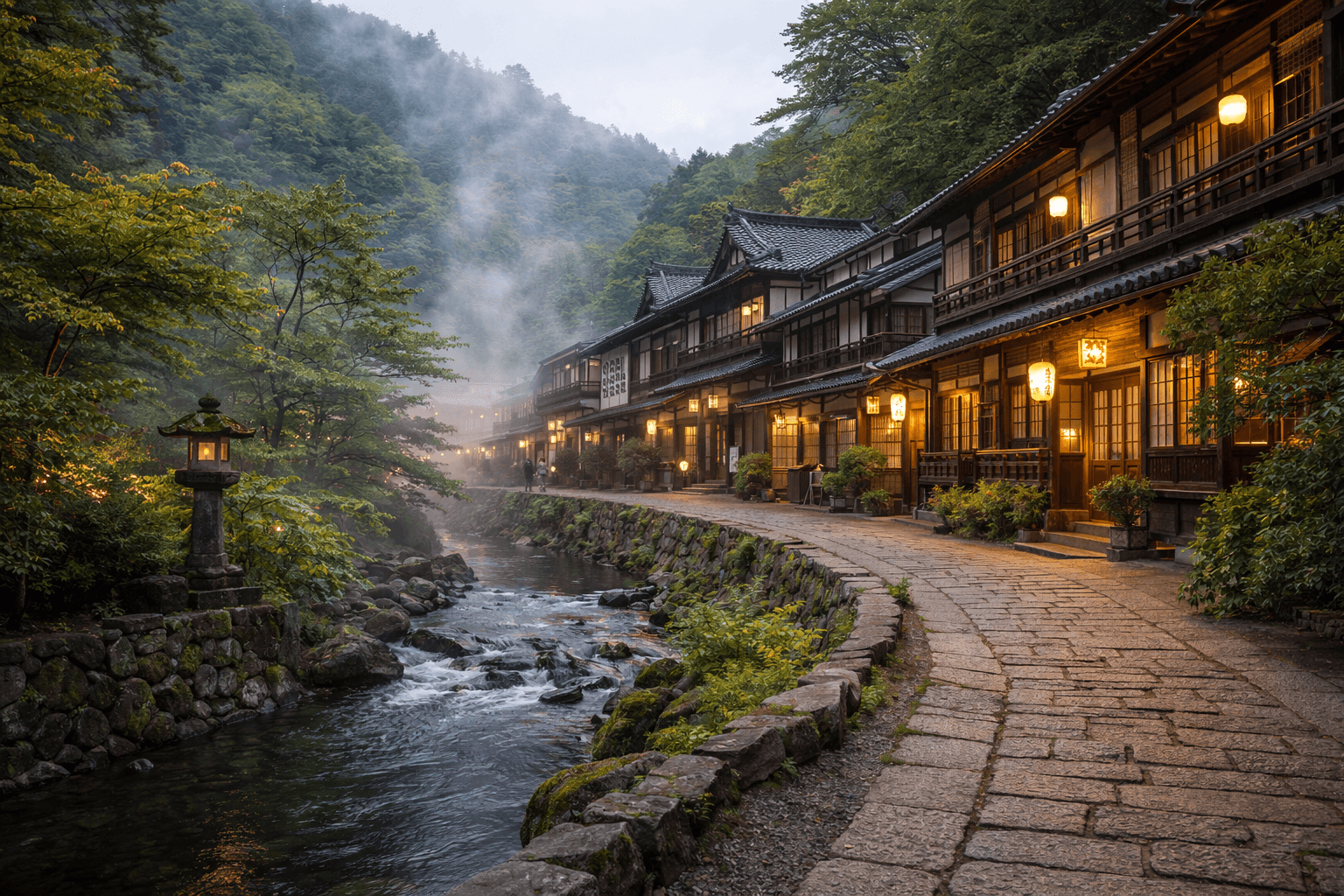
Yuwaku Onsen is a small, historic hot-spring (onsen) village located about 20–30 minutes by bus from central Kanazawa. Tucked into forested hills, it has offered mineral baths and ryokan hospitality for centuries and remains a calm counterpoint to the city’s cultural bustle. Visitors come for restorative baths, simple countryside walks, and a slower, more intimate experience of regional hospitality.
This place appeals to: travelers seeking relaxation, couples and solo visitors wanting traditional ryokan stays, culture-minded visitors who enjoy crafts and quiet landscapes, and day-trippers from Kanazawa looking to unwind.
Why Visit
- Natural hot springs with a range of public and private baths.
- Traditional ryokan and kaiseki meals for an authentic overnight experience.
- Scenic, walkable village with nearby temples and forest trails.
- Close to Kanazawa’s attractions but markedly quieter and restorative.
Main Areas & What to See
Yuwaku Village Center
- What it is: The small cluster of ryokan, public baths, and a handful of shops and cafes.
- Why it matters: This is the social and service hub where you’ll arrange baths, meals, and short walks.
- What to notice/do: Book a ryokan dinner (kaiseki) in advance; try the public bathhouse to compare waters.
Public Bathhouses (Soto-yu and Local Sentō)
- What it is: Communal hot-spring facilities open to day visitors and guests.
- Why it matters: The mineral-rich waters are the main draw; different facilities offer varied atmospheres and views.
- What to notice/do: Follow bathing etiquette (wash before entering, no towels in the water), and bring change for entry and vending machines.
Ryokan Rooms & Private Onsen (Kashikiri)
- What it is: Traditional inns offering tatami rooms and sometimes private baths.
- Why it matters: Staying overnight is the best way to experience local hospitality and multi-course meals.
- What to notice/do: Reserve rooms with private baths if you prefer privacy; enjoy the unhurried pace after the evening meal.
Natadera Temple & Nearby Trails
- What it is: A historic temple and small network of walking paths and viewpoints near Yuwaku.
- Why it matters: Offers a chance to stretch your legs, see local foliage, and view the valley from higher ground.
- What to notice/do: Wear comfortable shoes; check opening hours for temples and avoid noisy behavior.
Local Crafts & Cafés
- What it is: Small shops selling regional crafts and a couple of cafes serving local sweets and tea.
- Why it matters: Adds cultural texture and a chance to buy handcrafted souvenirs.
- What to notice/do: Browse for simple ceramics or lacquerware and sample yokan or matcha-based sweets.
Best Time to Visit
- Time of day: Early morning and late evening are most peaceful—morning mist and evening steam are atmospheric. Afternoon is busiest for day-trippers.
- Crowd considerations: Weekdays and off-peak seasons (outside Golden Week, Obon, and major holidays) are far quieter. Weekend afternoons see more local visitors.
- Atmosphere differences: Mornings are contemplative; after sunset it becomes intimate and restful, ideal for bathing and dining.
Seasonal Highlights
- Spring: Fresh green foliage and comfortable temperatures; fewer insects than summer.
- Summer: Lush forest scenery and cooler evenings—good for escaping city heat but busier on weekends.
- Autumn: Spectacular foliage in surrounding hills (late October–early November), a favorite time for photographers.
- Winter: Quiet, often snow-dusted landscapes and especially cozy baths—perfect for a romantic or restorative stay.
Note: Local festivals are modest; check Kanazawa event calendars if you want to coordinate visits with seasonal cultural events.
Practical Tips
- Cultural etiquette: Shower thoroughly before entering baths; no swimsuits in communal onsen; modesty towels should not be submerged.
- Photography: Respect privacy—don't photograph bath areas or other guests. Outside the baths, ask before photographing ryokan interiors or staff.
- Payment & access: Many small ryokan accept cash; carry yen for small purchases. Larger inns accept cards but confirm when booking.
- Timing tips: Book ryokan and dinner in advance, especially during autumn foliage and holiday periods.
- Estimated visit duration: Day-trip (2–4 hours) can include a public bath and a short walk; overnight stay (1 night) recommended to fully relax and enjoy dinner and breakfast.
Getting There
- Nearest access point: Kanazawa Station is the main hub. From there, take the Hokuriku Railroad bus toward Yuwaku Onsen (approx. 25–30 minutes) or a taxi (20–30 minutes depending on traffic).
- Typical travel time from city center: About 20–30 minutes from Kanazawa Station; add time for bus schedules if traveling outside peak hours.
Is It Worth It?
Yes—especially if you value calm, authentic onsen experiences close to Kanazawa. Yuwaku Onsen is not a flashy resort but a quietly rewarding stop: ideal for slowing down, appreciating traditional ryokan hospitality, and enjoying seasonal nature. For travelers pressed for time, a brief visit adds contrast to Kanazawa’s museums and gardens; for those seeking rest, an overnight stay is well worth it.