
Introduction
Fushimi Inari Taisha is Kyoto’s principal shrine dedicated to Inari, the Shinto deity of rice, prosperity, and business. Famous worldwide for its seemingly endless rows of vermilion torii gates that climb Mount Inari, the shrine mixes active religious practice with a uniquely photogenic landscape. It appeals to first-time visitors seeking an iconic Kyoto image, returning travelers who want a quieter walk up the mountain, and cultural travelers interested in Shinto ritual and local commerce.
Why Visit
- Walk through the dense tunnels of thousands of torii gates (senbon torii) — an instantly recognizable experience.
- Combine shrine architecture, statue-lined approaches, and wooded mountain trails for a varied outing.
- Observe living religious practices and small merchants selling local offerings and snacks.
- Easy to reach from Kyoto Station and free to enter, making it an efficient stop on a Kyoto itinerary.
Main Areas & What to See
Romon (Main Gate)
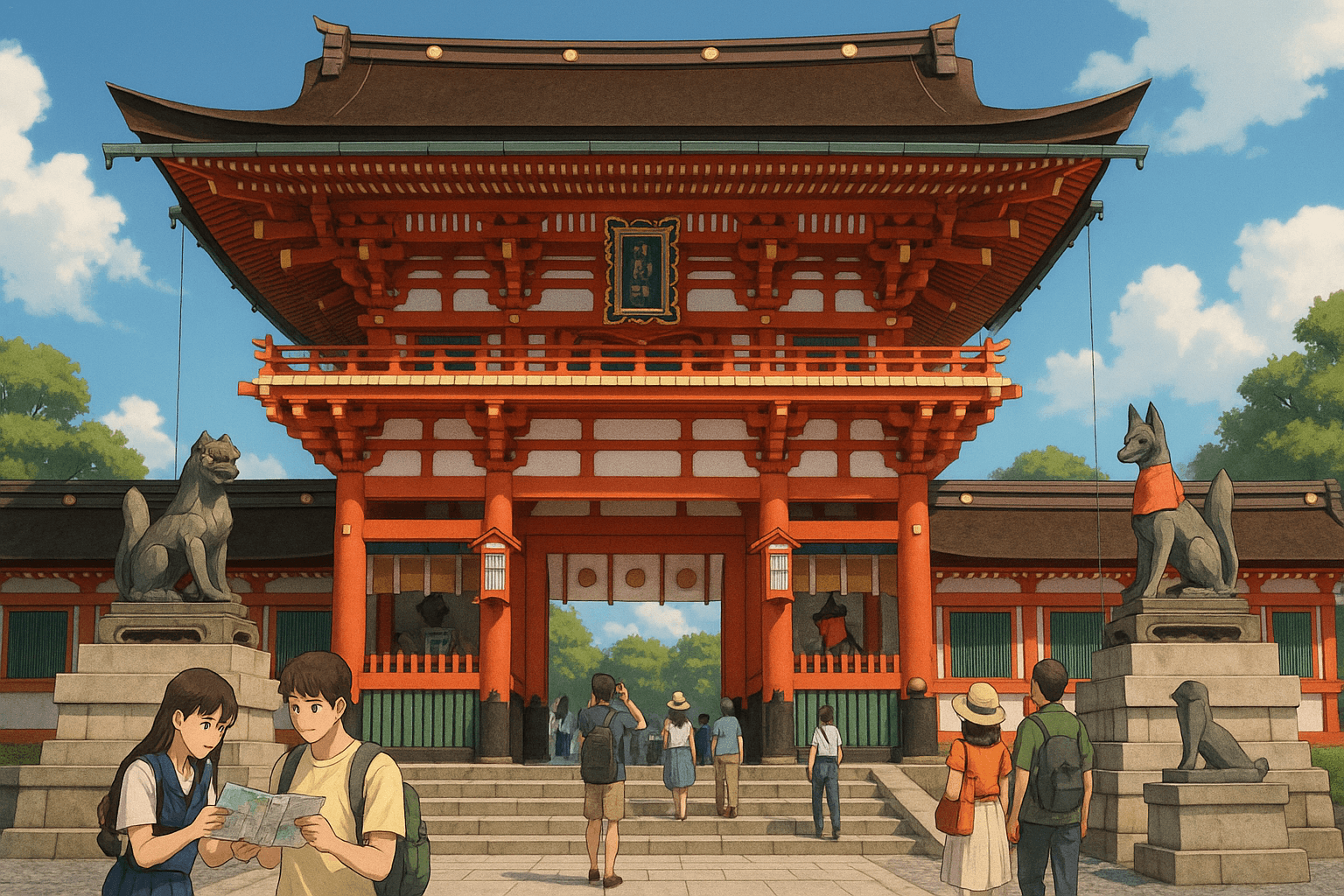
What it is: A large, two-storied gate that marks the approach to the shrine complex. Why it matters: It sets the tone and is a common meeting point for guided tours and groups. What to notice/do: Pause here for a first photo and read the large wooden plaques with donor names.
Honden (Main Shrine) and Haiden (Worship Hall)
What it is: The central worship buildings where offerings are made. Why it matters: This is the focal point of ritual at the shrine and where prayers for business and success are offered. What to notice/do: Follow the customary purification and prayer etiquette (see Practical Tips); avoid loud behavior and be mindful of worshippers.
Senbon Torii (Thousand Torii Gates)
What it is: The famous tunnels formed by thousands of closely spaced torii donated by individuals and companies. Why it matters: They create the iconic visuals and a contemplative walking route up the mountain. What to notice/do: Walk into the tunnels, noticing donor inscriptions on each gate. The path forks frequently — choose routes based on time and energy.
Okusha Hohaisho and Yotsutsuji Summit Area
What it is: Mid- and upper-mountain shrines and viewing points, including the Yotsutsuji lookout with views over Kyoto. Why it matters: These spots reward the climb with quieter shrine spaces and panoramic views. What to notice/do: If you have time, continue past the main torii area to experience more secluded shrines and forested trails.
Fox Statues (Kitsune)
What it is: Stone and bronze fox statues placed throughout the grounds, often holding symbolic items. Why it matters: Foxes are messengers of Inari and carry complex symbolism tied to prosperity and protection. What to notice/do: Respect the small votive offerings placed near these statues.
Best Time to Visit
Time of day recommendations:
- Early morning (before 8:00) — best for smaller crowds, cool light for photography, peaceful atmosphere.
- Late afternoon / early evening — golden light and quieter after peak tourist hours; the summit can be cooler.
- Night — the shrine grounds are lit and open 24 hours, offering a quieter, atmospheric visit (exercise caution on trails after dark).
Crowd considerations:
- Midday is busiest, especially weekends and national holidays. The torii paths can become congested.
- Arrive early or later in the afternoon to avoid tour-group peaks.
Atmosphere differences:
- Morning: quiet, meditative, local worshippers present.
- Midday: lively, busy, many photographers and tour groups.
- Evening/night: serene but darker; fewer vendors remain open.
Seasonal Highlights
- Spring (Mar–May): Cherry and early-season blooms in and around Kyoto enhance views; mild weather.
- Summer (Jun–Aug): Dense greenery and humid days; expect more mosquitoes on forested trails. Evening visits feel cooler.
- Autumn (Sep–Nov): Fall colors intensify the woodland setting, especially around the summit — very popular time to visit.
- Winter (Dec–Feb): Crisp air and fewer tourists; torii colors contrast sharply with bare branches and occasional frost.
Festivals / special events:
- Hatsuuma and New Year’s visits draw large numbers of worshippers making first prayers of the year; expect heavy crowds during New Year’s period.
Practical Tips
Cultural etiquette:
- Purify at the chozuya (water basin): rinse hands and mouth before approaching the main worship area.
- At the haiden, bow twice, clap twice, make your prayer, then bow once. Keep voices low and respectful.
- Don’t block paths or shrine entrances while taking photos or resting.
Photography rules/restrictions:
- Photography is generally allowed in most outdoor areas, including the torii. Be respectful near worshippers and inside spaces where signs prohibit photos.
- Avoid standing in the middle of narrow paths for long photo shoots; keep groups moving to let others pass.
Payment, access, timing tips:
- No admission fee; most areas open 24 hours. Individual sub-shrines or museum exhibits (if any) may charge a small entry fee.
- Many small stalls and some auxiliary facilities close early (around late afternoon), so buy snacks or souvenirs earlier in the day.
Estimated visit duration:
- Quick visit: 30–45 minutes (see the lower shrine and first stretch of torii).
- Typical visit: 1–2 hours (including a moderate walk through the main torii route).
- Full hike: 2–3 hours (complete climb to the summit and return, with stops).
Getting There
Nearest stations:
- Inari Station (JR Nara Line) — usually the easiest: a 2–3 minute walk from the station to the shrine entrance.
- Fushimi-Inari Station (Keihan Main Line) — about a 5–7 minute walk.
Typical travel time from the city center:
- From Kyoto Station: 5 minutes by JR Nara Line to Inari Station (plus a 2–3 minute walk).
- From central Kyoto (e.g., Gion/Shijo area): 10–20 minutes by train or taxi depending on route and connections.
Is It Worth It?
Yes — Fushimi Inari Taisha delivers a rare blend of living religious practice, memorable visuals, and easy access. For a brief stop it’s an efficient must-see; for those who linger and climb, it becomes a quiet, layered experience away from Kyoto’s busiest temples. Expect crowds in peak hours but plan your timing and a modest route to get a personally rewarding visit.