
Introduction
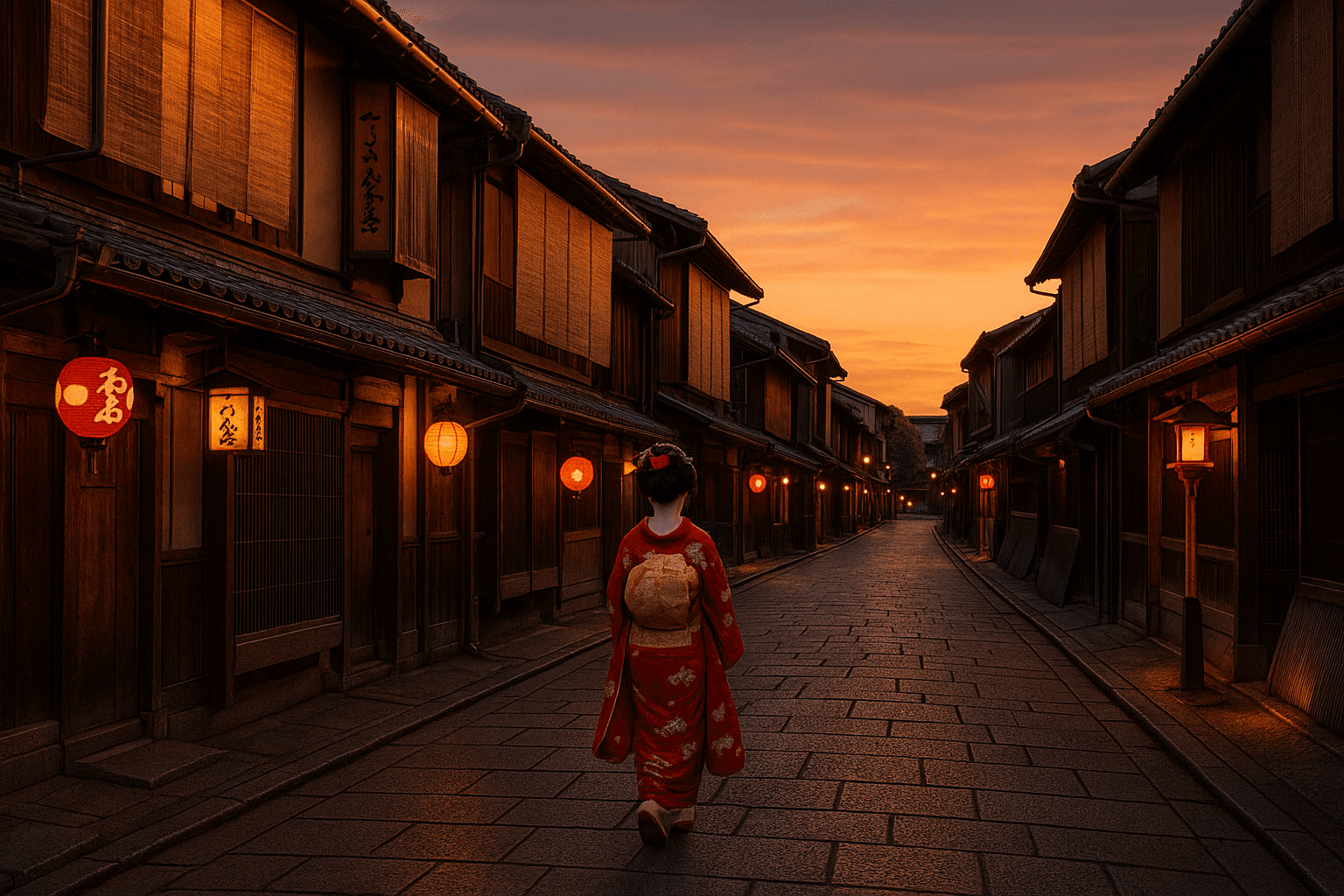
Gion is Kyoto’s most famous traditional entertainment district, where wooden machiya townhouses, tea houses (ochaya), and narrow lantern-lit streets preserve a sense of old Japan. Historically the heart of Kyoto’s pleasure quarters and the training ground for geisha (known locally as geiko) and apprentice maiko, Gion blends living tradition with everyday city life. It appeals to culture seekers, photographers, and travelers who want a compact, atmospheric slice of Kyoto’s historical streetscape.
Why Visit
- Walkable streets lined with classical wooden architecture and small shops.
- Chance to glimpse geiko/maiko in authentic surroundings (respectfully, not a show).
- Tea houses, traditional dining (kaiseki), and serene shrines offer varied experiences.
- Proximity to other central Kyoto attractions (Yasaka Shrine, Shirakawa).
Main Areas & What to See
Hanamikoji Street
- What it is: The main north–south artery through central Gion, flanked by preserved machiya.
- Why it matters: It’s the iconic image of Gion—tea houses, fine dining, and carefully maintained façades.
- What to notice/do: Stroll slowly at dusk, admire wooden lattices and noren curtains, and watch for geiko/maiko moving between appointments (do not approach or block them).
Shirakawa Area (Shirakawa Canal and Minamiza side)
- What it is: A quieter, photogenic canal lined with willow trees and riverside restaurants.
- Why it matters: Offers a tranquil contrast to busier Hanamikoji; excellent for low-light photography and reflective scenes.
- What to notice/do: Walk the riverside paths, sit in a riverside café, and observe the traditional river-side lanterns after sunset.
Yasaka Shrine (nearby)
- What it is: Large, active Shinto shrine at Gion’s eastern edge.
- Why it matters: Central to many local festivals and a cultural hub for visitors and residents.
- What to notice/do: Visit early morning for quiet or during festival times (e.g., Gion Matsuri in July) for atmosphere—shrine grounds are free to enter.
Gion Corner (theater)
- What it is: A showcase theater offering condensed performances of traditional Japanese arts.
- Why it matters: Good way to sample tea ceremony, kyogen, bunraku, and traditional dance in one sitting.
- What to notice/do: Check performance times and book in advance on busy days; performances are short and tourist-friendly.
Local Tea Houses and Restaurants
- What it is: Private ochaya and public restaurants offering kaiseki and other Kyoto cuisine.
- Why it matters: Dining here ranges from accessible meals to exclusive, reservation-only experiences.
- What to notice/do: If seeking an authentic ochaya experience with geiko/maiko, work through a reputable guide or matchmaker—do not expect walk-in access.
Best Time to Visit
- Time of day: Early morning (7–9 AM) for quiet streets and softer light; dusk to early evening (5–8 PM) for lantern-lit atmosphere and higher chances of seeing geiko/maiko.
- Crowd considerations: Midday and weekends are busiest; narrow streets can feel congested. Arrive early or later in the evening to avoid peak tourist flows.
- Atmosphere differences: Mornings feel calm and local; evenings are atmospheric, photogenic, and more romantic but busier.
Seasonal Highlights
- Spring: Cherry blossoms in nearby Maruyama Park and along canal edges create a delicate backdrop (late March–April).
- Summer: Gion Matsuri (July) is Kyoto’s largest festival—expect crowds, processions, and intense atmosphere if visiting then.
- Autumn: Fall colors (November) add dramatic reds and golds to the streets and nearby temple gardens.
- Winter: Crisp air and quieter streets; occasional illuminated events make for peaceful evening walks.
Practical Tips
- Cultural etiquette: Be respectful and quiet. If you see geiko/maiko, give them space—do not call out, chase, or ask for photos. A discreet, non-flash photo from a respectful distance is acceptable only if they are in a public space and not clearly hurrying.
- Photography rules: Inside tea houses and private properties photography is usually forbidden. Look for signage; always ask permission before photographing people close-up.
- Payment/access: Many small shops and eateries accept cash only—carry yen. Major restaurants will take cards but confirm in advance.
- Timing: Allow 1–3 hours for a thorough walk; a meal or show will add 1–2 hours.
- Mobility: Streets are cobbled and uneven in places; wear comfortable shoes and be prepared for narrow sidewalks.
Getting There
- Nearest stations: Kawaramachi Station (Hankyu Line) and Gion-Shijo Station (Keihan Line) are the closest for central Gion; Kyoto Station is the main city hub.
- Typical travel time from city center: From Kyoto Station, it’s 10–15 minutes by taxi; 15–20 minutes by public transit (subway + walk or direct train). From central areas like Pontocho or Shijo, Gion is often a 5–10 minute walk.
Is It Worth It?
Gion is worth visiting for the atmosphere—its preserved streets, chance encounters with living tradition, and convenient location make it a compact cultural highlight of Kyoto. For first-timers, a focused walk at dawn or dusk plus a meal gives an authentic experience; repeat visitors can discover quieter alleys, seasonal events, and less touristy tea houses. Be realistic: Gion’s charm is subtle and respectful behavior is essential to preserving it.