
Introduction
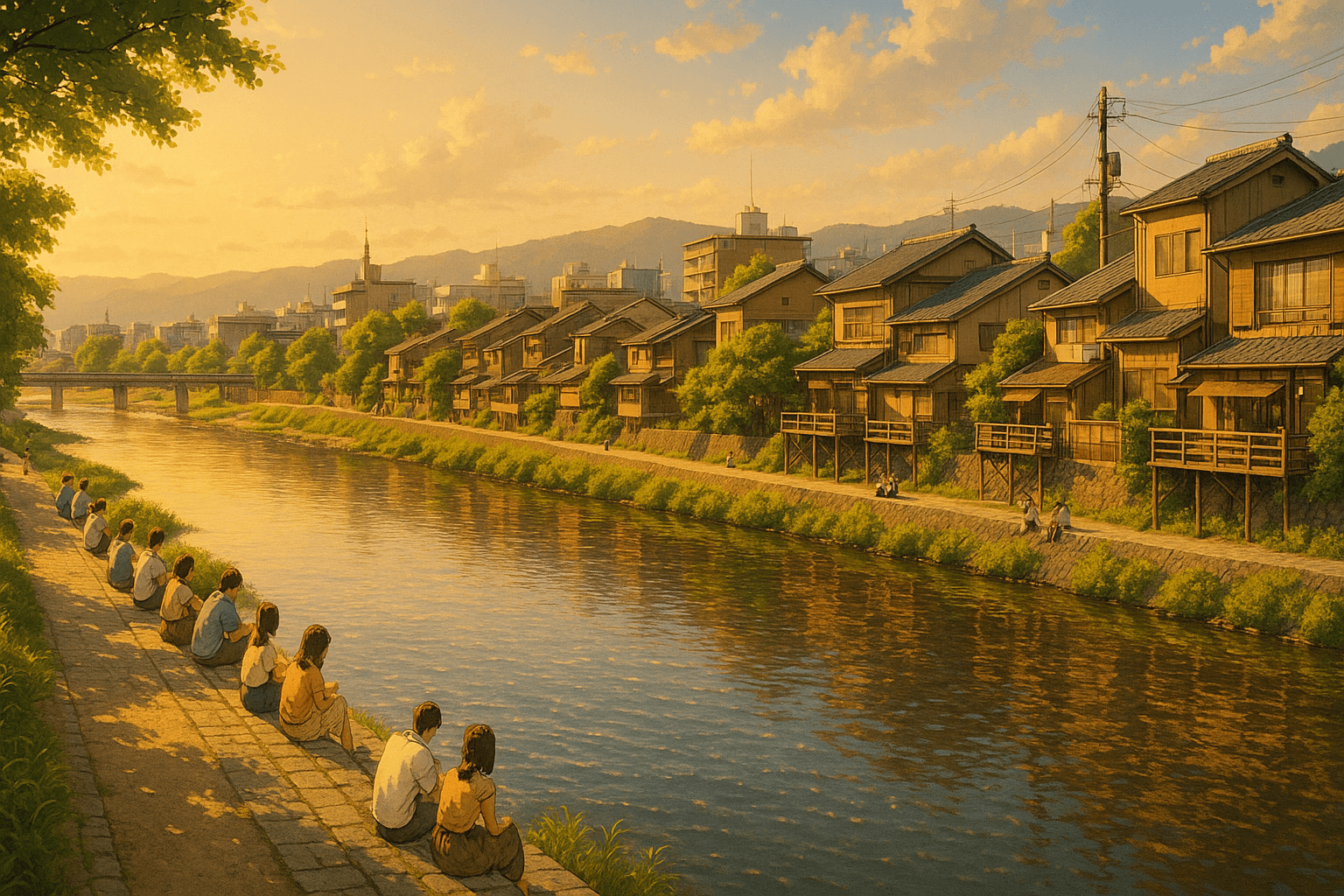
The Kamo River (Kamo-gawa) is Kyoto’s defining urban river: a long, gently flowing waterway that threads north–south through the city, bordered by walking paths, cafés, shrines and neighborhoods. It’s as much a local gathering place as a scenic feature — where commuters, students, couples and street performers meet, where city life slows down, and where Kyoto’s seasonal character is easiest to read.
Cultural and experiential significance: the riverbanks have been public social space for centuries; they feature in classical poetry, everyday rituals and modern city life. As a living public space, the Kamo River offers quiet reflection, people-watching and easy access to many of Kyoto’s historic districts.
Who it appeals to: first-time visitors seeking a relaxed introduction to Kyoto’s atmosphere; returning travelers who want local rhythms rather than packed temples; walkers, runners, photographers and anyone looking for a low-cost, flexible activity.
Why Visit
- Serene urban strolls with clear views of seasonal changes (cherry blossoms, autumn colors, snow in winter).
- Easy access to major neighborhoods (Gion, Pontocho, Higashiyama) and nightlife along the riverside alleys.
- People-watching and casual local life — street musicians, picnics, and riverside cafés.
- Photogenic bridges and reflections at dawn/dusk.
- A low-cost, flexible addition to any Kyoto itinerary.
Main Areas & What to See
Shijo–Sanjo (Central Kyoto)
- What it is: the busiest central stretch near downtown shopping streets and major bridges (Shijo, Sanjo).
- Why it matters: acts as a lively gateway between the commercial center and historic neighborhoods.
- What to notice/do: walk along the riverside promenade, cross the bridges for views downriver, stop at riverside cafés or small izakaya alleys (Pontocho is a short detour).
Pontocho and Gion (East bank, central)
- What it is: narrow, atmospheric alleys and traditional tea‑house districts adjacent to the river.
- Why it matters: a concentration of traditional architecture, nightlife, and chances to glimpse geisha moving between appointments.
- What to notice/do: stroll after sunset when lanterns glow, look for wooden machiya buildings, respect privacy (don’t approach geisha for photos).
Kamogawa Delta (Kamogawa Oike intersection, southern stretch)
- What it is: where the Kamo River meets the nearby Takase- and Horikawa-aligned waterways and open green spaces.
- Why it matters: local hub for picnics, festivals, and weekend gatherings.
- What to notice/do: sit on the grassy banks, watch riverside activity, join locals walking dogs or playing music.
Northern stretches toward Demachiyanagi
- What it is: quieter residential and university areas upstream with tree-lined paths.
- Why it matters: more peaceful walking and cycling, close to Philosopher’s Path and smaller shrines.
- What to notice/do: rent a bicycle nearby, enjoy long walks without heavy tourist crowds.
Bridges and Viewing Points
- What they are: dozens of small bridges (Shijo, Gojo, Sanjo, Demachiyanagi) each offering different angles on the river and city.
- Why they matter: sunrise/sunset reflections and framing of Kyoto’s skyline make them top photo spots.
- What to notice/do: pick a bridge for golden-hour photos; avoid blocking pedestrian traffic when shooting.
Best Time to Visit
- Time of day: early morning (sunrise to mid-morning) for calm light, cooler temperatures and few people; late afternoon into early evening for golden light and lively atmosphere; after dark in central stretches for lantern-lit charm.
- Crowd considerations: central stretches (Shijo–Sanjo, Pontocho) get busiest late afternoon–evening, especially on weekends; northern stretches are noticeably quieter.
- Atmosphere differences: mornings feel contemplative and local; evenings feel social and festive, especially near restaurants and bars.
Seasonal Highlights
- Spring (late March–April): cherry blossoms along parts of the river create classic hanami (flower-viewing) scenes; expect crowds on warm weekend days.
- Summer (June–August): verdant banks and occasional river-side festivals; evenings are pleasant but can be humid — river breezes help.
- Autumn (November): colorful foliage on nearby trees creates dramatic reflections; a prime time for photographers.
- Winter (December–February): quieter walks, occasional frost or light snow that transforms the city into a minimalist scene.
- Festivals/special events: various local festivals use the riverside at times (dates vary); seasonal lantern displays or university events may appear — check local listings if you're traveling during festival season.
Practical Tips
- Cultural etiquette: keep noise respectful, especially near residential stretches and shrines; don’t picnic on private property or block pathways; give space to locals and ritual processions.
- Photography: public riverside areas are fine to photograph; avoid taking intrusive photos of people (especially geisha or private gatherings) and never use flash directly on people at night.
- Payment/access/timing tips: the river is free and open 24/7; nearby cafés and restaurants may have limited hours — bring cash for small vendors though most shops accept cards in central Kyoto.
- Safety: riverbanks can be slippery when wet — wear sensible shoes; keep valuables secure in crowded spots.
- Estimated visit duration: 30 minutes for a quick stretch, 1–2 hours for a relaxed riverside walk with stops, half a day if combining cafés, Pontocho and nearby temples.
Getting There
- Nearest stations and access points:
- Shijo Station (Karasuma/Shijo area): short walk to central Shijo stretch.
- Sanjo Station (Keihan Line): convenient for Sanjo Bridge and Gion access.
- Gion-Shijo Station (Keihan Line): ideal for Pontocho and Gion areas.
- Kyoto Station: a 10–20 minute taxi or bus ride to central Kamo River areas (or ~25–30 minutes by subway + walk depending on specific route).
- Demachiyanagi Station (northern stretch): direct access to quieter upstream walks.
- Typical travel time from the city center: if you consider Kyoto Station as the city hub, most central river stretches are 10–25 minutes away by public transport or taxi.
Is It Worth It?
Yes — the Kamo River is a low-effort, high-reward experience: it requires no ticket, offers a true slice of Kyoto life, and pairs well with nearby historic sites. For a short visit it provides scenic variety and atmosphere; for longer stays it becomes one of those quiet, local rituals that make a trip feel lived-in rather than just seen. If you want temple-heavy sightseeing, treat the river as a calming interlude; if you want local color and relaxed exploration, prioritize time here.