
Introduction
Kiyomizu-dera (清水寺) is one of Kyoto's most iconic Buddhist temples, celebrated for its wooden stage that juts from the hillside and affords sweeping views of the city and maple-studded slopes. Founded in the late 8th century and rebuilt several times, the temple is both a religious site and a powerful symbol of Kyoto's cultural continuity. It appeals to first-time visitors seeking a classic Kyoto experience, returning travelers who want seasonal photography or quieter perspectives, and anyone interested in architecture, spiritual sites, or scenic viewpoints.
Why Visit
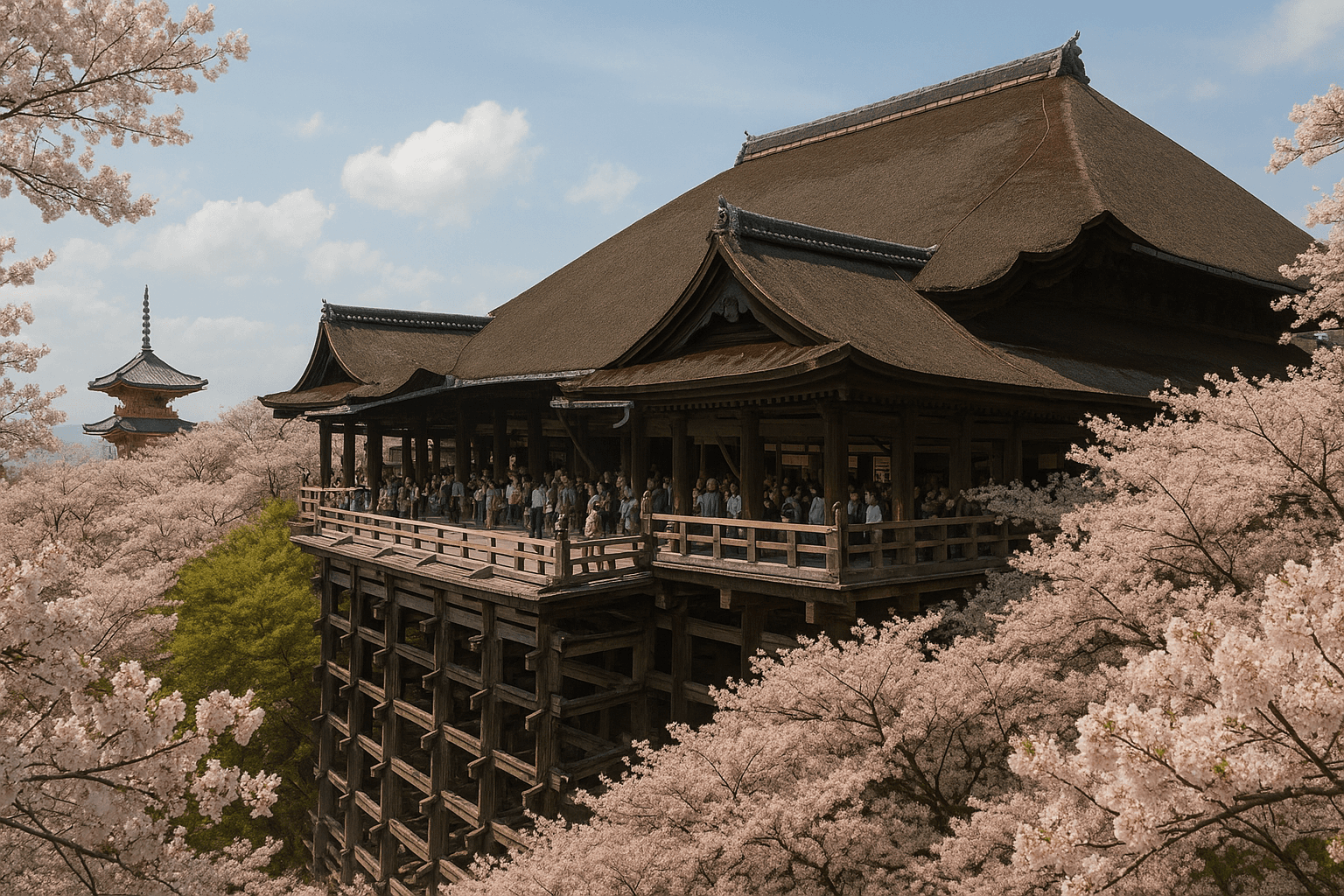
- The dramatic wooden terrace (Kiyomizu-no-butai) with panoramic views of Kyoto.
- Historic temple buildings and atmospheric walkways that evoke traditional Japan.
- Spectacular seasonal foliage (autumn) and cherry blossoms (spring).
- Close proximity to Higashiyama streets for food, crafts, and wandering.
Main Areas & What to See
-
Kiyomizu-no-butai (the Main Hall Stage)
- What it is: A large wooden veranda supported by tall pillars projecting from the main hall.
- Why it matters: The stage’s construction (without nails) is an engineering and aesthetic highlight; it has been a place of pilgrimage and viewing for centuries.
- What to notice/do: Stand at the railing for views of Kyoto; feel the texture of the weathered wood; avoid blocking passage during busy times.
-
Hondo (Main Hall)
- What it is: The temple’s principal hall housing a revered statue of Kannon (the deity of mercy).
- Why it matters: The hall is the spiritual heart of the complex and the starting point for many worship practices.
- What to notice/do: Observe offerings and prayers respectfully; quiet your voice and phones.
-
Jishu Shrine
- What it is: A small shrine within the compound dedicated to love and matchmaking.
- Why it matters: Popular for those seeking romantic luck; has two “love stones” placed apart.
- What to notice/do: Try the blind-walking test between the stones (used as a fun local custom), but be mindful of crowds and respectful of worshippers.
-
Otowa Waterfall
- What it is: Three channels of water that flow into a basin beneath the stage.
- Why it matters: Visitors drink from the streams for wisdom, longevity, and success in studies—each stream represents a different blessing.
- What to notice/do: Use provided cups carefully and queue courteously; choose one stream if you do not want to take multiple blessings.
-
Higashiyama Slope & Ninenzaka/Sannenzaka Streets
- What it is: Historic pedestrian streets leading down from Kiyomizu-dera lined with shops and tea houses.
- Why it matters: These streets are ideal for sampling local snacks, buying crafts, and experiencing an atmospheric stroll before or after the temple visit.
- What to notice/do: Browse early for quieter shopping; try yatsuhashi (local sweet) and small pottery shops.
Best Time to Visit
- Time of day: Early morning (shortly after opening) for the quietest experience and softer light; late afternoon toward sunset for dramatic views from the stage.
- Crowd considerations: Midday and early evening (especially during seasonal illumination events) are busiest—expect long lines to the main stage and photo spots.
- Atmosphere differences: Mornings feel contemplative and calmer; afternoons are lively with tour groups and street vendors; evenings (during special illuminations) are atmospheric but crowded.
Seasonal Highlights
- Spring (late March–April): Cherry blossoms transform the slopes; prime photo opportunities and heavy crowds.
- Summer (June–August): Lush green hillside and slightly cooler breezes on the stage; more humid and busy with domestic tourists.
- Autumn (mid-October–early December): Peak fall colors—arguably the most popular time; crowds increase dramatically, especially on weekends and at night during illumination.
- Winter (December–February): Fewer tourists and clearer air; some mornings may be crisp with distant views; limited special events but peaceful exploration.
- Special events: Seasonal night illuminations (spring cherry and autumn foliage) draw large crowds—check local schedules if you want to attend.
Practical Tips
- Cultural etiquette: Dress modestly; remove hats and keep voices low inside halls; do not walk on interior wooden areas unless allowed; follow signs and temple staff instructions.
- Photography: Exterior photography is allowed; be discreet and avoid using tripods or blocking pathways; flash and tripods may be restricted during special events—respect notice boards and staff directions.
- Payment & access: There is an admission fee; cash is widely accepted, but bring some coins/bills as smaller stalls may not take cards. Some ticket counters close before gate closing—arrive with time to purchase.
- Timing & peak duration: Plan 45–90 minutes for a standard visit; allow 2–3 hours if you intend to explore the surrounding Higashiyama streets and take photos.
- Accessibility: The site is on a hillside with many steps and uneven paths; wear comfortable shoes and plan for mobility limitations.
Getting There
- Nearest stations: The closest public-transport access is Kiyomizu-michi or Gojozaka bus stops served by Kyoto City buses; from Kyoto Station, take bus 100 or 206 to Gojozaka or Kiyomizu-michi (about 15–20 minutes by bus plus a short uphill walk). Alternatively, walk ~20–30 minutes from Gion-Shijo or use a taxi for faster uphill access.
- Typical travel time from city center: From Kyoto Station to Kiyomizu-dera: roughly 15–30 minutes depending on traffic and chosen transport (bus or taxi).
Is It Worth It?
Kiyomizu-dera is worth visiting for its unique wooden stage, layered history, and the scenic approach through Higashiyama. Expect crowds, especially during cherry blossom and autumn color seasons, but the site still rewards with memorable views and cultural atmosphere. For a more contemplative visit, go early or pair the trip with nearby temples and a slow walk down Ninenzaka and Sannenzaka.