
Introduction
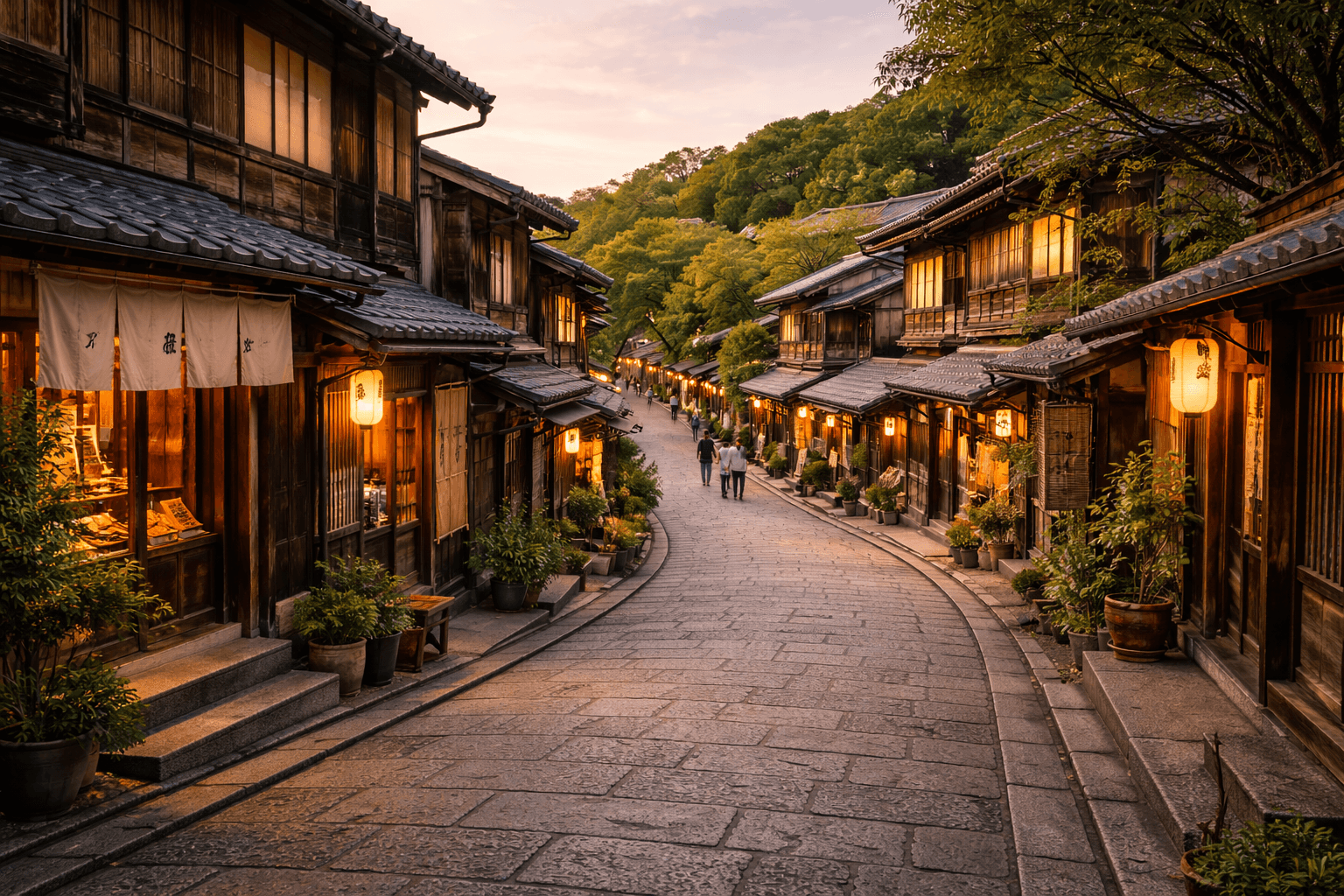
Ninenzaka (also spelled "Ninen-zaka") is a gently sloping, cobblestone street in Kyoto’s historic Higashiyama district. Lined with preserved wooden machiya houses, tea shops, and small craft stores, it forms part of the pedestrian route up to Kiyomizu-dera Temple. The street evokes traditional Kyoto: quiet, photogenic and rooted in Edo- and Meiji-period townscape.
Ninenzaka is culturally significant as a preserved streetscape that shows how Kyoto’s commercial neighborhoods looked for centuries. It’s an atmospheric place to experience local crafts, sweets, and architecture while walking toward one of the city’s most famous temples.
It appeals to:
- First-time visitors seeking a classic Kyoto experience without entering a shrine or temple immediately
- Photographers and architecture lovers who appreciate traditional wooden facades and narrow lanes
- Travelers who enjoy shopping for crafts, specialty snacks, and souvenirs in an atmospheric setting
Why Visit
- Authentic streetscape: well-preserved wooden buildings and stone paving that feel like old Kyoto
- Convenient location: on the walking route to Kiyomizu-dera and other Higashiyama sights
- Local food and crafts: traditional sweets (wagashi), tea shops, and artisan boutiques
- Great photo opportunities: especially at golden hour and when lanterns or lights are on
Main Areas & What to See
The Street Itself
- What it is: A sloped, stone-paved lane with wooden storefronts and tiled roofs.
- Why it matters: It preserves the feel of Kyoto’s pre-modern merchant quarter and is protected from heavy modern redevelopment.
- What to notice/do: Walk slowly, look up at rooflines and latticework, and pause at side alleys for quieter views.
Small Shops and Craft Boutiques
- What they are: Shops selling kimono accessories, ceramics, hand-made fans, incense and other Kyoto crafts.
- Why they matter: Many shops are family-run with goods made by local artisans.
- What to notice/do: Ask for product stories, inspect craftsmanship, and try on a small accessory; most shops welcome browsing but be mindful when items are delicate.
Tea Houses and Wagashi Shops
- What they are: Traditional tea rooms and confectionary stores offering matcha and seasonal sweets.
- Why they matter: Sampling wagashi is a direct way to taste Kyoto’s seasonal aesthetics.
- What to notice/do: Try matcha and a sweet set; take a short break on a bench or upstairs seating if available.
Viewpoints Toward Kiyomizu-dera
- What it is: The northern end of Ninenzaka connects to the route up to Kiyomizu-dera and offers glimpses of temple roofs and city views.
- Why it matters: It’s the transition from intimate streetscape to expansive temple precincts.
- What to notice/do: Time your walk so you arrive at the temple area for sunset colors if you plan to continue.
Best Time to Visit
- Time of day: Early morning (as shops open) for the quietest experience and soft light; late afternoon into early evening for warm light and lit lanterns, but expect more people.
- Crowd considerations: Ninenzaka is popular and can get crowded mid-morning through late afternoon, especially on weekends and holidays. Weekday mornings are best for fewer people.
- Atmosphere differences: Morning feels peaceful and local; afternoon is livelier with tourists and shoppers; early evening is atmospheric with illuminated lanterns and shop lights.
Seasonal Highlights
- Spring: Cherry blossoms nearby add brief but beautiful accents—peak crowd season.
- Summer: Lush greenery and festivals elsewhere in Higashiyama; humidity can make afternoons feel heavy, mornings are better.
- Autumn: One of the most photogenic times—maple leaves and amber tones; expect large crowds during peak foliage.
- Winter: Crisp, quieter streets; some nights have special illuminations but cold weather keeps crowds down.
Practical Tips
- Cultural etiquette: Keep voices low, avoid blocking the narrow lane, and be respectful when photographing locals and storefronts. Remove shoes only where invited.
- Photography: Street photography is fine, but ask permission before photographing shop interiors, staff or people close-up. Avoid tripods in crowded stretches.
- Payment and access: Many small shops prefer cash (yen); larger stores accept cards but carry some cash for purchases and small snacks. Most shops are on street level, but some have narrow stairs—carry a light bag.
- Timing: Allow 30–90 minutes to stroll Ninenzaka itself; add time if you plan to stop for tea, shop, or continue to Kiyomizu-dera.
Getting There
- Nearest access points: Ninenzaka sits between Sannen-zaka and the route up to Kiyomizu-dera in Higashiyama. Common approaches are on foot from Gion or the Kiyomizu-michi/Kiyomizu-Gojo areas.
- Nearest stations: The closest rail stops for most visitors are Kiyomizu-Gojo (Keihan Line) or Gion-Shijo (Keihan) and Kawaramachi (Hankyu/Keihan) followed by a 15–25 minute walk; many visitors reach the area by bus from Kyoto Station (roughly 15–25 minutes depending on traffic).
Is It Worth It?
Ninenzaka is worth visiting if you want a concentrated, easy-to-access taste of traditional Kyoto streetscape without committing to a long excursion. For first-timers it’s an essential, atmospheric stop en route to Kiyomizu-dera; for repeat visitors it’s a pleasant place to slow down, shop for crafts, and enjoy tea. If you dislike crowds or are short on time, visit early or pair it with nearby attractions to make the trip efficient.