
Introduction
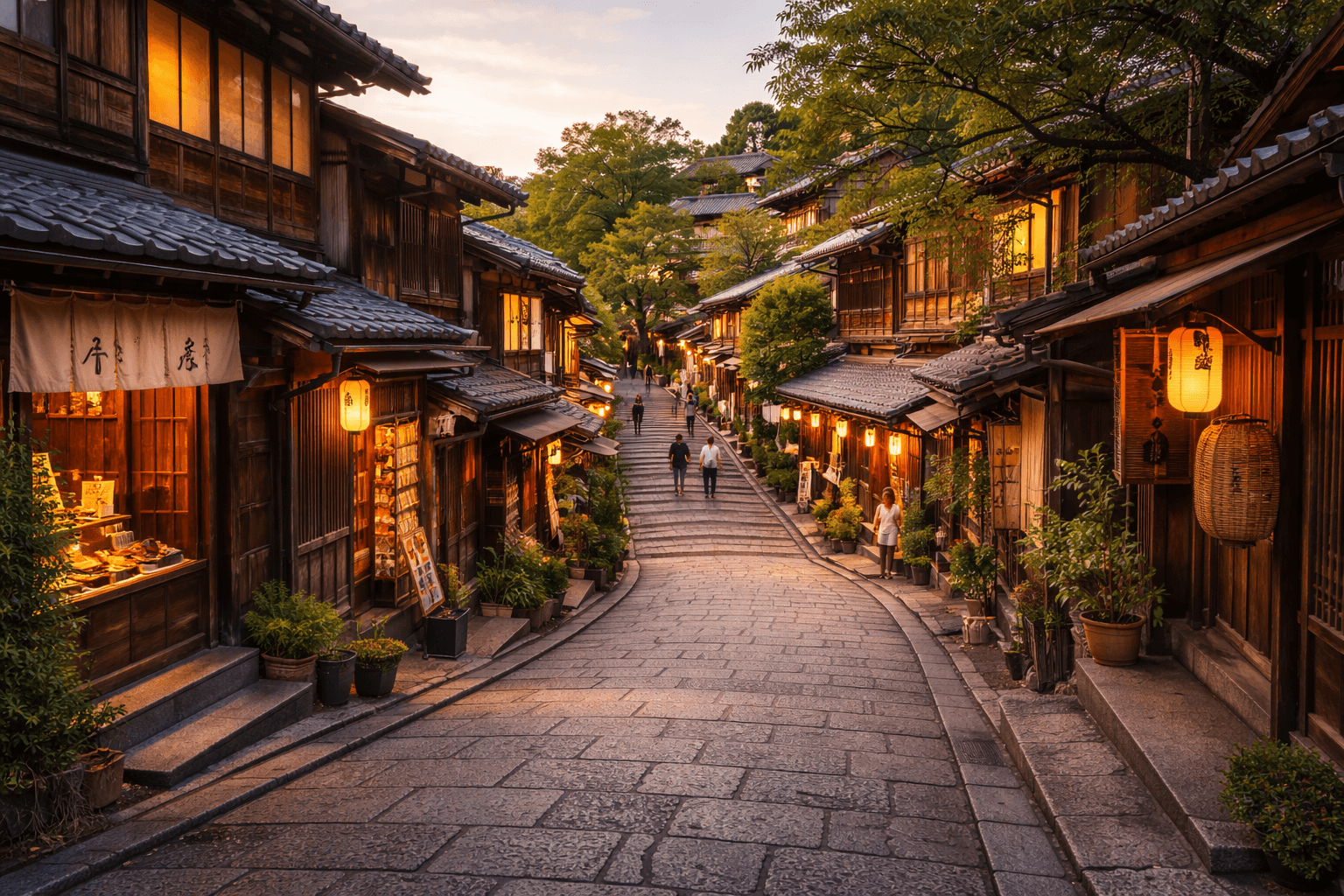
Sannenzaka (often paired with the adjacent Ninenzaka) is a pair of gently sloping, stone-paved lanes on the eastern approach to Kiyomizu-dera in eastern Kyoto. Lined with traditional wooden machiya houses, shops, teahouses and small temples, the streets preserve the look and rhythm of premodern Kyoto and act as a living link to the city’s cultural past. The area is significant for its architecture, souvenir and crafts shopping, and as a calm, photogenic route for visitors heading to Kiyomizu-dera.
Who it appeals to: first-time visitors wanting a quintessential Kyoto streetscape; photographers and culture seekers; returning travelers who enjoy craft shops, small galleries and local snacks.
Why Visit
- Walkable historic atmosphere: authentic machiya architecture and stone steps.
- Crafts and food: small shops selling ceramics, textiles, wagashi (sweets) and pickles.
- Easy access to Kiyomizu-dera and other Higashiyama attractions.
- Photogenic views and tranquil corners away from big boulevards.
Main Areas & What to See
The Upper Slope (closer to Kiyomizu-dera)
What it is: the final, steeper stretch that leads directly to Kiyomizu-dera’s entrance. Why it matters: the feel is most historic here; many shops carry temple charms, matcha sweets and wooden crafts. What to notice/do: pause for the view back down the slope, browse lacquerware and hand-crafted souvenirs, and pick up a small sweet to enjoy on a bench.
The Middle Section (Sannenzaka proper)
What it is: the stone-paved lane where traditional storefronts and wooden facades are best preserved. Why it matters: this is the classic postcard view of Kyoto streets — a concentrated strip of artisans, kimono rental shops and teahouses. What to notice/do: look for handcrafted fans and incense, step into a small gallery, and watch local artisans at work where visible.
Ninenzaka (adjacent lane)
What it is: a neighboring lane often combined with Sannenzaka for a continuous walk. Why it matters: slightly gentler slope with charming side streets and quieter cafés. What to notice/do: follow the side alleys for smaller temples, and seek out a matcha parfait or hidden courtyard garden.
Small Shrines & Historic Buildings
What they are: neighborhood shrines, ochaya-style buildings and storehouses integrated among the shops. Why they matter: they add spiritual and architectural layers to the walk. What to notice/do: observe respectfully, remove hats when entering small shrine precincts, and avoid blocking pathways while photographing.
Best Time to Visit
- Time of day: early morning (before 9:00) for the quietest experience and soft light; late afternoon for golden light and active streets.
- Crowd considerations: midday and late afternoon are busiest, especially on weekends and public holidays.
- Atmosphere differences: mornings are peaceful and contemplative; afternoons feel lively with shoppers, tea houses and kimono-clad visitors.
Seasonal Highlights
- Spring: cherry blossoms in nearby lanes and at Kiyomizu-dera create a romantic overlay; expect larger crowds during sakura season.
- Summer: shaded lanes feel cool; watch for evenings with festivals in nearby Gion.
- Autumn: the area is framed by brilliant maple color — one of the most atmospheric times to visit.
- Winter: quieter, crisper light and fewer tourists; some shops may have shorter hours.
- Festivals: Sannenzaka itself hosts no large festival, but it’s on routes to events at Kiyomizu-dera and nearby Gion festivals — check local calendars when planning.
Practical Tips
- Cultural etiquette: speak softly, avoid smoking or eating while walking through sacred approaches, and be polite when passing small shops or shrine visitors.
- Photography: photographs are welcome in public lanes; be mindful of shopfronts, people in kimono and small shrine interiors where photography may be restricted. Avoid tripods during busy times.
- Payment & access: many small shops prefer cash (yen); larger stores and cafés may accept cards but bring cash for smaller purchases. Most lanes are pedestrian but narrow — not suitable for luggage trolleys.
- Timing: allow 30–90 minutes to stroll both lanes and enter a few shops or tea houses; add extra time if you plan to visit Kiyomizu-dera.
Getting There
- Nearest access points: walk up from Kiyomizu-dera (the most direct), or approach from the Higashiyama/Gion area.
- Nearest public transport: bus stops named Kiyomizu-michi or Kiyomizu-michi (from Kyoto Station) and the Kyōto city bus network; nearest train station is Keihan Gion-Shijo (about 15–20 minutes on foot) or Kiyomizu-Gojo bus stop.
- Typical travel time from Kyoto Station: 15–25 minutes by direct bus or 10–20 minutes by taxi depending on traffic.
Is It Worth It?
Yes — for a short, concentrated taste of old Kyoto, Sannenzaka and Ninenzaka are well worth the visit. They’re especially rewarding if you arrive early or combine the walk with Kiyomizu-dera. If you prefer very quiet, off-the-beaten-path experiences, avoid peak hours and high-season weekends; otherwise the lanes deliver the classic Kyoto ambiance in a compact, walkable area.