
Introduction
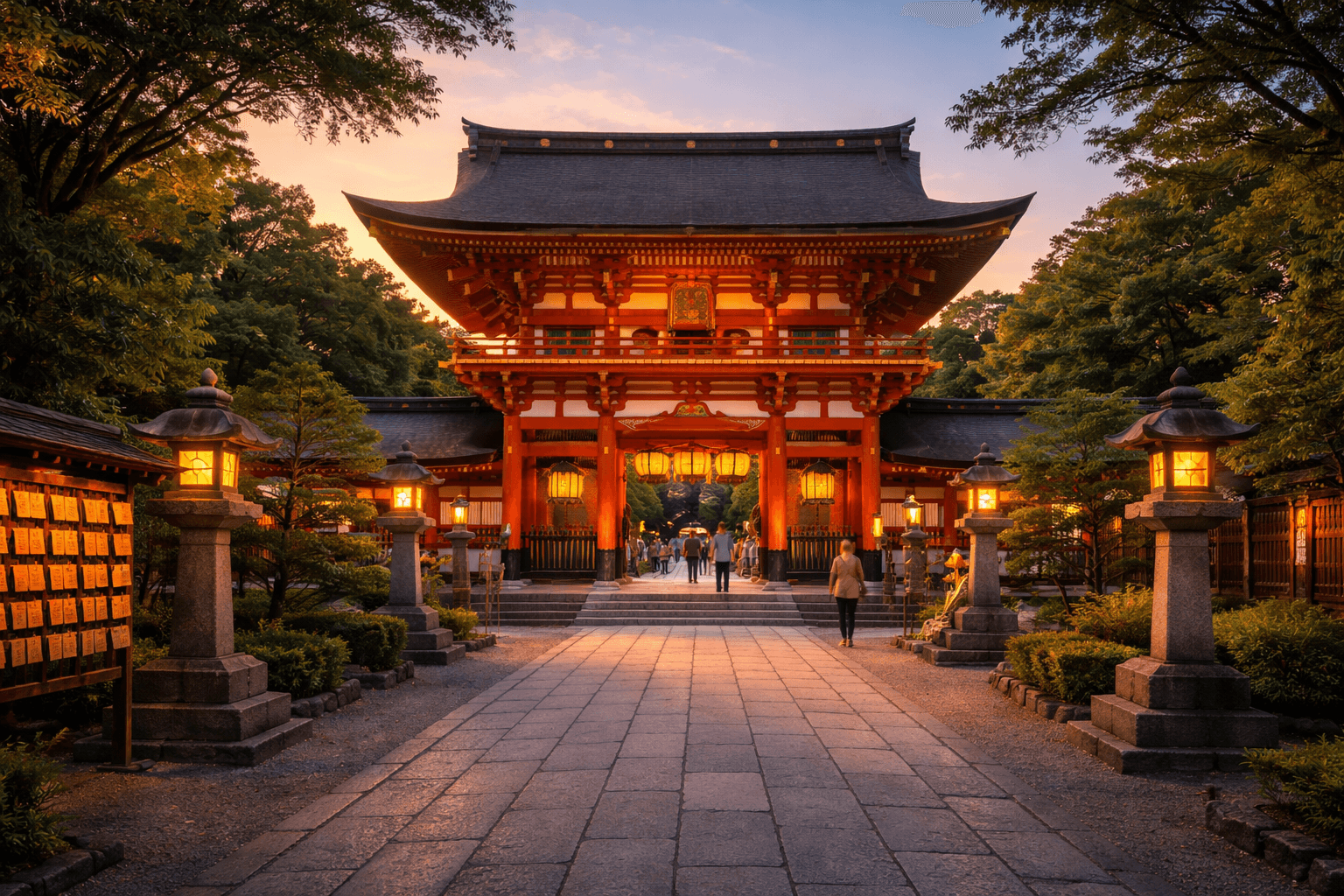
Yasaka Shrine (commonly called Gion Shrine) is a Shinto sanctuary at the eastern end of Kyoto’s historic Gion district. Founded over a thousand years ago, it occupies a prominent place in Kyoto’s religious life and is closely associated with the city’s famous Gion Matsuri festival. The shrine blends vibrant shrine architecture, seasonal foliage, and daily rituals, offering a compact, atmospheric experience for first-time and returning visitors.
Why Visit
- Experience a living religious site central to Kyoto’s cultural calendar.
- Walkable from Gion and Higashiyama — easy to combine with other attractions.
- Colorful rituals, lantern-lit evenings, and strong seasonal character.
- Family-friendly: short strolls, open spaces, and accessible grounds.
Main Areas & What to See
-
Main Hall (Honden)
- What it is: The primary worship building where offerings and prayers are made.
- Why it matters: The architectural focus of the shrine and place for formal rituals.
- What to notice/do: Perform a respectful two-bow, two-clap, one-bow sequence if you join worship; observe the wooden ema (prayer plaques) and talismans.
-
Gate and Approach
- What it is: The entrance area linking Yasaka to the bustling streets of Gion.
- Why it matters: The gate frames the transition from city life to sacred space.
- What to notice/do: Pause before entering, listen to the atmosphere, and note small lanterns and offerings along the path.
-
Lanterns and Night Illumination
- What it is: Rows of paper and metal lanterns that decorate the shrine year-round and especially during festivals.
- Why it matters: They create a particularly evocative ambiance after dusk and are central to festival processions.
- What to notice/do: Visit at twilight or evening for glowing lanterns; be mindful of limited light for photos.
-
Side Shrines and Prayer Stations
- What it is: Smaller auxiliary shrines on the grounds dedicated to different deities and purposes.
- Why it matters: Locals use them for health, business, and family prayers; they reveal everyday religious practice.
- What to notice/do: Read the small plaques, toss a coin and offer a short prayer if you wish; avoid disrupting ongoing rituals.
-
Gion Street Connection
- What it is: The adjacent historic streets of Gion, full of teahouses, shops, and traditional architecture.
- Why it matters: Visiting Yasaka naturally links to a broader cultural walk through Kyoto’s preserved district.
- What to notice/do: Combine a shrine visit with a stroll through Hanami-koji or Shirakawa for a fuller neighborhood experience.
Best Time to Visit
- Time of day: Early morning (before 9:00) for quiet contemplation; late afternoon to early evening for atmospheric light and lanterns.
- Crowd considerations: Midday and early evening can be crowded, especially on weekends and during festival periods.
- Atmosphere differences: Morning feels peaceful and reflective; evenings are lively and photogenic with lanterns and nearby nightlife.
Seasonal Highlights
- Spring: Nearby cherry blossoms brighten the approaches — popular and busy during bloom.
- Summer: Center of Gion Matsuri (July), with related processions and floats; expect very large crowds and a festival atmosphere.
- Autumn: Crisp air and colorful foliage add warmth to the grounds—less crowded than peak cherry season but still popular.
- Winter: Quieter visits with sparse crowds; cold air sharpens the architecture and lantern glow.
Practical Tips
- Cultural etiquette: Dress modestly for shrine grounds, bow slightly when passing torii gates, and show quiet respect near worshippers. Do not walk on the central approach if it is reserved for processions.
- Photography: Photography of buildings and grounds is generally allowed, but be discreet and never photograph people in prayer without permission. During some rituals or inside restricted areas, photos may be prohibited — follow signs and staff instructions.
- Payment & access: Entry to Yasaka Shrine grounds is free. Small fees may apply for certain stalls, offerings, or special events.
- Timing: Typical visit duration is 30–60 minutes; longer if you attend a ceremony or explore Gion and nearby temples.
Getting There
- Nearest stations: Gion-Shijo Station (Keihan Main Line) and Gion Corner area; Kawaramachi Station is a short walk away. Multiple bus lines stop along Shijo-dori near the shrine.
- Typical travel time from Kyoto Station: About 10–20 minutes by subway/rail plus a short walk, or 20–30 minutes by city bus depending on traffic.
Is It Worth It?
Yes. Yasaka Shrine is compact but richly atmospheric — an ideal stop for travelers who want a tangible, everyday piece of Kyoto's spiritual life. It pairs especially well with a longer stroll through Gion or nearby temples; if you have only limited time in Kyoto, a quick visit delivers authentic cultural flavor without a large time investment.