
Introduction
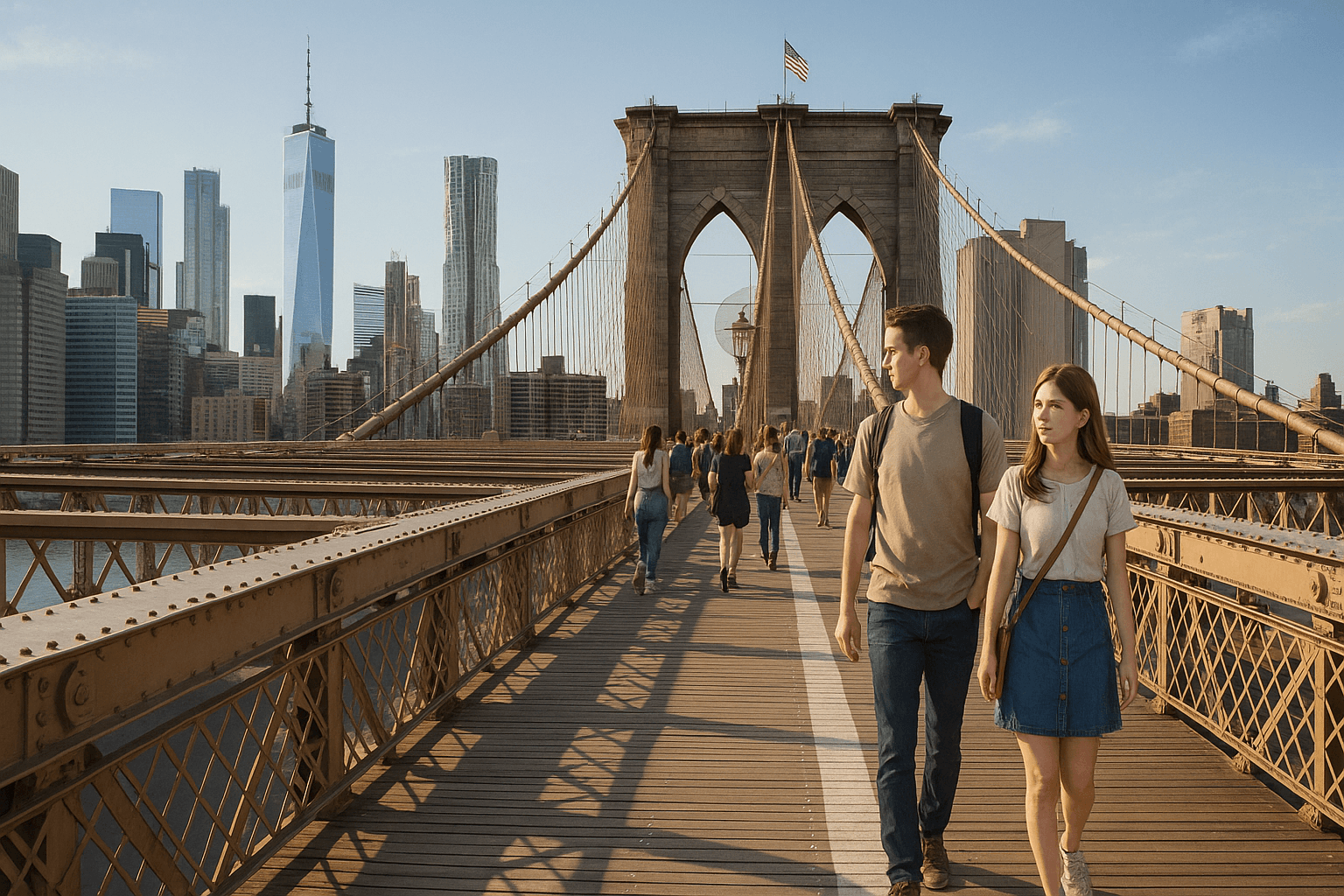
The Brooklyn Bridge is an iconic suspension bridge connecting Lower Manhattan and Brooklyn across the East River. Opened in 1883, it's a landmark of engineering and a living piece of New York City history. The bridge offers sweeping skyline views, a raised wooden pedestrian promenade, and an accessible way to move between boroughs on foot or by bike. It appeals to first-time visitors seeking classic NYC views, repeat travelers wanting a relaxed stroll or photo stop, and local commuters.
Why Visit
- Walkable landmark with uninterrupted skyline and river views.
- Historic architecture and engineering significance (19th‑century suspension design).
- Easy access to Brooklyn and Manhattan neighborhoods and nearby attractions.
- Great for photography, morning runs, romantic sunsets, and people‑watching.
Main Areas & What to See
Pedestrian Promenade
- What it is: A raised wooden walkway above the traffic lanes reserved for pedestrians and cyclists.
- Why it matters: Provides the best vantage point for views of Lower Manhattan, the Statue of Liberty (in the distance), and the Manhattan skyline.
- What to notice/do: Keep right for bikers, walk single file to pass, and pause at midpoint for photos. Early morning offers the clearest light and fewer people.
Suspension Cables & Gothic Towers
- What it is: Granite and limestone towers with the bridge's distinctive steel cables fanning outward.
- Why it matters: They showcase the bridge's 19th‑century engineering and make for striking architectural photos.
- What to notice/do: Stop at the base of the towers on either side to study the masonry and plaques; handheld close-ups show cable patterns.
Manhattan Approach & City Hall Park Views
- What it is: The northern end near Park Row and Brooklyn Bridge/City Hall subway stations.
- Why it matters: Offers immediate access to the Financial District, City Hall, and nearby landmarks like the Woolworth Building.
- What to notice/do: Combine with a short walk through City Hall Park or a detour to the 9/11 Memorial (a 10–15 minute walk).
Brooklyn Promenade & DUMBO
- What it is: The bridge’s Brooklyn landing opens into Brooklyn Bridge Park and the DUMBO neighborhood.
- Why it matters: One of the most photographed points in NYC — perfect views of Manhattan Bridge framing Lower Manhattan.
- What to notice/do: Explore Pebble Beach, Jane’s Carousel, or grab coffee/food on Washington Street; stay for sunset colors reflecting on the skyline.
Under-Bridge & Riverfront Park Spaces
- What it is: Park areas and piers beneath and beside the bridge on both shores.
- Why it matters: Offer different perspectives of the bridge structure and quieter places to sit.
- What to notice/do: Use these for picnic breaks, longer photo sessions, or to launch a riverside walk along the East River Esplanade.
Best Time to Visit
- Time of day: Early morning (6:30–8:30 AM) for quiet, clean light, and cooler temperatures. Golden hour before sunset is spectacular but much busier.
- Crowd considerations: Midday and late afternoon are busiest, especially weekends and holidays. Weekday mornings are calmest.
- Atmosphere differences: Mornings feel peaceful and local; midafternoon is lively with tourists; evenings are romantic but crowded and require care with bike traffic.
Seasonal Highlights
- Spring: Blossoms and comfortable walking weather; park plantings begin to bloom in Brooklyn Bridge Park.
- Summer: Warm evenings, vibrant park activity, and outdoor concerts nearby; expect larger crowds and stronger sunlight for photos.
- Autumn: Crisp air and colorful foliage in nearby parks; clear views make this a favorite season for photographers.
- Winter: Fewer visitors, dramatic skies, and possible snow on the promenade; dress warmly — wind off the river can be biting.
- Events: Occasional runs, parades, and community events use nearby parks; check local event listings if visiting weekends or holidays.
Practical Tips
- Cultural etiquette: Walk on the right, yield to faster pedestrians and cyclists, and avoid stopping in the bike lane. Be polite to locals and street vendors.
- Photography: Allowed on walkways; avoid blocking traffic. Drone use is restricted/regulated over NYC — do not fly without FAA authorization and local permits.
- Payment/access: Crossing the bridge is free. Nearby restaurants, cafes, and attractions accept cards; carry small bills for street vendors if desired.
- Safety: Keep valuables close; hold onto cameras and phones when leaning on railings. At night, stay in well-lit areas and stick to the main promenade.
- Estimated visit duration: 30–90 minutes for a straightforward walk (one way ~25–40 minutes at a relaxed pace). Allow 2–4 hours to explore viewpoints, parks, and nearby neighborhoods.
Getting There
- Nearest Manhattan stations: Brooklyn Bridge–City Hall (4/5/6, Lexington Av/4/5/6 access), Chambers St (A/C), Fulton St (multiple lines) — all 5–15 minutes’ walk, depending on the exit.
- Nearest Brooklyn access: High St–Brooklyn Bridge (A/C) is the closest subway station; York Street (F) and Clark St (2/3) are also within a 10–15 minute walk to DUMBO.
- Typical travel time from the city center: From Midtown Manhattan (Times Square/42nd St) expect 20–35 minutes by subway plus a 5–15 minute walk; from Lower Manhattan (Wall St area) expect 5–15 minutes on foot.
Is It Worth It?
Yes — the Brooklyn Bridge delivers a uniquely tangible New York experience: historic engineering, immediate skyline views, and direct access to two distinct neighborhoods. For first-timers it’s an essential, compact slice of the city; for return visitors it’s a reliable, mood‑setting walk. If you have limited time and dislike crowds, choose early morning; if you’re after dramatic light and energy, plan for sunset but allow extra time for slow-moving crowds.