
Introduction
Chelsea Market is a covered food hall, shopping arcade, and creative-office complex housed in a former Nabisco factory on Manhattan’s West Side. Part marketplace, part culinary laboratory, it blends industrial architecture with dozens of independent vendors, bakeries, and small retailers. The market is culturally significant as a longtime hub of New York food culture and an example of adaptive reuse that helped reshape Chelsea’s identity. It appeals to food lovers, design-minded travelers, families, and anyone seeking a compact taste of New York’s artisanal food scene.
Why Visit
- A concentrated selection of high-quality food vendors and international bites in one place.
- Historic industrial architecture and photogenic interior spaces.
- Easy access to the High Line, Chelsea galleries, and nearby attractions.
- Great for quick meals, gourmet shopping, or atmospheric people-watching.
Main Areas & What to See
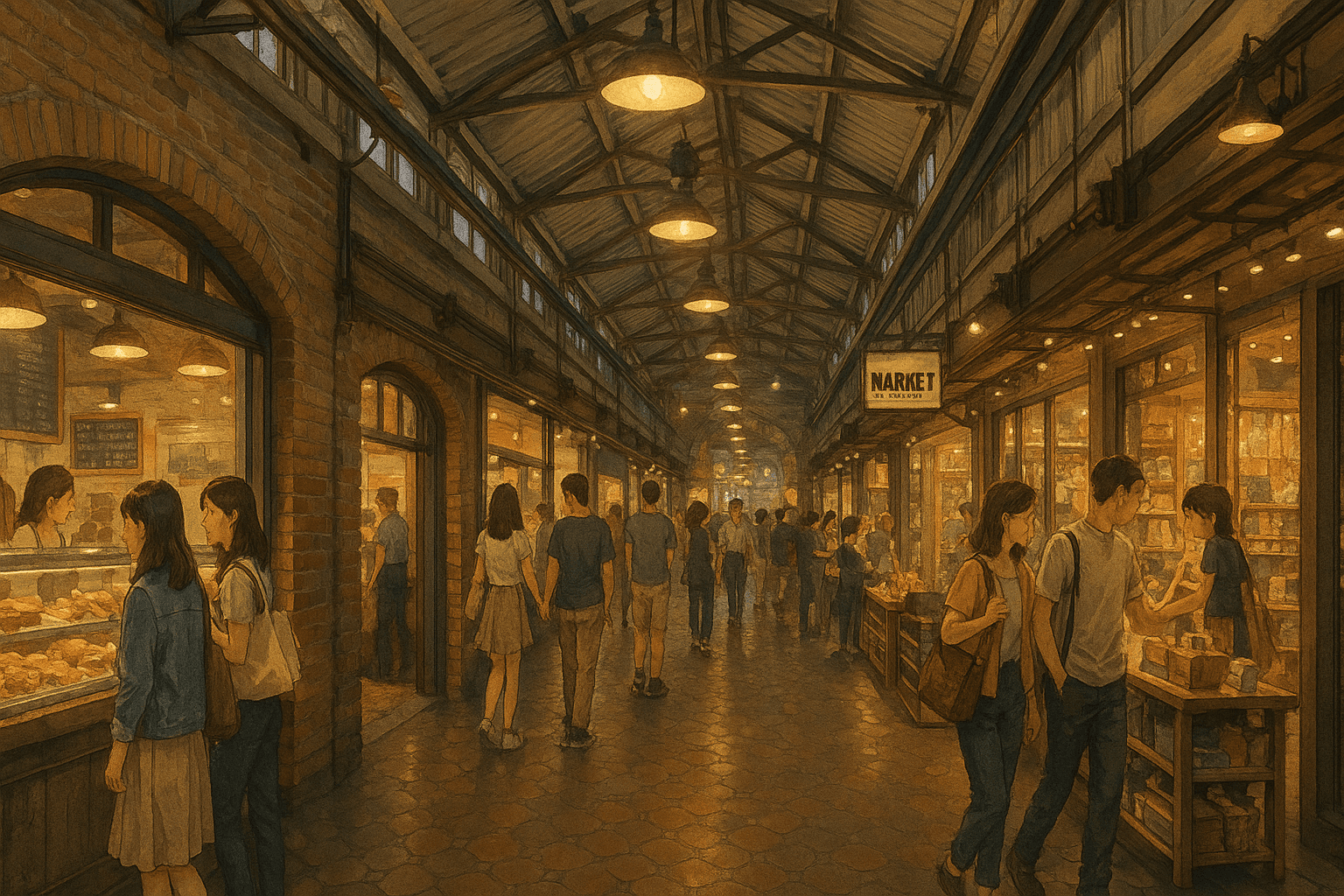
The Main Concourse
- What it is: The wide, central indoor walkway lined with stalls and restaurants.
- Why it matters: It’s the market’s social core—ideal for sampling multiple vendors.
- What to notice/do: Walk the length once to survey options, then settle at a communal table or step outside to eat on the sidewalk.
Food Stalls & Bakeries
- What it is: Artisanal bakeries, seafood counters, taco stands, coffee shops and more.
- Why it matters: The market showcases both established NYC names and smaller specialty producers.
- What to notice/do: Try small plates from different vendors rather than committing to one large meal; look for signature items like fresh-baked cookies, regional tacos, and specialty coffee.
Specialty Shops & Grocers
- What it is: Stores selling spices, olive oils, chocolates, cookware and curated groceries.
- Why it matters: Great opportunities to buy food souvenirs or ingredients uncommon in regular supermarkets.
- What to notice/do: Ask vendors for tasting recommendations; many shops offer small samples.
Offices & Creative Spaces (Exterior/Upper Floors)
- What it is: The converted upper floors house media and tech offices, visible from some parts of the market.
- Why it matters: They explain the market’s role in Chelsea’s redevelopment and why the building has a buzz during weekdays.
- What to notice/do: Respect private areas; the market experience is on the ground level.
Best Time to Visit
- Time of day: Mid-morning (9:30–11:30) for calmer exploration and fresh baked goods; early evening (5–7pm) for vibrant dining but expect crowds.
- Crowd considerations: Weekends and lunchtime are busiest; arrive early on weekends to avoid long lines.
- Atmosphere differences: Weekdays feel local and hurried; weekends are lively and tourist-heavy with a festival-like energy.
Seasonal Highlights
- Spring/Summer: More outdoor seating and casual alfresco eating along Ninth Avenue; nearby High Line gardens are in bloom.
- Fall: Crisp weather makes wandering outside between vendors pleasant; seasonal baked goods and warm drinks appear.
- Winter: Cozy indoor atmosphere—holiday decorations and limited outdoor seating; expect peak crowds around holidays.
- Events: Pop-ups and vendor collaborations happen periodically; special markets occasionally coincide with neighborhood events (check vendor listings before visiting).
Practical Tips
- Cultural etiquette: Be patient at busy counters, queue where indicated, and share communal tables courteously.
- Photography: Casual photos are fine in public areas; avoid photographing staff or private office entrances without permission. Tripods and professional shoots often require manager approval.
- Payment & access: Most vendors accept credit/debit cards and mobile pay; smaller stalls may prefer cards over cash. Restrooms are available inside but may be for customer use only.
- Timing: Plan 45–120 minutes depending on whether you eat a full meal or sample multiple vendors.
- Food allergies: Ask vendors about ingredients—many prepare food on open counters where cross-contact can occur.
Getting There
- Nearest subway: 14th Street–Eighth Avenue (A, C, E, L lines) is the closest station; walk a few minutes north to the market at 75 Ninth Avenue (between 15th and 16th Streets).
- Other nearby stops: 14th Street–Union Square (N, Q, R, W, 4, 5, 6, L) is a 10–15 minute walk; PATH and regional buses also serve nearby corridors.
- Typical travel time from the city center: From Midtown (Times Square/42nd Street) expect about 12–25 minutes by subway depending on transfers; walking from Union Square is roughly 10–15 minutes.
Is It Worth It?
Chelsea Market is worth a visit for most travelers who enjoy food discovery, quick access to the High Line and Chelsea galleries, or want an indoor, weather-proof culinary experience. It can be crowded and a bit touristy at peak times, but with a short plan—arrive early, sample several vendors, then explore the High Line—you can get a memorable, efficient taste of New York’s food scene.