
Introduction
DUMBO (Down Under the Manhattan Bridge Overpass) is a compact, waterfront neighborhood in Brooklyn located between the Manhattan and Brooklyn Bridges. It evolved from a 19th‑century industrial and warehousing district into a creative, tech and culinary hub while keeping its cobblestone streets and converted brick warehouses. (en.wikipedia.org)
DUMBO’s significance comes from its dramatic skyline views of Manhattan, its role in Brooklyn’s arts and tech scenes, and its preserved industrial architecture that now houses galleries, shops and offices. It appeals to first‑time visitors seeking iconic photo views, culture and riverside parks, as well as returning travelers interested in food, design and neighborhood life. (en.wikipedia.org)
Why Visit
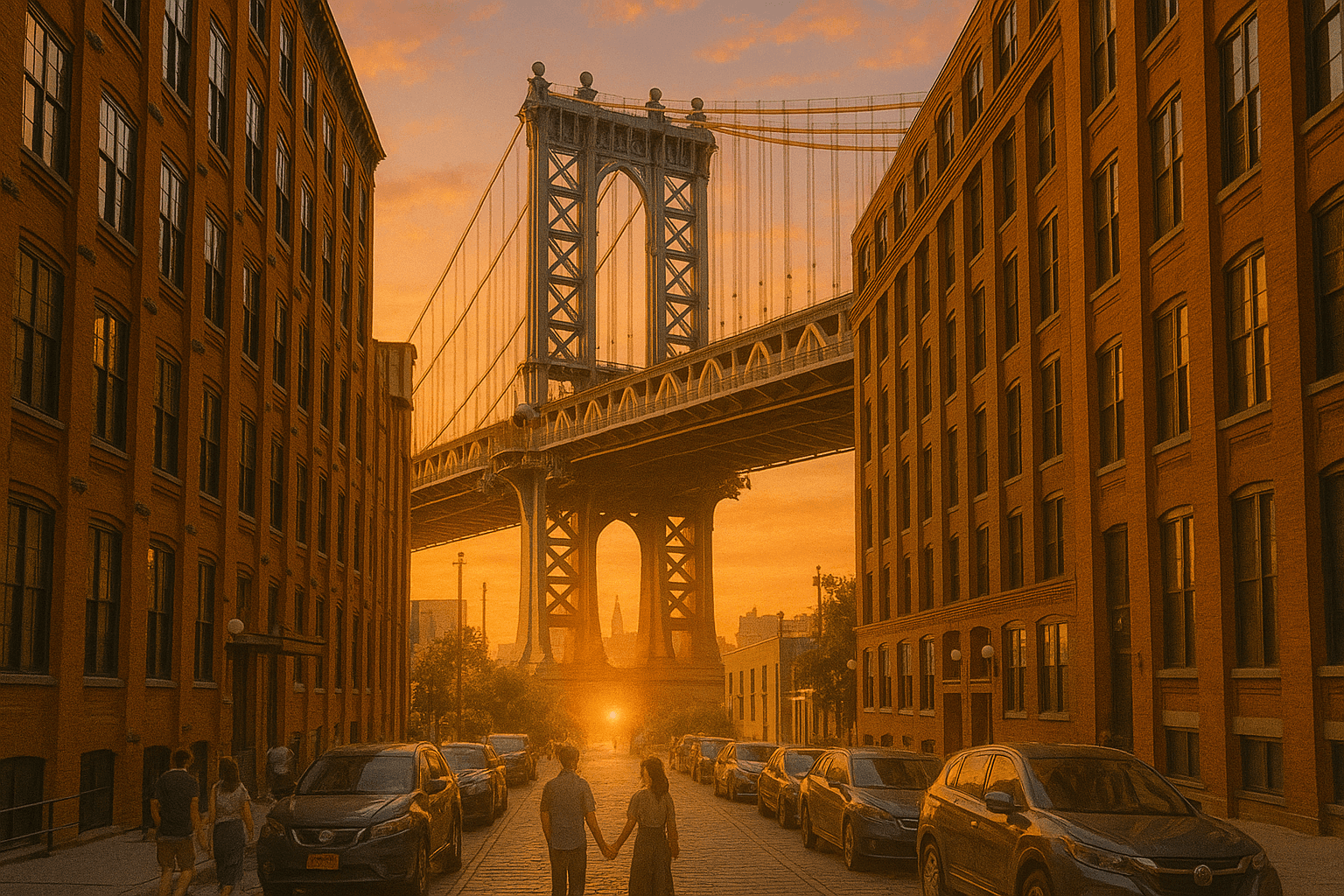
- Iconic view of the Manhattan Bridge framed on Washington Street — a classic NYC photo spot. (en.wikipedia.org)
- Brooklyn Bridge Park and waterfront promenades with skyline vistas and recreation. (cntraveler.com)
- Strong food and coffee scene: bakeries, pizzerias, and notable restaurants. (foodandwine.com)
- Compact neighborhood easy to explore on foot; galleries, boutiques and converted industrial spaces. (cntraveler.com)
Main Areas & What to See
-
Washington Street & Front Street (the Manhattan Bridge view)
- What it is: A short block where the bridge frames the Empire State Building sightline. (en.wikipedia.org)
- Why it matters: The image is widely published and simple to access — prime photo moment.
- Do: Arrive early or late afternoon to avoid crowds; watch for traffic and respect private property.
-
Brooklyn Bridge Park (Pebble Beach, Main Street Park, Empire‑Fulton Ferry)
- What it is: A multi‑block, riverfront park with lawns, piers, sports areas and promenade. (cntraveler.com)
- Why it matters: Offers unobstructed Manhattan skyline views, seasonal programming and relaxed waterfront space.
- Do: Walk the promenade, sit on the piers at sunset, check seasonal events and Smorgasburg (when running).
-
Jay Street/Water Street warehouse corridor
- What it is: Converted industrial buildings housing shops, galleries, offices and restaurants. (cntraveler.com)
- Why it matters: Shows DUMBO’s adaptive reuse — great for browsing design stores and independent bookstores.
- Do: Pop into a gallery or bookshop, and look up to appreciate original brickwork and freight doors.
-
Jane’s Carousel
- What it is: A restored 1920s carousel housed in a glass pavilion on the waterfront. (cntraveler.com)
- Why it matters: Charming, family‑friendly spot with skyline backdrop.
- Do: Ride for a short, nostalgic break and photo opportunities.
-
Food & Coffee (Jacques Torres, Breads Bakery, pizzerias and small restaurants)
- What it is: A concentrated assortment of bakeries, cafes and notable dining options. (foodandwine.com)
- Why it matters: DUMBO punches above its size with quality, variety and local favorites.
- Do: Try a pastry, a slice or a chocolatier treat while strolling the streets.
Best Time to Visit
- Time of day: Early morning (sunrise–9am) for quiet photos; late afternoon/sunset for skyline lighting; evenings for dining and skyline illumination. (cntraveler.com)
- Crowds: Midday and weekends, especially near the bridge view and park, can be busy. Aim for weekday mornings or late afternoons to avoid peak tourist clusters. (dumbo.is)
- Atmosphere differences: Mornings are calm and photogenic; afternoons are lively with families and park users; evenings are dining‑focused and pleasantly lit.
Seasonal Highlights
- Spring: Parks and trees bloom, outdoor markets and waterfront seating return. (cntraveler.com)
- Summer: Active park programming, outdoor events and higher foot traffic; bring sun protection. (cntraveler.com)
- Fall: Clear air and crisp skyline views; comfortable walking weather and foliage color along the promenade. (cntraveler.com)
- Winter: Quieter streets, holiday lights at nearby spots and cozy indoor dining; cooler waterfront winds—dress warmly. (cntraveler.com)
Practical Tips
- Cultural etiquette: Keep noise reasonable in residential blocks; step aside for pedestrians and cyclists on shared paths. Be mindful of private courtyards and do not block shopfronts when photographing.
- Photography: The Washington Street viewpoint is public but crowded; avoid tripods during busy periods and respect signage. No special permits for casual photography. (en.wikipedia.org)
- Payment & access: Most places accept cards and contactless payments; small vendors may prefer cardless apps or cash for small purchases. Ferry and subway fares use OMNY or MetroCard. (dumbo.is)
- Timing & duration: Plan 2–4 hours to see main highlights (photo spot, park walk, a café and a quick gallery/shop). A relaxed meal or museum visit can extend this to half‑day. (cntraveler.com)
Getting There
- Nearest subway stations: York Street (F), High Street–Brooklyn Bridge (A, C); Clark Street (2, 3) is a short walk from the south end. (nyc-metro.com)
- Ferry: NYC Ferry serves DUMBO with a stop near the waterfront (check schedules for routes and times). (nyc-metro.com)
- Typical travel time from Midtown Manhattan: ~15–30 minutes by subway or ferry depending on origin and connections; taxis/rideshares vary with traffic. Walking over the Brooklyn Bridge takes ~30–60 minutes from lower Manhattan entrances depending on pace. (dumbo.is)
Is It Worth It?
Yes — DUMBO is compact and delivers a high return for a short visit: striking views, pleasant waterfront parkland, quality food and a distinct neighborhood character. For first‑timers it’s an essential Brooklyn stop; for repeat visitors it offers familiar comforts plus changing pop‑ups, galleries and dining to discover. Be prepared for crowds at the signature photo spot and pick quieter times if you want a more relaxed experience. (en.wikipedia.org)