
Introduction
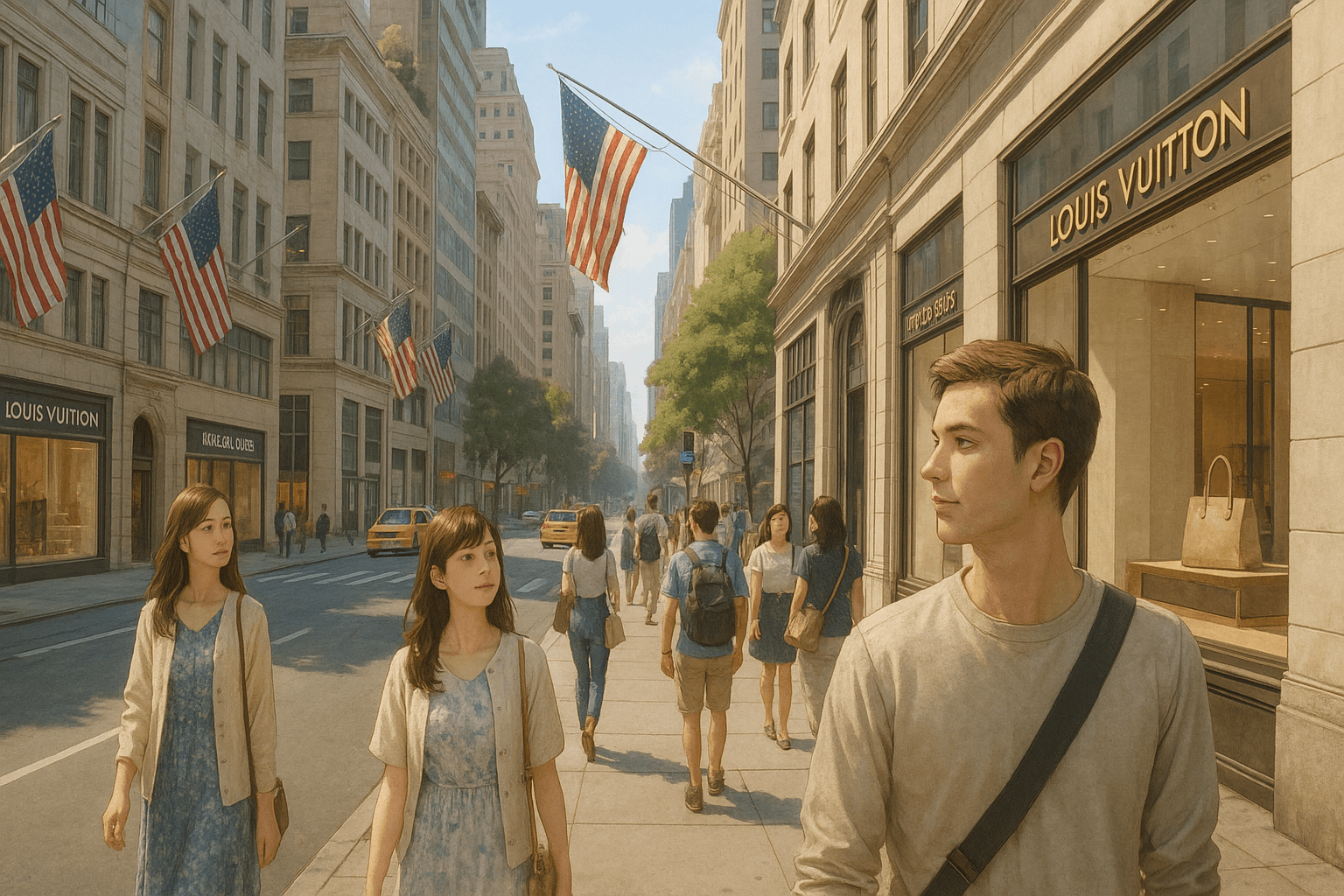
Fifth Avenue is one of New York City's most iconic streets, running north–south through Midtown Manhattan and known for luxury shopping, landmark institutions and parade routes. It blends commercial spectacle (flagship stores, designer boutiques) with cultural stops (museums, St. Patrick’s Cathedral, Rockefeller Center). Fifth Avenue appeals to first-time visitors wanting a quintessential Manhattan experience and returning travelers interested in shopping, architecture, holiday pageantry, or people‑watching.
Why Visit
- World-class shopping and flagship stores in a compact, walkable stretch.
- Concentration of landmarks and museums within a short stroll.
- Seasonal spectacles (holiday windows, Thanksgiving parade, Rockefeller Center tree).
- Iconic photo opportunities and classic Manhattan streetscape.
Main Areas & What to See
Midtown (around 59th–50th Streets)
- What it is: The northern Midtown stretch bordering Central Park and Columbus Circle.
- Why it matters: Entry point to the park, luxury boutiques, and high‑end hotels.
- What to do: Walk the park edge, browse designer stores, and watch traffic and fashion pass by.
Museum Mile (roughly 82nd–105th Streets; Fifth Avenue continues north)
- What it is: The stretch along Central Park East hosting major museums (Metropolitan Museum of Art is nearest to Fifth Avenue at 82nd Street).
- Why it matters: A cultural counterpoint to the commercial blocks—art, architecture and calmer streets.
- What to do: Visit the Met and stroll the park-facing façades; plan dedicated museum time rather than combining with fast shopping.
Rockefeller Center & St. Patrick’s Cathedral (around 50th Street)
- What it is: A cluster of major Midtown attractions on or adjacent to Fifth Avenue.
- Why it matters: Home to iconic public art, Radio City, and the cathedral—center of holiday activities.
- What to do: See the plaza, visit the Top of the Rock observation deck (advance tickets recommended), and step inside St. Patrick’s Cathedral for its interior and stained glass.
Empire State and Midtown South (around 34th Street)
- What it is: The southern stretch where Fifth Avenue meets the Empire State Building and Herald Square nearby.
- Why it matters: Historic commercial heart of Manhattan with accessible sightseeing and large department stores.
- What to do: Photograph the Empire State Building from the avenue, shop at major department stores, and use this area as a transit hub.
Luxury Shopping Corridor (roughly 49th–57th Streets)
- What it is: Flagship stores, showrooms and designer boutiques lining the avenue.
- Why it matters: The place for window displays, seasonal merchandising and aspirational retail experiences.
- What to do: Window‑shop, enter a flagship if you wish, and be mindful of crowds on weekends and holidays.
Best Time to Visit
- Time of day: Early morning (8:00–10:00) for quieter sidewalks and better photos; late afternoon for more animated street life and window displays.
- Crowd considerations: Midday and evenings—especially weekends and holidays—are busiest. Weekdays before noon are usually calmer.
- Atmosphere differences: Mornings feel brisk and local; afternoons bustle with tourists and shoppers; evenings light up with illuminated displays and city lights.
Seasonal Highlights
- Winter (Nov–Jan): Holiday window displays, Rockefeller Center tree and ice rink, heavy crowds around Thanksgiving–New Year’s.
- Spring (Mar–May): Milder weather for strolling; fewer tourists than peak summer; windows transition to spring themes.
- Summer (Jun–Aug): Warm, lively streets, longer daylight — expect more tourists and crowded sidewalks.
- Fall (Sep–Nov): Comfortable walking weather and clear views; peak for fashion events and fewer summer crowds.
- Special events: Macy’s Thanksgiving Day Parade route is adjacent (late November) and holiday merchandising is at its peak in December.
Practical Tips
- Cultural etiquette: Keep right on sidewalks when walking quickly; do not block store entrances or curb lines; tipping customs apply at nearby restaurants and for services.
- Photography: Public sidewalks and plazas are fine for photos; be respectful inside churches and museums (observe signage). Avoid tripod use on crowded sidewalks without permission.
- Payment & access: Most shops accept cards and contactless payments; smaller vendors may take cash. Many flagship stores allow appointments for private shopping—book ahead for peak times.
- Safety & comfort: Watch for double‑parked vehicles and heavy traffic; use crosswalks and follow signal timings.
- Estimated visit duration: 1–4 hours for a focused stroll and photos; half‑day to full‑day if combining multiple museum visits or shopping deeply.
Getting There
- Nearest subway stops (by area):
- 59th Street–Columbus Circle (A, B, C, D, 1) for the northern Midtown stretch.
- 5th Ave–53rd Street (E, M) and 47–50 Sts–Rockefeller Center (B, D, F, M) for central Midtown landmarks.
- 34th Street–Herald Square / 34th St–Penn Station (B, D, F, M, N, Q, R, W, 1, 2, 3, A, C, E) for the Empire State/Herald Square area.
- Typical travel time from Times Square (center of Midtown): 5–20 minutes by subway or taxi depending on which segment of Fifth Avenue you target.
Is It Worth It?
Yes—Fifth Avenue gives a concentrated slice of New York’s shopping, architecture and landmark culture. For first-timers it’s a convenient way to tick off several iconic sights; for repeat visitors, pick specific experiences (Top of the Rock, the Met, a seasonal window tour) to avoid a shallow, hurry‑through visit. If you dislike crowds or commercial noise, visit early or focus on Museum Mile to the north for a quieter, more contemplative experience.