
Introduction
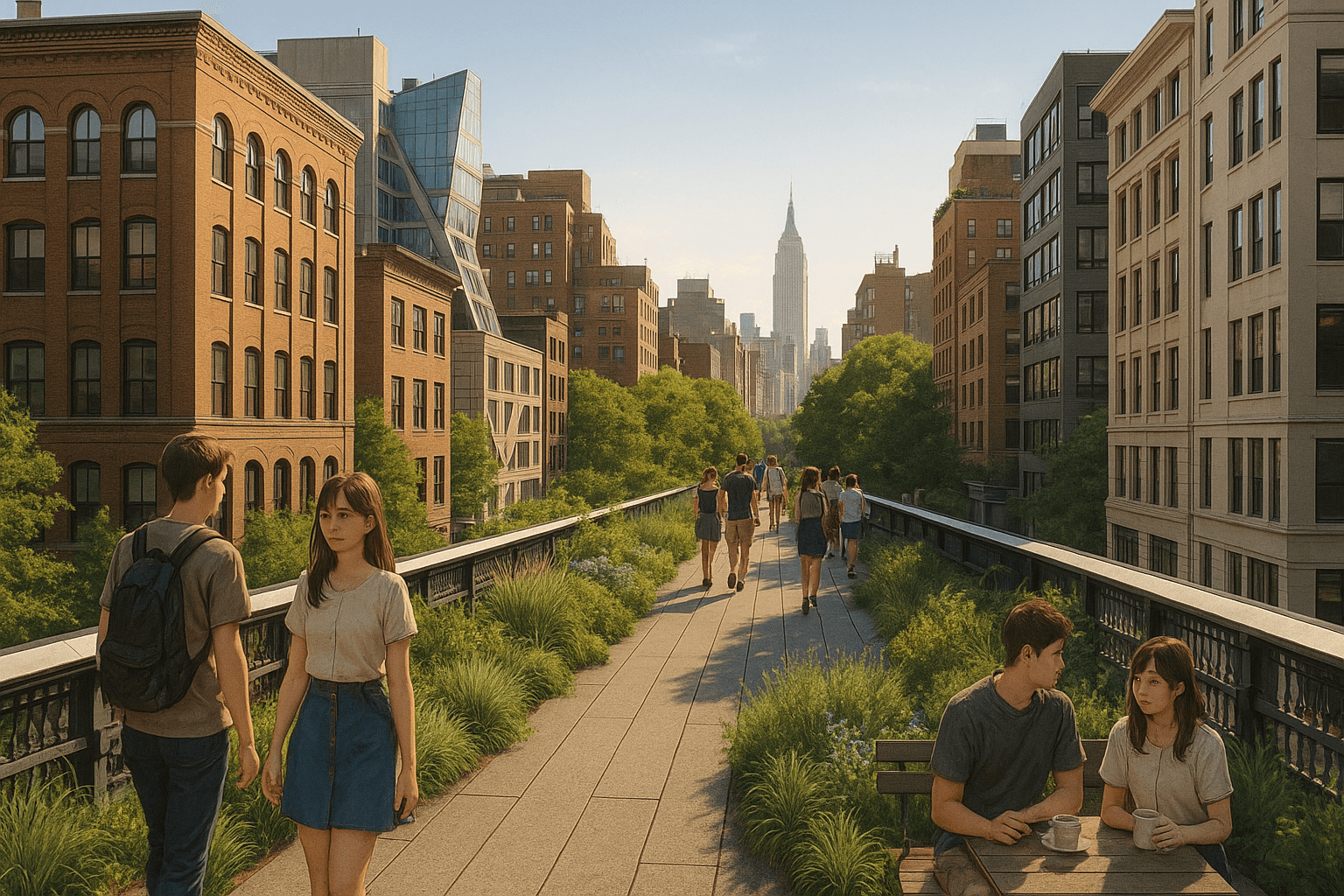
The High Line is an elevated linear park built on a historic freight rail line on Manhattan’s West Side, running roughly from Gansevoort Street in the Meatpacking District up to Hudson Yards. It blends public art, planting design, and urban views, offering a unique pedestrian experience above street level. The High Line is significant as an example of adaptive reuse, a catalyst for neighborhood change in Chelsea and Hudson Yards, and a flexible public space that draws locals and visitors alike.
It appeals to: first-time visitors seeking an iconic New York experience, returning travelers who want a quieter city perspective, architecture and landscape-lovers, photographers, and anyone looking for a pleasant walk or people-watching spot.
Why Visit
- A distinctive way to see Manhattan from above street level with skyline and river glimpses.
- Thoughtful gardens and seasonal plantings that change the feel across the year.
- Public art installations and design details that reward slow strolling.
- Easy access to Chelsea, the Meatpacking District, and Hudson Yards — great for pairing with food, galleries, or shopping.
Main Areas & What to See
Gansevoort to 14th Street (Meatpacking & Chelsea)
What it is: The southernmost stretch with views over the Meatpacking District and trendy streets below. Why it matters: This is where the High Line begins and where the old rail character is most visible; close to Chelsea Market and boutique shops. What to notice/do: Pause at seating platforms, peek over to the streetscape below, and detour to Chelsea Market for food.
14th to 23rd Street (Mid section)
What it is: A varied passage of planted beds, small viewing platforms, and occasional art. Why it matters: Offers a quieter, green experience with thoughtful planting schemes and places to sit away from the busiest entrances. What to notice/do: Look for interpretive signs about the site’s history and enjoy the mix of city architecture around you.
23rd to 30th Street (Chelsea & Rail Yards)
What it is: A longer, landscaped stretch with elevated views and sites for rotating public art. Why it matters: This area passes former rail yards and features spaces designed for lingering and events. What to notice/do: Check for temporary art installations and use the gently sloped seating for a break.
30th to 34th Street (Hudson Yards & The Spur)
What it is: The newest section that connects to Hudson Yards and includes The Spur, a wide open space with expanded planting. Why it matters: It links to Hudson Yards developments and provides sweeping views of the Hudson River and Manhattan skyline. What to notice/do: Exit to explore Vessel surroundings (viewing from outside) and the shops at Hudson Yards; note that major attractions there may require separate entry.
Best Time to Visit
- Time of day: Early morning (before 9:30 AM) for calm, softer light, and fewer people; golden hour around sunset is beautiful but much busier.
- Crowd considerations: Midday and weekends are busiest, especially between 10:30 AM–4 PM. Weekday mornings and late afternoons are quieter.
- Atmosphere differences: Mornings feel restorative and local; midday is social and active; evenings often have a relaxed, urban glow and more couples/families.
Seasonal Highlights
- Spring: Bulbs and early perennials bring fresh color; comfortable weather for walking.
- Summer: Lush plantings and public programming (performances, tours) — expect crowds and warm temperatures.
- Fall: Strong foliage colors and crisp air; one of the best times for photography and long walks.
- Winter: Sparse planting and clear sightlines; quieter, sharper light — dress warmly. Holiday events nearby may add activity in adjacent neighborhoods.
Practical Tips
- Cultural etiquette: Keep to the right, avoid blocking pathways when stopping, speak at moderate volume, and respect performance and art spaces.
- Photography: Personal photography is welcome. If you plan commercial shoots, a permit may be required — check park rules before you film.
- Payment/access: Entry to the High Line is free. Some nearby attractions (galleries, Hudson Yards indoor sites) may charge admission.
- Safety & rules: Bicycles and scooters are not allowed on the High Line; supervise children; follow posted signage. Bring water in warm months.
- Estimated visit duration: 45 minutes to 2 hours depending on pace, stops, and detours to adjacent neighborhoods.
Getting There
- Nearest subway access points: 14th Street–8th Avenue (A, C, E, L), 14th Street–Union Square (4, 5, 6, N, Q, R, W) for nearby access, 23rd Street (C, E), and 34th Street–Hudson Yards (7) for the north end. Several entrances have stairs and elevators; check signs for accessible routes.
- Typical travel time from Midtown (Times Square / Bryant Park): about 10–25 minutes by subway or taxi, depending on which section you plan to visit and current traffic.
Is It Worth It?
Yes — the High Line offers a distinctive, walkable slice of New York that’s both restful and rewarding. For a short, memorable experience that connects art, landscape design, and city views, it’s well worth including on your itinerary. If you prefer completely quiet nature or long hiking routes, plan a shorter visit and combine it with nearby parks and neighborhoods to round out the day.