
Introduction
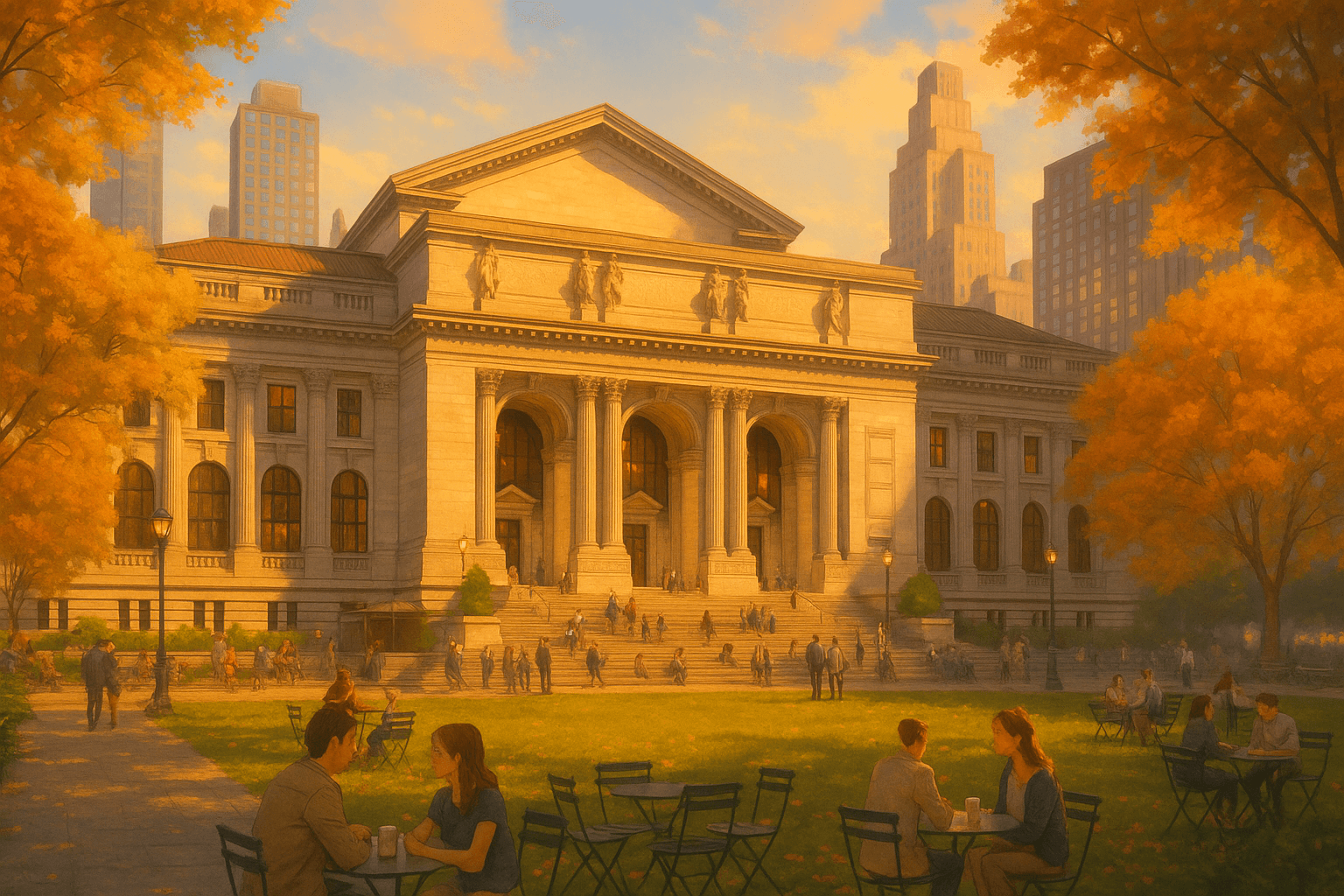
The New York Public Library’s flagship Stephen A. Schwarzman Building (commonly called the New York Public Library) sits at 476 Fifth Avenue, facing Bryant Park. It's a working research library, an architectural landmark, and a public cultural space with grand reading rooms, rotating exhibitions, and free programs. The building blends Beaux-Arts grandeur with everyday civic use and attracts book lovers, architecture fans, students, and curious travelers.
Why Visit
- See iconic architecture and landmark interiors (the Rose Main Reading Room, marble staircases).
- Experience a quiet, historic public space in the middle of Midtown Manhattan.
- Browse rotating exhibitions, special collections, and free events.
- Photograph exterior façades and nearby Bryant Park (with attention to interior photo rules).
Main Areas & What to See
Exterior & Entrance (Fifth Avenue steps and lions)
- What it is: The library’s classical façade, broad stairs, and the famous marble lion statues.
- Why it matters: The façade and lions are symbolic New York images and an easy meeting point.
- What to notice/do: Pause on the steps for photos; read the inscription over the entrance; check signage for visitor info.
Rose Main Reading Room
- What it is: A vast, high‑ceilinged reading room with long wooden tables, ornate plasterwork, and tall arched windows.
- Why it matters: One of the city’s most celebrated interiors and a quiet place for study and reflection.
- What to notice/do: Observe the scale and light; be respectful and quiet; use the benches for reading if you have a library card or pass.
Schwarzman Building Exhibition Galleries
- What it is: Rotating exhibitions drawn from the library’s collections and loaned materials.
- Why it matters: Offers changing displays that spotlight history, literature, and art tied to New York and beyond.
- What to notice/do: Check the information desk or the library website for current exhibitions and any timed-entry requirements.
McGraw Rotunda & Astor Hall
- What it is: Grand interior spaces near the entrance, with murals and architectural details.
- Why it matters: They set the tone for the building’s design and are pleasant areas to orient yourself.
- What to notice/do: Read informational plaques and take a moment to appreciate the decorative work.
Special Collections / Research Centers (front desk directions)
- What it is: Rare books, manuscripts, and research reading rooms accessible by request.
- Why it matters: Home to unique items; invaluable for scholars and bibliophiles.
- What to notice/do: If you plan to consult materials, arrange access in advance and bring ID; rules differ from general visiting areas.
Bryant Park (adjacent)
- What it is: A lively green space behind the library with seasonal markets, seating, and events.
- Why it matters: Complements a library visit with cafés, free outdoor programs, and a calm place to read.
- What to notice/do: Grab coffee and sit in the park after touring the library; check for seasonal programming (films, markets, ice skating).
Best Time to Visit
- Time of day: Early morning (shortly after opening) for quieter interiors and softer light in the reading room; late afternoon for lively street and park activity.
- Crowd considerations: Midday and weekend afternoons are busiest; mornings and weekday late afternoons are calmer.
- Atmosphere differences: Morning/weekday — peaceful and study-focused; weekend/afternoon — more tourists, exhibitions, and park activity nearby.
Seasonal Highlights
- Spring/Summer: Bryant Park comes alive with outdoor markets, concerts, and more seating—nice to combine with a library stop.
- Fall: Crisp air and foliage in the park make for pleasant walks; many cultural programs restart after summer.
- Winter: Holiday markets and Bryant Park’s ice rink (seasonal) create festive surroundings; interiors provide a warm refuge.
- Events: The library hosts talks, readings, and panel discussions year-round—check the program calendar before you go.
Practical Tips
- Cultural etiquette: Keep voices low inside; respect study spaces and other patrons. Follow staff directions.
- Photography rules: Exterior photos are fine; interior photography for personal use is usually allowed in public spaces but avoid flash and be discreet in reading rooms. Photography of special collections and some exhibitions may be restricted—ask staff.
- Payment/access: General admission to the building and many exhibitions is free; some temporary exhibitions or special tours may have fees or timed tickets. Bring photo ID if you plan to use research services or request archival materials.
- Accessibility: The library provides accessible entrances, elevators, and services—contact visitor services for specific needs.
- Estimated visit duration: 45 minutes–2 hours (quick photo and walk-through vs. exploring exhibitions and the reading room). Scholars and research visitors will need more time.
Getting There
- Nearest subway stations: Bryant Park/42nd Street (B, D, F, M via the 42 St–Bryant Park station), 5th Ave/42nd Street (7), and Grand Central–42nd Street (4, 5, 6, 7, S) are all within a short walk.
- Typical travel time from the city center: From Times Square (midtown core), it’s a 5–15 minute walk or a single short subway ride; from elsewhere in Manhattan allow 15–30 minutes depending on transit.
Is It Worth It?
Yes—particularly for first-time visitors who value architecture, quiet public interiors, and accessible culture in Midtown Manhattan. If you’re short on time and prefer outdoor landmarks, a quick exterior stop and a stroll through Bryant Park will still be rewarding. For readers, researchers, or those who appreciate historic interiors, plan at least an hour to soak in the building and any exhibitions.