
Introduction
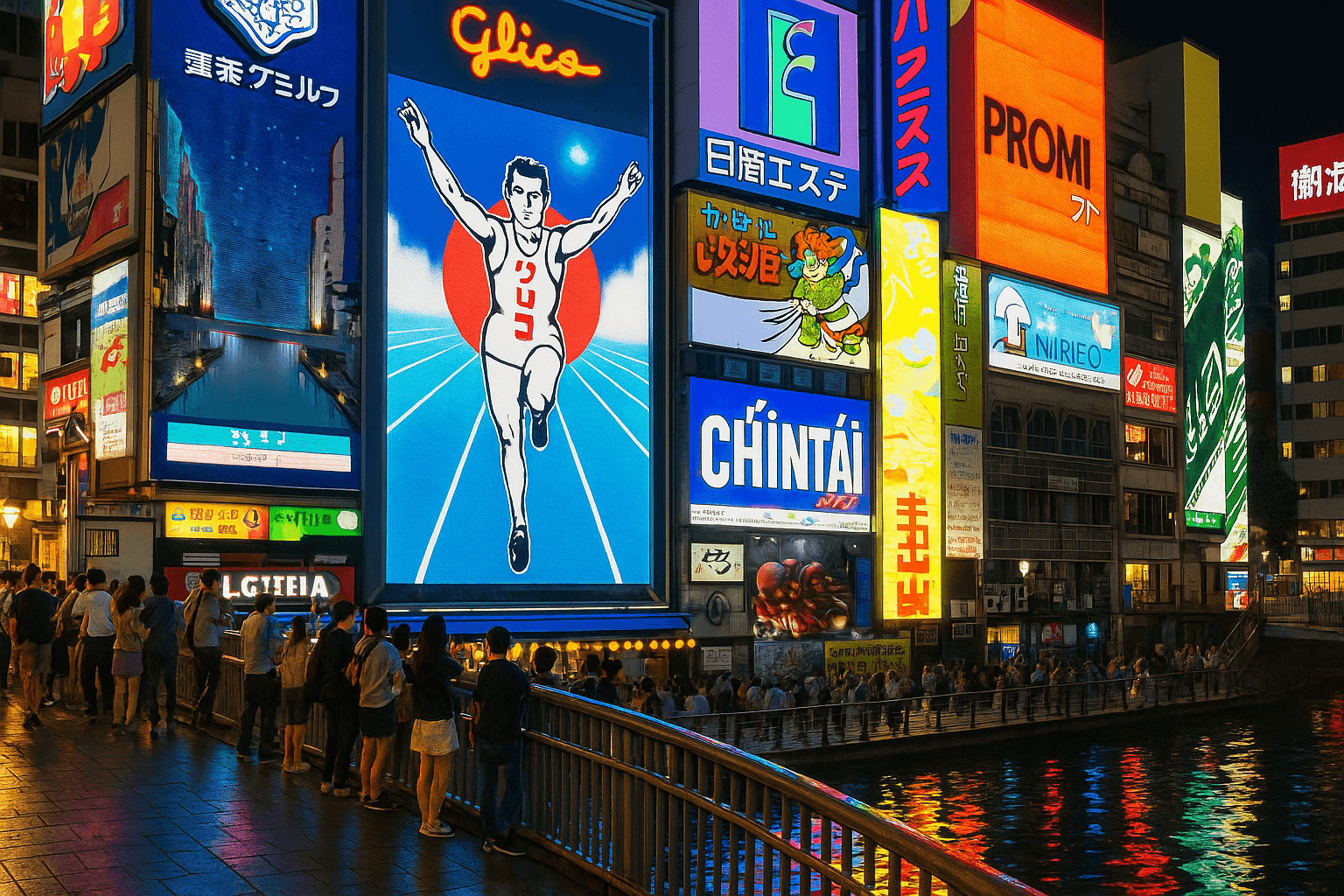
Dotonbori is Osaka's iconic riverside entertainment and dining district, known for its neon signs, animated shopfronts, and dense concentration of street food and restaurants. Centred on a canal lined with walkways and bridges, it has been a commercial and social hub since the Edo period and today represents Osaka's culinary reputation and playful urban energy. Dotonbori appeals to food lovers, night-owls, photographers, and anyone who wants a concentrated slice of contemporary Osaka culture.
Why Visit
- World-class street food and classic Osaka dishes in one compact area.
- A lively, photogenic streetscape — the Glico running man, giant crab, and moving signs.
- Easy to combine with shopping, river cruises, and nearby nightlife.
- Great place to experience local atmosphere and late-night dining culture.
Main Areas & What to See
Ebisu-bashi Bridge and the Glico Sign
What it is: The central pedestrian bridge and the famous Glico running man neon billboard overlooking the canal. Why it matters: The most recognizable Dotonbori landmark and a popular meeting/photography spot. What to notice/do: Visit at night for the full neon spectacle; step back to capture reflections on the water and be prepared for crowds when taking photos.
The Canal Walkways
What it is: Narrow promenades along both banks of the Dotonbori Canal. Why it matters: They concentrate restaurants, izakaya, takoyaki stalls, and street performers. What to notice/do: Stroll both sides to compare menus and signage; try small bites at multiple stalls rather than committing to one large meal.
Kani Doraku and Themed Shopfronts
What it is: Elaborate mechanical façades — the giant moving crab at Kani Doraku is the most famous — plus oversized takoyaki, octopus and pufferfish signs. Why it matters: These theatrical signs reflect Osaka's commercial creativity and make window-shopping entertaining. What to notice/do: Use them as orientation points; many shops offer set menus or take-away options.
Hozenji Yokocho and Hozenji Temple
What it is: A short stone-paved alley branching off the main drag with traditional restaurants and a small temple. Why it matters: Offers a quieter, old-Osaka contrast to the main neon avenues. What to notice/do: Walk the alley to escape the crowds; visit Hozenji Temple and see the moss-covered statue of Fudo Myoo.
Nightlife & Izakaya Alleyways
What it is: Side streets that fill with bars and late-night eateries after dark. Why it matters: Experience local drinking culture and small-plate dining in intimate settings. What to notice/do: Look for places with open kitchens or counter seating for a more social experience; many accept walk-ins but some popular spots fill quickly.
Best Time to Visit
- Time of day: Evening (after sunset) is the signature Dotonbori experience — neon, crowds, and full-service dining. Late afternoon is good for food-first visits with smaller lines.
- Crowd considerations: Peak crowds arrive between 7–10 PM; weekends and national holidays are busiest. If you prefer fewer people, visit weekday early evening or around 4–6 PM.
- Atmosphere differences: Daytime feels more commercial and practical; night is theatrical and lively with street performers and full restaurant floors.
Seasonal Highlights
- Spring: Pleasant temperatures for walking; near-by cherry blossom spots make combined outings attractive.
- Summer: Hot and humid; late-night activity stays strong. Watch for occasional festival crowds in July–August.
- Autumn: Cooler evenings and comfortable strolls; fall colors are more visible in nearby parks than the canal area.
- Winter: Crisp air and early sunsets make the neon atmosphere especially striking; New Year’s period is festive and crowded.
Practical Tips
- Cultural etiquette: Keep noise reasonable in small eateries; remove backpacks at counter seats if crowded; say “itadakimasu” before eating to show respect.
- Photography: Public photography is allowed on the streets; be mindful of blocking sidewalks and avoid photographing people up close without permission.
- Payment & access: Many restaurants accept cards but smaller stalls may be cash-only — carry some yen. Streets are pedestrian-heavy and mostly flat but can be slippery when wet.
- Timing & pacing: Expect 1–3 hours for a typical visit (snacking, photos, short stroll). Allow more time if dining at a sit-down restaurant or joining a river cruise.
Getting There
- Nearest stations: Namba Station (served by JR, Nankai, Osaka Metro Midosuji Line, Yotsubashi Line) and Nippombashi Station (Sakaisuji and Sennichimae lines). Shinsaibashi Station is a short walk to the north.
- Typical travel time from the city centre: From Umeda/Osaka Station area, allow about 15–25 minutes by subway or metro to reach Namba, depending on line and transfers.
Is It Worth It?
Yes for first-time visitors and repeat travelers who enjoy food, lively urban nightlife, and recognizable sights. Dotonbori offers an easily accessible, concentrated taste of Osaka culture — highly enjoyable for short visits, though its crowds and tourist-oriented stores mean the most authentic food experiences may require stepping into adjacent alleys or smaller restaurants. If you prefer quiet or low-key cultural sites, pair a Dotonbori visit with quieter neighborhoods or visit outside peak hours.