
Introduction
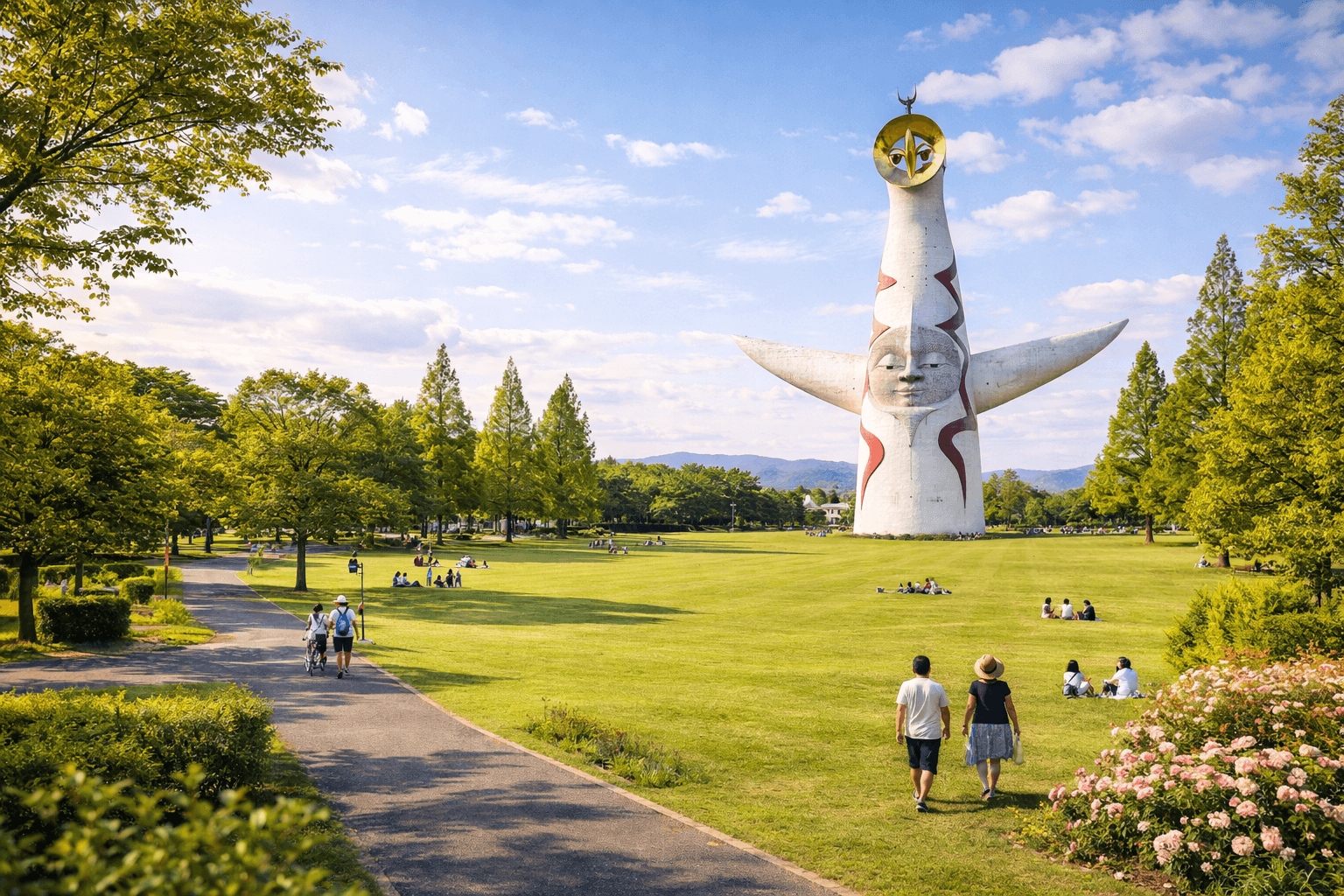
Expo ’70 Commemorative Park (Banpaku Kinen Kōen) occupies the site of Japan’s 1970 World Exposition in northern Osaka. The park is a broad, green complex combining modern museum spaces, iconic public art (including the famous Tower of the Sun), themed gardens, ponds, and wide lawns. It’s important historically as a symbol of postwar optimism and technological exchange, and today offers a peaceful contrast to Osaka’s urban energy.
The park appeals to: first-time visitors wanting a dose of modern Japanese history; culture and design enthusiasts; photographers seeking striking public art and architecture; families and nature-lovers looking for open space and seasonal displays.
Why Visit
- See the Tower of the Sun, an enduring symbol of Expo ’70 and a unique piece of public art.
- Explore on-foot wide lawns, themed gardens, and seasonal blooms away from central Osaka.
- Visit museums and exhibition spaces that contextualize postwar Japanese design, technology, and Expo history.
- Enjoy family-friendly facilities: playgrounds, open space for picnics, and event programming.
Main Areas & What to See
Tower of the Sun (Taiyō no Tō)
- What it is: A sculptural centerpiece by artist Tarō Okamoto — a towering, surreal structure with three faces representing past, present, and future.
- Why it matters: It’s the park’s most iconic landmark and a potent symbol of Expo ’70’s cultural legacy.
- What to notice/do: Photograph from multiple angles (front, side, and from the surrounding plaza). Interior visits are sometimes available—check opening status to go inside and see restored murals.
EXPO’70 Pavilion / National Museum of Art (nearby exhibits)
- What it is: Rotating exhibits and permanent displays that cover design, technology, and postwar cultural shifts tied to the 1970 Expo.
- Why it matters: Adds depth to the outdoor experience—understand the ideas behind the park’s creation.
- What to notice/do: Look for exhibition schedules; audio guides or English-language labels can vary.
Japanese Garden (Kibogaoka Japanese Garden)
- What it is: A carefully designed traditional garden with ponds, teahouse, and seasonal plantings.
- Why it matters: Offers a quiet, contemplative counterpoint to the park’s modernist art.
- What to notice/do: Walk the loop, pause at vantage points for reflections on the pond, and respect garden paths.
Family and Play Areas / Open Lawns
- What it is: Large grassy spaces, playground equipment, and picnic areas that are popular with local families.
- Why it matters: The park is an active community space where locals relax and children play.
- What to notice/do: Bring a picnic; weekends can be lively with children and group activities.
Flower Beds & Seasonal Plantings
- What it is: Planned flower displays—tulips in spring, hydrangeas early summer, and maples in autumn.
- Why it matters: Seasonal color drastically changes the park’s feel and photography opportunities.
- What to notice/do: Check seasonal bloom forecasts if you’re targeting particular flowers.
Open-Air Exhibition Spaces & Expo Remnants
- What it is: Remaining pavilions, placards, and sculptures from the Expo era scattered through the park.
- Why it matters: These remnants create a sense of historical layering—past world-stage displays set in a modern park.
- What to notice/do: Walk the Expo promenade to spot plaques and informative signage; bring comfortable shoes.
Best Time to Visit
- Time of day: Mornings (opening until late morning) for softer light and fewer visitors; late afternoon can be beautiful for warm light on the Tower of the Sun.
- Crowd considerations: Weekdays are quieter than weekends and national holidays. Spring and autumn weekends draw families and photographers.
- Atmosphere differences: Early mornings are calm and contemplative; mid-afternoon is lively with families; golden hour offers the most dramatic photography.
Seasonal Highlights
- Spring: Cherry blossoms and early tulip displays—ideal for hanami-style picnics.
- Early Summer: Hydrangeas and lush green lawns; pleasant for long walks.
- Autumn: Maple color transforms garden areas; cool temperatures make walking comfortable.
- Winter: Crisp skies and sparse crowds; some features quiet down but art and architecture remain accessible.
- Events: The park hosts seasonal festivals and local events (flower festivals, art fairs). Event dates vary—check current schedules before visiting.
Practical Tips
- Cultural etiquette: Keep noise low near the Japanese Garden and museum areas; dispose of trash in designated bins (Japan has limited public trash collection—carry small items until you find a bin).
- Photography: Exterior photography is allowed in most outdoor areas; be respectful of visitors and any signs that restrict photography near exhibits or inside buildings.
- Payment & access: Entrance to the park grounds is free; some attractions and museums charge admission. Pay options vary—carry a small amount of cash (JPY) and a contactless card for museum entry if available.
- Facilities: Toilets, vending machines, and cafés are located within the park; accessibility paths are generally good but check ahead for specific mobility needs.
- Estimated visit duration: 1.5–3 hours for a focused visit (Tower of the Sun, walk through gardens and Expo promenade). Half a day if visiting museums or attending events.
Getting There
- Nearest stations: Bampaku-Kinen-Koen Station on the Osaka Monorail is directly adjacent (most convenient). Alternatively, Kitasenri Station or Kohrinku-mae depending on route.
- Typical travel time: From Osaka city center (Umeda/Osaka Station) expect roughly 30–45 minutes by public transit (monorail transfers or a mix of subway + monorail). From central Namba, plan about 45–60 minutes.
- Tips: Use the Osaka Monorail for the most direct access; check last train times if staying late.
Is It Worth It?
Yes—especially if you enjoy public art, design history, or need an easy escape into green space while in Osaka. It’s neither a half-day museum crawl nor a quick photo stop; it best rewards visitors who allow time to walk, photograph, and visit a museum or garden. For travelers with limited time, prioritize the Tower of the Sun and a short garden walk; for slower-paced visits, combine exhibitions and a picnic to make the most of the park.