
Introduction
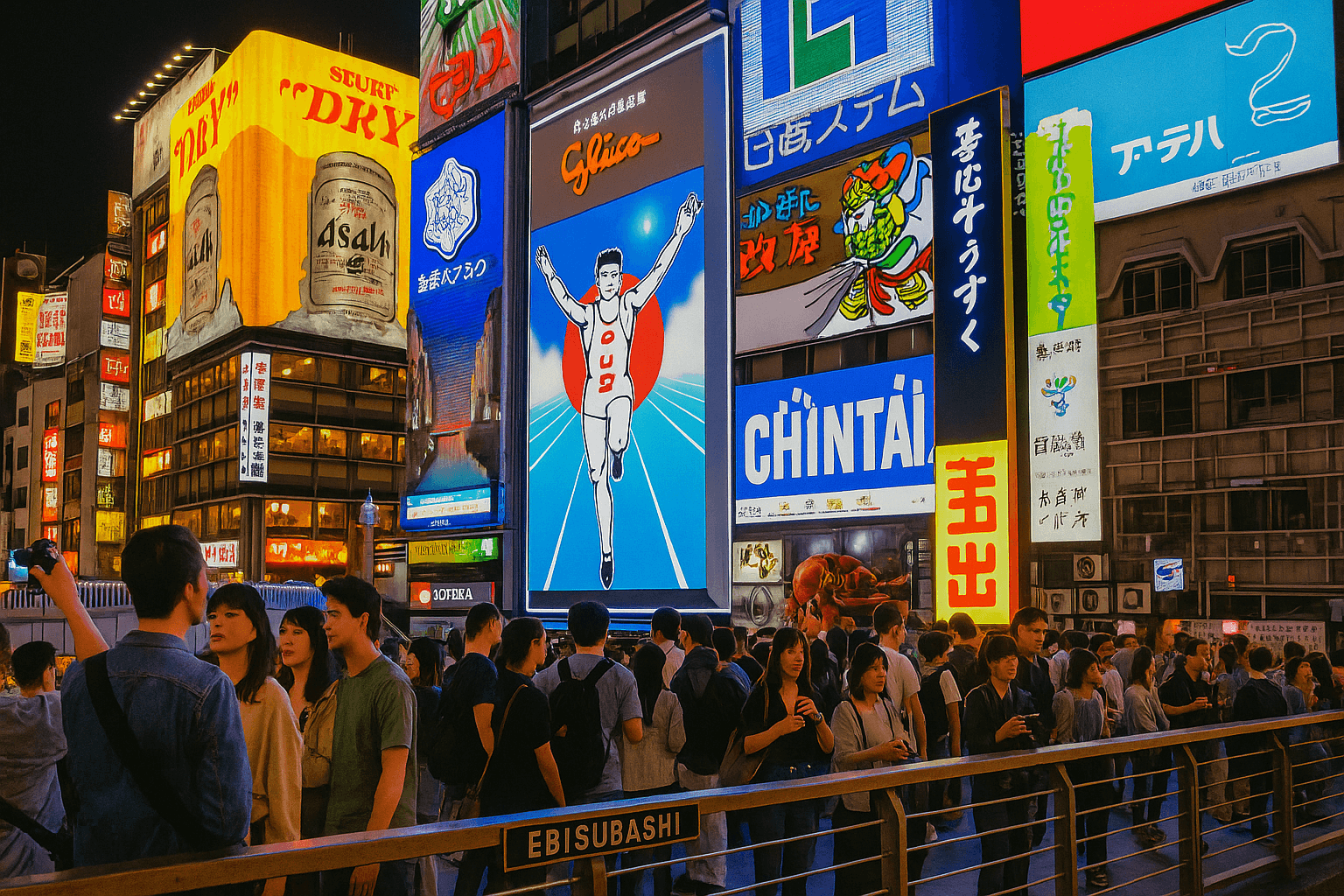
The Glico Sign is the iconic neon billboard of a running man on the Dotonbori canal in Osaka’s Namba district. First installed in 1935 and updated many times since, the sign has become a symbol of Osaka’s energy, nightlife, and food culture. It appeals to first-time visitors seeking a classic photo-op, evening strollers enjoying neon-lit streets, and return travelers exploring Kansai’s lively entertainment quarter.
Why Visit
- Instant Osaka landmark and one of the city’s most recognizable photo spots.
- Central to Dotonbori’s food, shopping, and nightlife scene—easy to combine with dining and sightseeing.
- A lively riverside view that captures Osaka’s urban atmosphere, especially at night.
Main Areas & What to See
The Glico Sign (viewing point)
- What it is: A large illuminated billboard showing a runner crossing a finish line above the canal.
- Why it matters: A cultural shorthand for Osaka—appears in travel photos, postcards, and local media.
- What to notice/do: Take photos from the Ebisu-bashi bridge or the riverbank; try variations from different angles and at night when the neon is vivid.
Ebisu-bashi Bridge
- What it is: The pedestrian bridge directly facing the Glico Sign.
- Why it matters: The classic vantage point for the Glico shot and a hub for crowds.
- What to notice/do: Arrive early evening to catch sunset-to-neon transition; watch for street performers and local life.
Dotonbori Canal Walks
- What it is: A promenade along the canal lined with restaurants and entertainment signs.
- Why it matters: Offers a broader sense of the neighborhood’s scale and lively storefronts (Kani Doraku crab, giant takoyaki signs, etc.).
- What to notice/do: Combine the photo stop with a walking food tour—takoyaki, okonomiyaki, and kushikatsu are local specialties.
River Cruise (optional)
- What it is: Short boat tours along the Dotonbori canal.
- Why it matters: Provides a low-angle view of the Glico Sign and other neon facades.
- What to notice/do: Good for photos without the crowd; check departure points and schedules on-site.
Best Time to Visit
- Time of day: Twilight to early night (around 5:30–9:30 PM) is best—natural light fading with neon glowing.
- Crowd considerations: Evenings are busy; for fewer people, arrive just after sunset or before 6 PM on weekdays.
- Atmosphere differences: Daytime feels busy and commercial; night is atmospheric, photogenic, and louder.
Seasonal Highlights
- Spring (Mar–May): Comfortable weather for long walks; cherry blossoms nearby on riverbanks in some spots.
- Summer (Jun–Aug): Warmer and humid—late-night energy peaks with street food and festival crowds.
- Autumn (Sep–Nov): Cooler evenings make nighttime strolls pleasant; fewer tourists than peak summer.
- Winter (Dec–Feb): Crisp nights with clear neon—clever layering recommended; holiday decorations may add sparkle.
Practical Tips
- Cultural etiquette: Be mindful of pedestrians on bridges; avoid standing in the middle of crowded walkways for long photo sessions.
- Photography rules/restrictions: Public space—photos are fine for personal use; be respectful of individuals and performers; tripod use can be restricted during busy times.
- Payment/access/timing: Dotonbori is free to visit; nearby restaurants accept cash and cards—carry some yen for small stalls. Many businesses stay open late.
- Estimated visit duration: 20–60 minutes for the sign and immediate area; 1.5–3 hours if combining with food and a canal walk.
Getting There
- Nearest stations: Namba Station (Nankai, JR, Osaka Metro—Sakai-suji, Midosuji and Yotsubashi lines) and Nippombashi Station (Sakaisuji/ Sennichimae lines).
- Typical travel time from city center: From Osaka Station (Umeda) about 10–15 minutes by subway or 15–25 minutes by local transit depending on route; from Kansai International Airport about 45–60 minutes by train.
Is It Worth It?
Yes—if you want a succinct taste of Osaka’s neon personality, a famous photo spot, and immediate access to some of the city’s best street food. Expect crowds and plan to combine the stop with dining or a canal walk; for a quieter experience, visit just after sunset on a weekday.