
Introduction
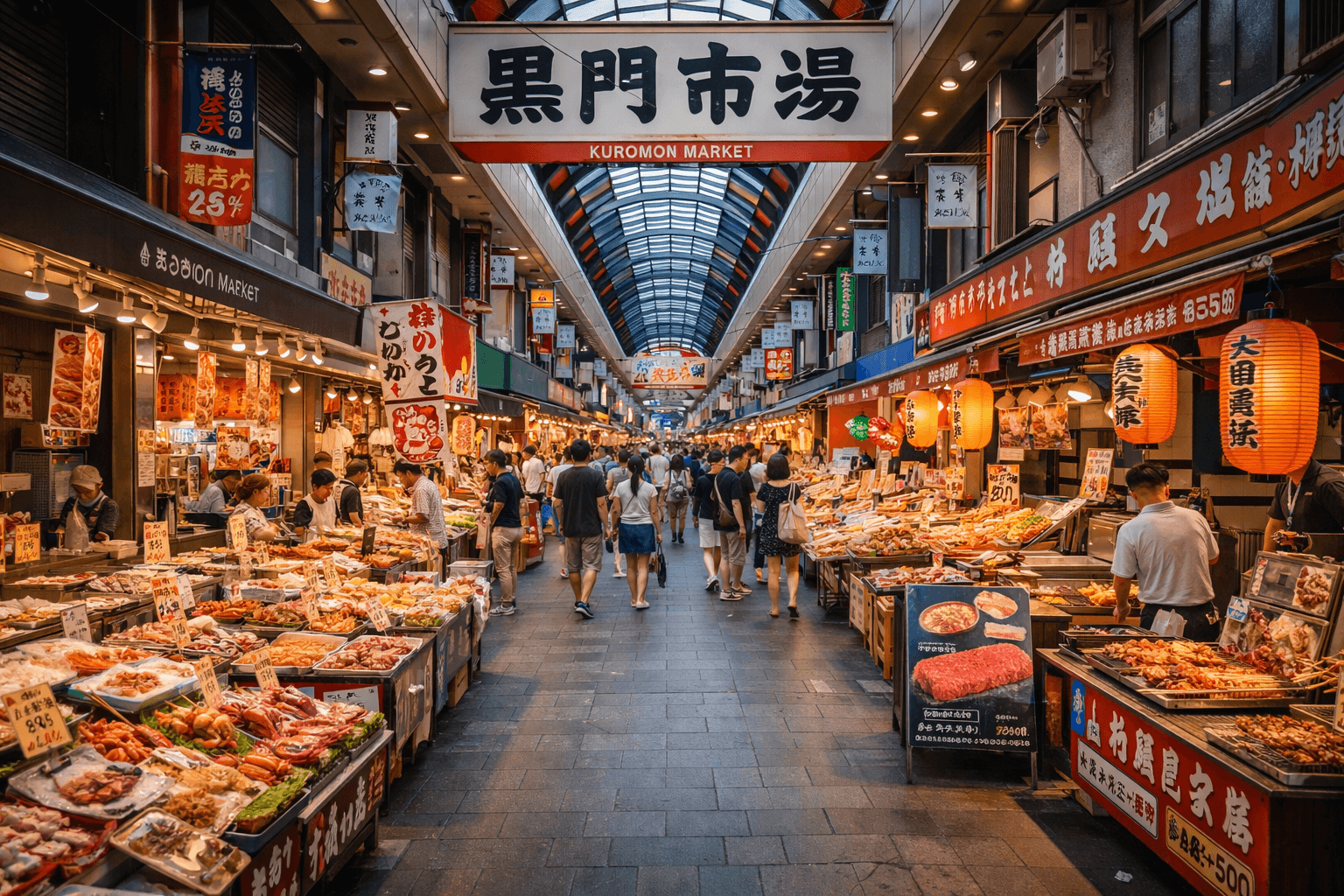
Kuromon Market (Kuromon Ichiba) is a covered market street in central Osaka known for fresh seafood, produce, and ready-to-eat stalls. Dating back more than a century as a wholesale market, it blends everyday shopping with a lively tasting route that showcases Osaka’s food culture. The market appeals to food lovers, first-time visitors who want hands-on tasting, and return travelers looking for authentic local flavors and quick meals.
Why Visit
- Sample high-quality seafood, street snacks, and seasonal produce in small portions.
- Experience a working market atmosphere where vendors prepare food to order.
- Discover regional ingredients and quick local meals inexpensive and fresh.
- Good for short, flexible visits—easy to combine with nearby neighborhoods (Namba, Dotonbori).
Main Areas & What to See
-
Central Arcade
- What it is: The long covered shopping street that forms the market’s spine.
- Why it matters: Most vendors, eateries, and tasting counters are here; it’s where the market’s energy is concentrated.
- What to notice/do: Walk slowly, sample takoyaki, grilled scallops, uni, and seasonal sashimi; many stalls offer single-serving tastings.
-
Seafood Counters
- What it is: Fresh fish, shellfish, and prepared sashimi sold by specialist stalls.
- Why it matters: Osaka is famous for seafood; these stalls let you taste premium items without a restaurant reservation.
- What to notice/do: Point at what you want, ask for a small portion; if buying raw fish to eat on site, eat immediately and keep waste minimal.
-
Fresh Produce & Specialty Shops
- What it is: Stalls selling fruit, vegetables, pickles, wagashi (Japanese sweets), and condiments.
- Why it matters: Highlights regional produce and ingredients used in Osaka cuisine.
- What to notice/do: Try seasonal fruit samples and buy small jars of pickles or sauces to take home.
-
Cooked-Food Stalls and Small Eateries
- What it is: Takoyaki, kushikatsu-style skewers, grilled seafood, and bento-style counters.
- Why it matters: Perfect for a quick, affordable meal while exploring.
- What to notice/do: Stand at counters or find a nearby bench; be mindful of queue order and tray etiquette.
-
Specialty Knife & Kitchenware Shops
- What it is: Local merchants selling knives, utensils, and housewares.
- Why it matters: Osaka has a strong culinary tradition—this is where home cooks and professionals shop.
- What to notice/do: Handle items carefully and ask about customs declarations if buying high-value knives to carry home.
Best Time to Visit
- Time of day: Morning to early afternoon (8:00–13:00) is best for vendors with peak freshness and the full range of stalls open.
- Crowd considerations: Mid-mornings on weekdays are quieter; weekends and holidays (especially midday) are busiest with tourists.
- Atmosphere differences: Early morning feels local and work-focused; late morning–early afternoon is lively and best for sampling.
Seasonal Highlights
- Spring: Fresh spring vegetables, early fish varieties, and seasonal sweets appear.
- Summer: Shellfish, grilling stalls, and cold snack items are popular; markets can feel humid.
- Autumn: Peak seafood season—octopus, certain fish, and hearty produce; many stalls offer seasonal tastings.
- Winter: Richer seafood (crab, fatty fish) and warm dishes; quieter streets on very cold days.
- Events: The market itself has no major single festival for tourists, but seasonal food promotions and local shopping days occur—check stall notices when you arrive.
Practical Tips
- Cultural etiquette: Be polite and brief when ordering; a small bow and a clear "kudasai" or pointing are fine. Don’t block aisles; let sellers finish transactions.
- Photography: Taking photos of products is usually fine; ask before photographing vendors closely or any prepared food being served to a customer.
- Payment & access: Many stalls accept cash only; some accept cards or mobile pay—carry cash (¥) for small purchases. The market is mostly flat and covered but can be narrow when busy.
- Timing: Plan 45–90 minutes for a focused tasting visit; 2+ hours if you want to shop, eat multiple items, and browse specialty shops.
Getting There
- Nearest stations: Nippombashi Station (Sakaisuji and Sennichimae lines) and Nipponbashi exit toward Kuromon Market; Namba Station is a 5–10 minute walk.
- Typical travel time from the city center: From Osaka Station (Umeda) expect 15–25 minutes by subway or train plus a short walk; from Namba it’s a 5–10 minute walk.
Is It Worth It?
Yes—especially for food-focused visitors. Kuromon Market offers immediate, tactile access to Osaka’s flavors in one compact area. If you want fine dining, it’s not a replacement, but for tasting, shopping for ingredients, and quick, authentic bites, it’s a practical and rewarding stop. Expect crowds at peak times and plan mornings for the freshest experience.