
Introduction
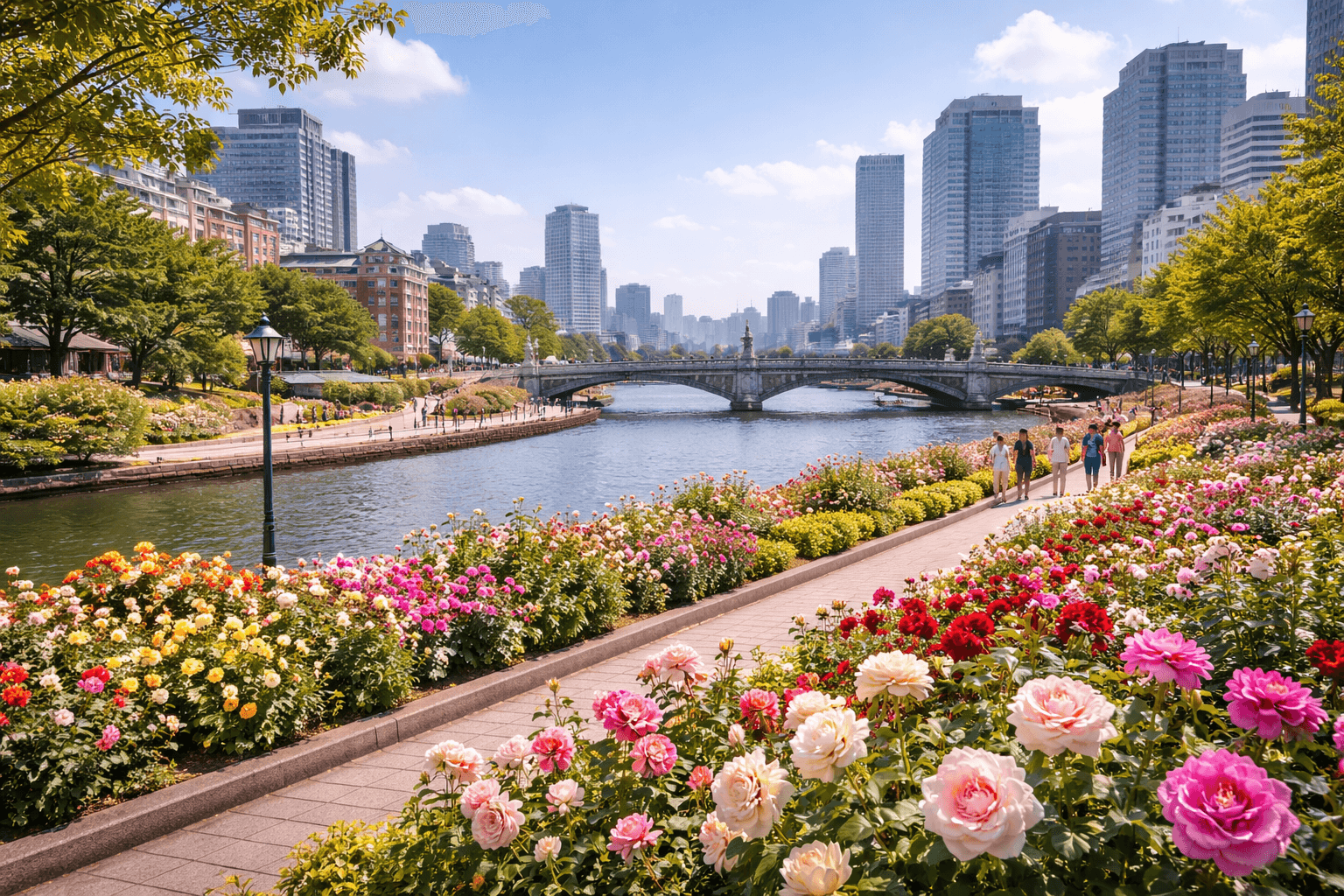
Nakanoshima Park is a narrow, landscaped island park that sits between the Dojimagawa and Tosabori rivers in central Osaka. A green ribbon of trees, fountains, and walkways, it connects several cultural institutions and historic buildings, offering a peaceful contrast to the surrounding business district. The park is significant for its Meiji- and Taisho-era architecture nearby, its role as a riverside promenade, and as a popular spot for seasonal viewing and quiet breaks.
Who it's for: urban walkers, architecture and museum lovers, photographers, couples and families seeking an easy riverside stroll, and anyone wanting a calm outdoor spot near Osaka's central business areas.
Why Visit
- Scenic riverside setting in the middle of the city.
- Close access to museums, cafés, and historic buildings.
- Attractive for cherry blossoms in spring and illuminated trees in winter.
- Easy to combine with a short cultural itinerary (museums, galleries, historical sites).
Main Areas & What to See
Nakanoshima Promenade
- What it is: The main walkway along the riverbanks lined with plane trees and benches.
- Why it matters: Offers uninterrupted views of the river, bridges, and city skyline.
- What to notice/do: Walk both sides of the island, pause at benches to watch river traffic, and photograph reflections at golden hour.
Rose Garden (Seasonal)
- What it is: A compact rose garden near the center of the park.
- Why it matters: Adds color and fragrance during blooming months.
- What to notice/do: Visit in late spring to early summer when roses are at their best; look for varieties labeled in English and Japanese.
Central Fountain and Open Lawn
- What it is: A small plaza with a fountain and grassy areas for sitting.
- Why it matters: Popular spot for picnics, reading, or short rest stops.
- What to notice/do: Bring a light picnic or buy takeout from nearby cafés and enjoy the riverside view.
Osaka Central Public Hall (nearby)
- What it is: A historic red-brick concert hall on the island's edge (Taisho-era architecture).
- Why it matters: One of Osaka's most photographed historic buildings and often hosts exhibitions and performances.
- What to notice/do: Admire the façade from the park; check schedules if you want to attend an event or guided tour.
Nakanoshima Museums and Cultural Facilities
- What it is: Several cultural venues are within short walking distance, including art and science museums.
- Why it matters: Makes the park a cultural hub rather than just a green space.
- What to notice/do: Combine a museum visit with a stroll—many museums have cafés with river views.
Best Time to Visit
- Time of day: Early morning for quiet and soft light; late afternoon to sunset for photographic reflections and golden light. Midday is fine for a café stop.
- Crowds: Generally not crowded compared with other Osaka attractions; weekends and cherry-blossom season are busiest.
- Atmosphere differences: Morning—tranquil and local; afternoon—more office workers on breaks; evening—softly lit and pleasant for strolls.
Seasonal Highlights
- Spring: Cherry blossoms along parts of the riverbank create a short but lovely bloom show—popular for walks and photos.
- Summer: Lush greenery and shaded paths; some outdoor events may take place nearby.
- Autumn: Tree colors add warm tones to the riverscape; pleasant temperatures for longer walks.
- Winter: Crisp air and occasional illuminated trees or nearby winter events provide a cozy evening atmosphere.
Practical Tips
- Cultural etiquette: Keep noise to a minimum, dispose of trash in designated bins or take it with you (public bins are limited), and avoid obstructing paths.
- Photography: Public park—photograph freely for personal use. Be respectful of people, events, and any no-photo signs inside nearby museums or events.
- Payment/access: Park is free to enter. Nearby museums, cafés, and concert halls have separate admission and payment methods (cards widely accepted, but small cafés may prefer cash).
- Timing: A casual stroll and short breaks take 30–60 minutes; combine with a museum or nearby historic site for a half- to full-day outing.
Getting There
- Nearest stations: Nakanoshima Station (Keihan Nakanoshima Line) is the closest; Kitahama Station (subway Sakaisuji/Keihan lines) and Yodoyabashi Station (subway Midosuji/Keihan lines) are 5–10 minute walks away depending on where you enter the island.
- Typical travel time from city center: From Osaka Station (Umeda area) allow about 15–25 minutes by subway or a short taxi ride, depending on connections.
Is It Worth It?
Yes—especially if you want a peaceful riverside interlude between museum visits or shopping. Nakanoshima Park won’t take an entire day, but it’s a high-value, low-effort stop that showcases a quieter side of Osaka and pairs well with nearby cultural attractions.