
Introduction
Namba is Osaka’s energetic commercial and nightlife heart, a dense neighborhood of shopping arcades, neon-lit streets, izakaya-lined alleys and transport hubs. Historically a port and market area, it grew into a modern entertainment district that blends traditional Osaka street food culture with cutting-edge retail and nightlife. Namba appeals to food lovers, shoppers, night owls, and travelers who want a compact slice of contemporary Kansai life.
Why Visit
- World-class street food and casual dining (takoyaki, okonomiyaki, kushikatsu).
- Convenient base with major train and subway connections for exploring Osaka and Kansai.
- Vibrant nightlife and late-night shopping — lively well into the night.
- Dense cluster of contrasting experiences: retro alleys (Hozenji), bright boulevards (Dotonbori), and modern malls (Namba Parks).
Main Areas & What to See
-
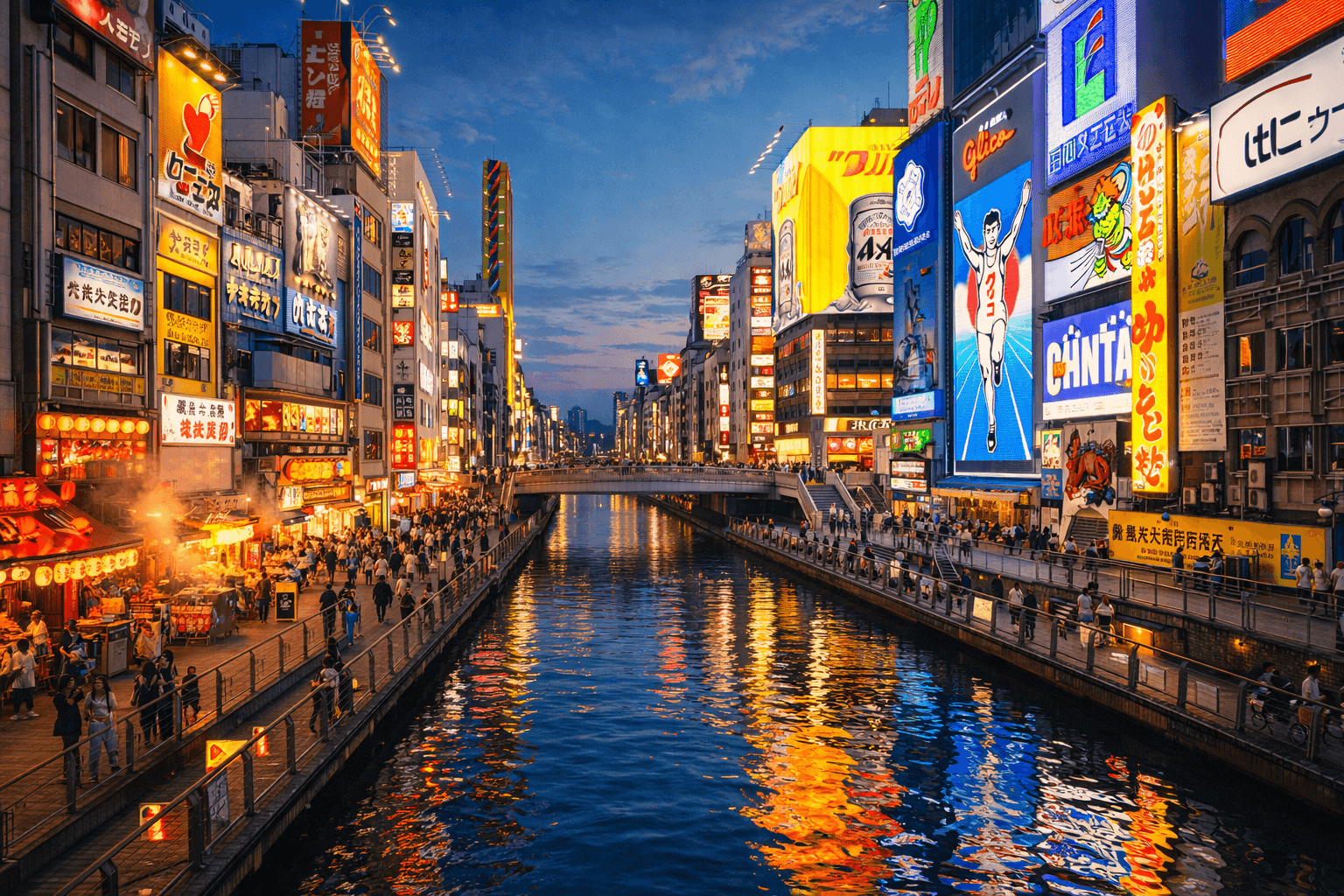
Dotonbori
- What it is: The iconic canal-side entertainment strip famous for neon signs, large mechanized shopfronts, and riverside promenades.
- Why it matters: It’s the visual symbol of Osaka’s fun-loving spirit and a great place to sample street food and people-watch.
- What to notice/do: Walk along the canal at night, photograph the Glico running man sign, try takoyaki from a reputable stall, and cross the Ebisu Bridge for prime views.
-
Shinsaibashi-suji Shopping Arcade
- What it is: A long, covered shopping arcade connecting to Namba with a mix of international brands, local boutiques and specialty shops.
- Why it matters: Offers sheltered shopping and a sense of Osaka’s retail culture; an easy place to buy fashion, souvenirs and snacks.
- What to notice/do: Explore side streets for independent stores, visit department stores (e.g., Daimaru), and sample local confectionery.
-
Namba Parks
- What it is: A multi-level shopping and office complex with a rooftop garden that rises like terraced parkland.
- Why it matters: A calm, green contrast to surrounding streets and a practical stop for dining, shopping and photos.
- What to notice/do: Walk the rooftop garden for skyline views, pick a café for a break, and use it as a wayfinding landmark.
-
Hozenji Yokocho and Hozenji Temple
- What it is: A narrow, atmospheric alley beside the larger commercial areas leading to a small, moss-covered temple statue.
- Why it matters: Preserves a quieter, traditional side of Osaka and demonstrates the city’s juxtaposition of old and new.
- What to notice/do: Respect the temple’s small shrine (no loud behavior), try local eateries in the alley, and take low-key photos of the lantern-lit passage.
-
Namba Station Complex (Namba Walk, OCAT)
- What it is: A network of underground malls and transport facilities connecting subway lines, private railways and buses.
- Why it matters: Key for efficient travel across Osaka and onward to Kansai; also full of affordable eateries and convenience stores.
- What to notice/do: Use the underground passages to avoid bad weather, check departure boards for train lines, and pick up snacks or bento.
Best Time to Visit
- Time of day recommendations: Evening (7–11 PM) is best for Dotonbori’s neon and dining; late afternoon suits shopping and rooftop walks; early mornings offer quiet streets and better photo light.
- Crowd considerations: Weekends, national holidays and evenings are busiest. If you prefer fewer crowds, visit on weekday mornings or early afternoons.
- Atmosphere differences: Daytime is active and practical (shopping, museums), evenings are theatrical and social (street food, bars), late night becomes more local and party-oriented.
Seasonal Highlights
- Spring (Mar–May): Comfortable temperatures and cherry blossom pockets nearby; fewer local festivals in Namba itself but excellent citywide sightseeing weather.
- Summer (Jun–Aug): Hot and humid; expect lively nightlife and extended hours. Nearby festivals and fireworks across Osaka can increase crowds.
- Autumn (Sep–Nov): Cool, pleasant weather and attractive foliage around nearby parks; popular travel season so expect more visitors.
- Winter (Dec–Feb): Cooler evenings with seasonal illumination displays; sales season in January can be busy for shoppers.
- Events: Namba hosts pop-up markets, illumination events and seasonal promotions; check local event listings for exact dates during your visit.
Practical Tips
- Cultural etiquette: Bow slightly when greeting, queue politely for food stalls and stores, and avoid loud phone conversations in trains and quiet alleys.
- Photography: Public areas are fine to photograph; be discreet and avoid shooting people close-up without permission, especially inside small eateries and temples.
- Payment & access: Many shops accept cards, but small stalls and older izakaya may be cash-only — keep yen handy. Free Wi‑Fi is limited; buy a data SIM or portable Wi‑Fi if you need constant access.
- Timing & pacing: Expect 1–3 hours for a quick Dotonbori/shopping visit, half a day to combine shopping, food and Park, and a full evening for food and nightlife.
Getting There
- Nearest stations: Namba Station (served by JR, Nankai, Kintetsu, Osaka Metro Midosuji, Yotsubashi and Sennichimae lines) and Namba’s underground walkways connect to the area.
- Typical travel time from city center: From Umeda (Osaka Station), take the Midosuji Line to Namba in about 10–15 minutes; from Kansai Airport, Nankai Rapit is about 34–45 minutes to Namba depending on the service.
Is It Worth It?
Namba is worth visiting for its compact concentration of Osaka’s signature experiences: outstanding casual food, accessible shopping and lively nightlife. For first-time visitors it offers an efficient, memorable introduction to the city’s character; returning travelers will find new pockets and seasonal events to enjoy. If you dislike crowds and neon, limit your time to morning visits or nearby quieter neighborhoods.