
Introduction
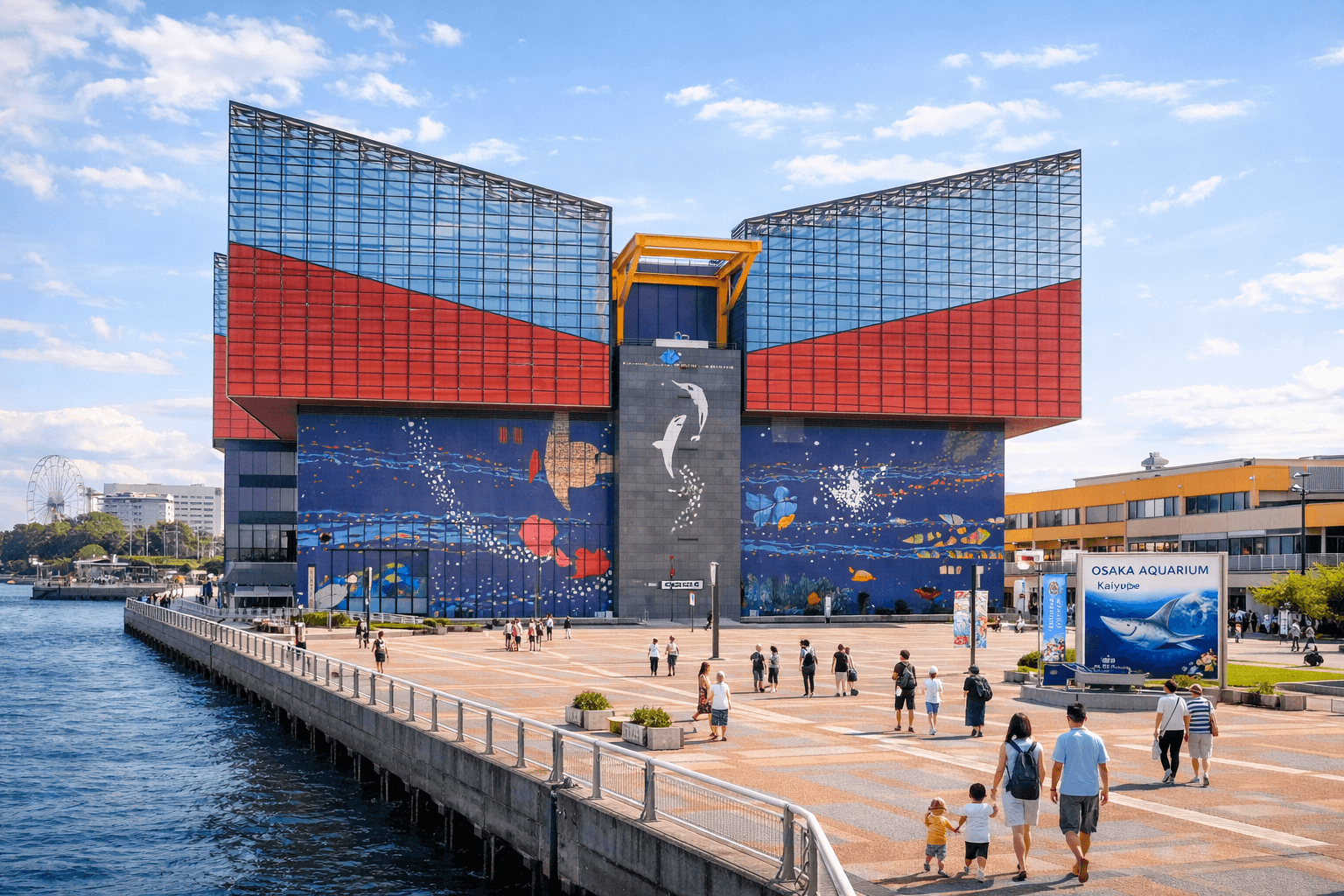
Osaka Aquarium Kaiyukan (Kaiyukan) is one of the world’s largest public aquariums, located in the Tempozan Harbor Village on Osaka Bay. Centered around a massive Pacific Ocean tank and a spiral route of exhibit galleries, Kaiyukan is known for immersive, close-up views of marine life—from whale sharks to jellyfish—presented in thoughtfully recreated habitats. It appeals to families, nature lovers, photographers, and travelers who enjoy educational, sensory experiences rather than quick “photo stops.”
Why Visit
- See a full-scale, multi-level presentation of Pacific Rim ecosystems with a standout central tank.
- Close encounters with large species (including whale sharks when present) and dynamic exhibits that are family-friendly and educational.
- Well-designed, accessible circulation that allows steady pacing and excellent viewing angles.
Main Areas & What to See
Pacific Ocean (Central Tank)
- What it is: The aquarium’s signature multi-story tank that houses large pelagic species.
- Why it matters: It anchors the whole exhibit and demonstrates scale—especially striking if larger fish are present.
- What to notice/do: Watch from different levels to appreciate depth; capture slow panning shots; note the feeding times if displayed.
North Pacific and Aleutian Islands Gallery
- What it is: Cool-water habitats with kelp, rock formations, and species from northern Pacific waters.
- Why it matters: Offers contrast to tropical exhibits and shows seasonal, nutrient-rich ecosystems.
- What to notice/do: Look for foraging behaviour and inter-species interactions among rockfish and invertebrates.
Japan Forest & Mangrove Galleries
- What it is: Shallow-water environments representing coastal and estuarine systems near Japan.
- Why it matters: Highlights species local to the region and the ecological links between land and sea.
- What to notice/do: Observe mudflat and mangrove creatures; these galleries are great for kids to learn about ecosystems.
Antarctic and Southern Oceans
- What it is: Cold-water tanks featuring penguins and other polar species.
- Why it matters: Provides an educational look at polar marine life and adaptation to extreme conditions.
- What to notice/do: Penguins are often active—watch their underwater swimming from viewing windows.
Tropical Rainforest & Coral Reefs
- What it is: Lush displays and colorful reef tanks showcasing tropical biodiversity.
- Why it matters: Excellent for macro observation—reef fishes, corals, anemones and small invertebrates.
- What to notice/do: Slow down for close-ups; many smaller species show interesting behaviors best seen at eye level.
Touch Tanks and Interactive Zones
- What it is: Supervised areas where visitors can gently touch certain creatures.
- Why it matters: Great for tactile learning and memorable experiences for children.
- What to notice/do: Follow staff instructions, sanitize hands, and handle animals only as directed.
Best Time to Visit
- Time of day: Early morning just after opening or mid-afternoon (after the lunch rush) are the calmest times. Late afternoon close to closing can be quiet too.
- Crowd considerations: Weekdays are less crowded than weekends and public holidays. School vacation periods draw families and groups.
- Atmosphere differences: Mornings feel fresher and less noisy; evenings—if the aquarium offers extended hours or illumination events—can be atmospheric and great for photography.
Seasonal Highlights
- Spring/Summer: Warmer-water exhibits and outdoor areas (if open) feel livelier; summer school holidays increase crowds.
- Autumn: Comfortable visiting weather in the city—often a pleasant time for combined harbor-front walks.
- Winter: Cooler, calmer city crowds; indoor exhibits are comfortably warm and often quieter.
- Special events: Kaiyukan sometimes offers seasonal displays, feedings, or themed exhibits—check current schedules before you go.
Practical Tips
- Cultural etiquette: Keep voices low in exhibit galleries, avoid tapping on glass, and follow staff instructions for animal interactions.
- Photography: Photography for personal use is welcome in most areas; avoid flash where signs prohibit it (it can disturb animals). Tripods and professional setups may be restricted—ask staff.
- Payment & tickets: Tickets are sold at the aquarium and often online. Consider advance purchase to skip queues—verify current pricing and reservation policies before you go.
- Accessibility: The facility is designed for wheelchairs and strollers with ramps and elevators; staff can assist if needed.
- Estimated visit duration: Plan 2–3 hours for a relaxed visit; allow 3+ hours if attending shows, touch pools, or nearby attractions.
Getting There
- Nearest station: Osakako Station (Osaka Metro Chuo Line) is the closest station—about a 5–10 minute walk to Tempozan Harbor Village where Kaiyukan sits.
- From city center: From Namba or Umeda, expect roughly 20–35 minutes by subway and/or tram depending on connections. Taxis from central Osaka typically take 20–30 minutes depending on traffic.
- Combined visits: Kaiyukan is next to Tempozan Marketplace, the Tempozan Ferris Wheel, and the cruise/harbor promenade—easy to combine into a half-day itinerary.
Is It Worth It?
For most visitors—yes. Kaiyukan offers a thoughtfully arranged, immersive marine experience that rewards a focused visit, especially for families and wildlife enthusiasts. If you prefer large-scale, contemplative exhibits and close animal viewing over quick novelty attractions, you’ll find it worthwhile. If your schedule is extremely tight and you’re indifferent to aquariums, consider prioritizing other Osaka highlights and visit Kaiyukan when you have 2–3 leisure hours to spare.
(Practical note: check current opening hours, ticketing, and any special restrictions before your visit.)