
Introduction
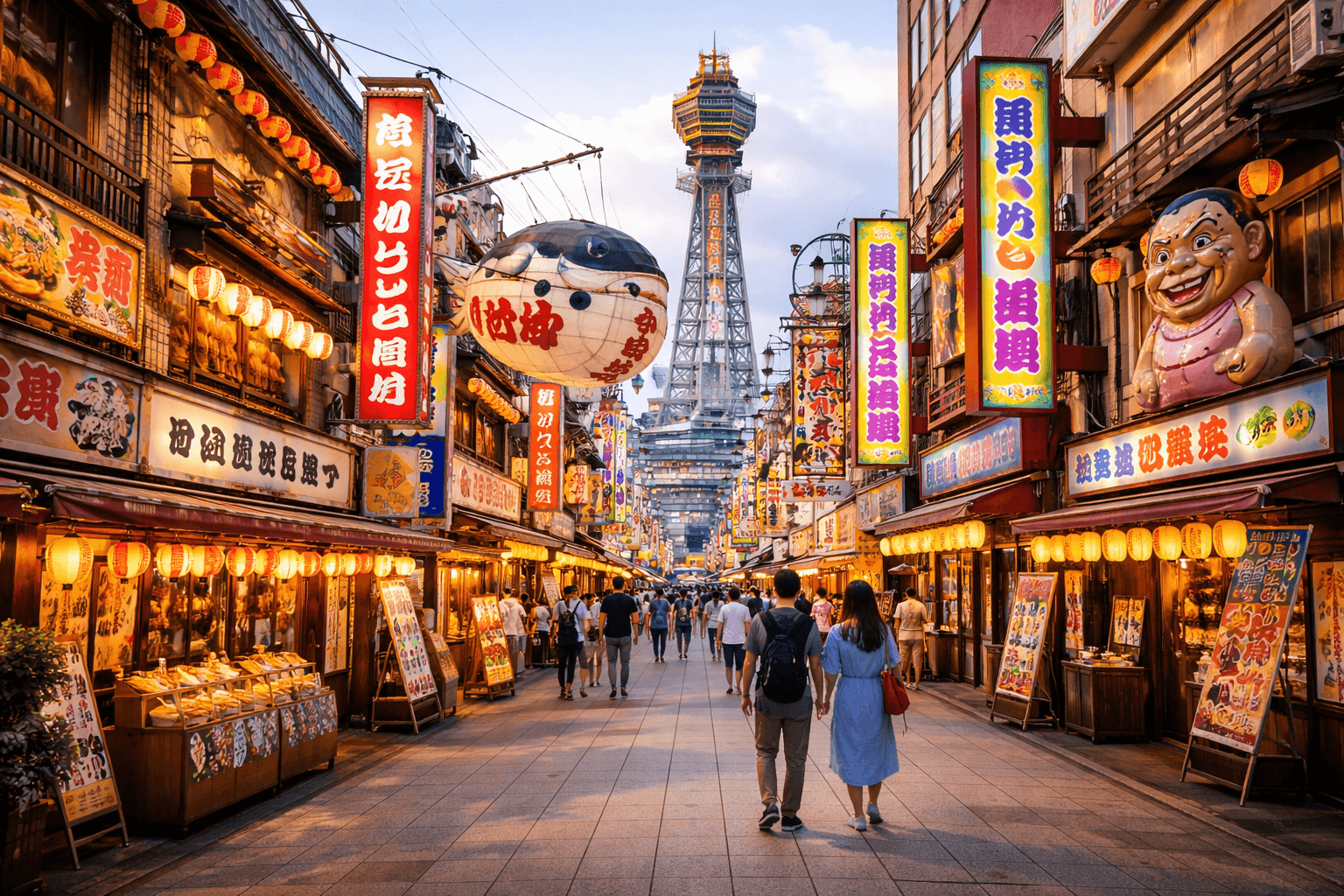
Shinsekai is a compact, nostalgic neighborhood in southern Osaka built around the early 20th-century idea of a modern entertainment district. Its name literally means "New World"; today it blends retro Showa-era charm, neon-lit streets, and working-class eateries with the iconic Tsutenkaku Tower at its heart. Shinsekai offers a sensory, down-to-earth snapshot of Osaka life and appeals to travelers who want authentic food, photogenic street scenes, and a neighborhood that feels lived-in rather than polished.
Why Visit
- Classic Osaka street food culture: kushikatsu, takoyaki stalls, and cheap local bars.
- Vintage atmosphere: retro signage, narrow alleys, and a gritty but welcoming vibe.
- Iconic landmark: Tsutenkaku Tower views and its museum-like exhibits.
- Easy to combine with nearby attractions: Tennoji Park, Tennoji Zoo, and Abeno Harukas.
Main Areas & What to See
Tsutenkaku Tower
What it is: A 1912-inspired observation tower rebuilt after WWII; a local symbol. Why it matters: Offers panoramic views and a peek into Osaka's postwar popular-culture history. What to notice/do: Ride up for the view, look for the Billiken statue (stick its feet for luck), and browse the tower's small shops and exhibition spaces.
Ebisubashi and the Main Street (Shinsekai's Central Corridor)
What it is: The pedestrian-friendly artery lined with kushikatsu restaurants, neon signs, and game parlors. Why it matters: The strip captures Shinsekai's culinary draw and lively street energy. What to notice/do: Try kushikatsu (deep-fried skewers) at a reputable shop, respect the "no double-dipping" rule, and wander side alleys for quieter bars and photo opportunities.
Janjan Yokocho (Alleyways)
What it is: Cramped, atmospheric alleys full of tiny eateries, izakayas, and local shops. Why it matters: These alleys are where Shinsekai feels most intimate and everyday. What to notice/do: Look for family-run stalls, sample small plates, and strike up friendly conversation — many owners appreciate simple greetings in Japanese.
SpaWorld and Public Bath Culture
What it is: A large multi-floor spa complex mixing international-themed baths and relaxation areas. Why it matters: It's a modern contrast to the neighborhood's retro feel and a way to experience Japanese bathing culture. What to notice/do: Follow bathing etiquette (wash before entering communal baths), check gender-segregated floors, and be aware of tattoo policies (ask staff or use private baths if needed).
Retro Shops & Arcades
What it is: Stores selling vintage toys, memorabilia, and small arcades with classic games. Why it matters: They preserve the district's Showa-era character and are fun for collectors and photographers. What to notice/do: Browse window displays, buy inexpensive souvenirs, and keep an eye out for humane opening hours — many are small, family-run operations.
Best Time to Visit
- Time of day: Early evening is ideal — the neon signs come alive and restaurants open, creating a lively yet manageable atmosphere. Late-night visits are colorful but busier and noisier.
- Crowd considerations: Weekends and holiday evenings attract the most visitors; weekday afternoons are quieter and better for slow exploration and photos.
- Atmosphere differences: Daytime feels residential and calm; after dusk Shinsekai becomes festive, loud, and food-focused.
Seasonal Highlights
- Spring: Mild weather makes alley-wandering pleasant; nearby Tennoji Park has cherry blossoms (peak varies each year).
- Summer: Busy evenings with open-air dining and a stronger festival vibe; expect heat and humidity.
- Autumn: Cooler temperatures and clearer skies for tower views; comfortable for longer walks.
- Winter: Fewer tourists and cozy indoor dining; some shops may shorten hours around New Year.
- Festivals: Occasional local festivals and events occur in nearby Tennoji and Abeno areas — check local listings if you plan travel during a specific season.
Practical Tips
- Cultural etiquette: Greet staff with a polite "konnichiwa" or "arigatou"; remove shoes where requested; keep voices moderate inside restaurants.
- Kushikatsu rules: Do not double-dip sauce; use provided cabbage or separate sauce container if offered.
- Photography: Street photography is generally acceptable, but be respectful when photographing people (ask permission for close portraits) and avoid intrusive shots inside small eateries unless you ask staff.
- Payment & access: Many small shops prefer cash (yen); ATMs that accept foreign cards are available in convenience stores and major stations. Major credit cards are accepted at larger restaurants and attractions like SpaWorld and Tsutenkaku.
- Languages: English signage exists but is limited in smaller businesses — a translation app or basic Japanese phrases helps.
- Estimated visit duration: 1.5–3 hours to explore main streets and eat; 3–5 hours to include tower, spa, and a relaxed meal.
Getting There
- Nearest stations: Dobutsuen-mae Station (Osaka Metro Midosuji and Sakaisuji lines) and Ebisucho Station (Tanimachi Line) are the closest subway stops.
- Typical travel time from city center: From Umeda (Osaka Station) or Namba, expect 10–20 minutes by subway depending on connections; from Kansai Airport allow about 50–70 minutes by train.
- Walking connections: Shinsekai is an easy walk from Tennoji Station (10–15 minutes), making it convenient to combine with nearby attractions.
Is It Worth It?
Short answer: Yes, if you value authentic street food, retro atmosphere, and people-watching. Shinsekai isn't a polished tourist showcase — its appeal lies in atmosphere, affordable eats, and character.
Balanced perspective: For a quick taste of Osaka's down-to-earth side or an evening of kushikatsu and neon-lit photos, allocate a couple of hours. If you prefer upscale dining or highly curated sights, combine Shinsekai with nearby Tennoji or Abeno for a fuller day. Overall, it's an efficient, memorable stop on most Osaka itineraries.