
Introduction
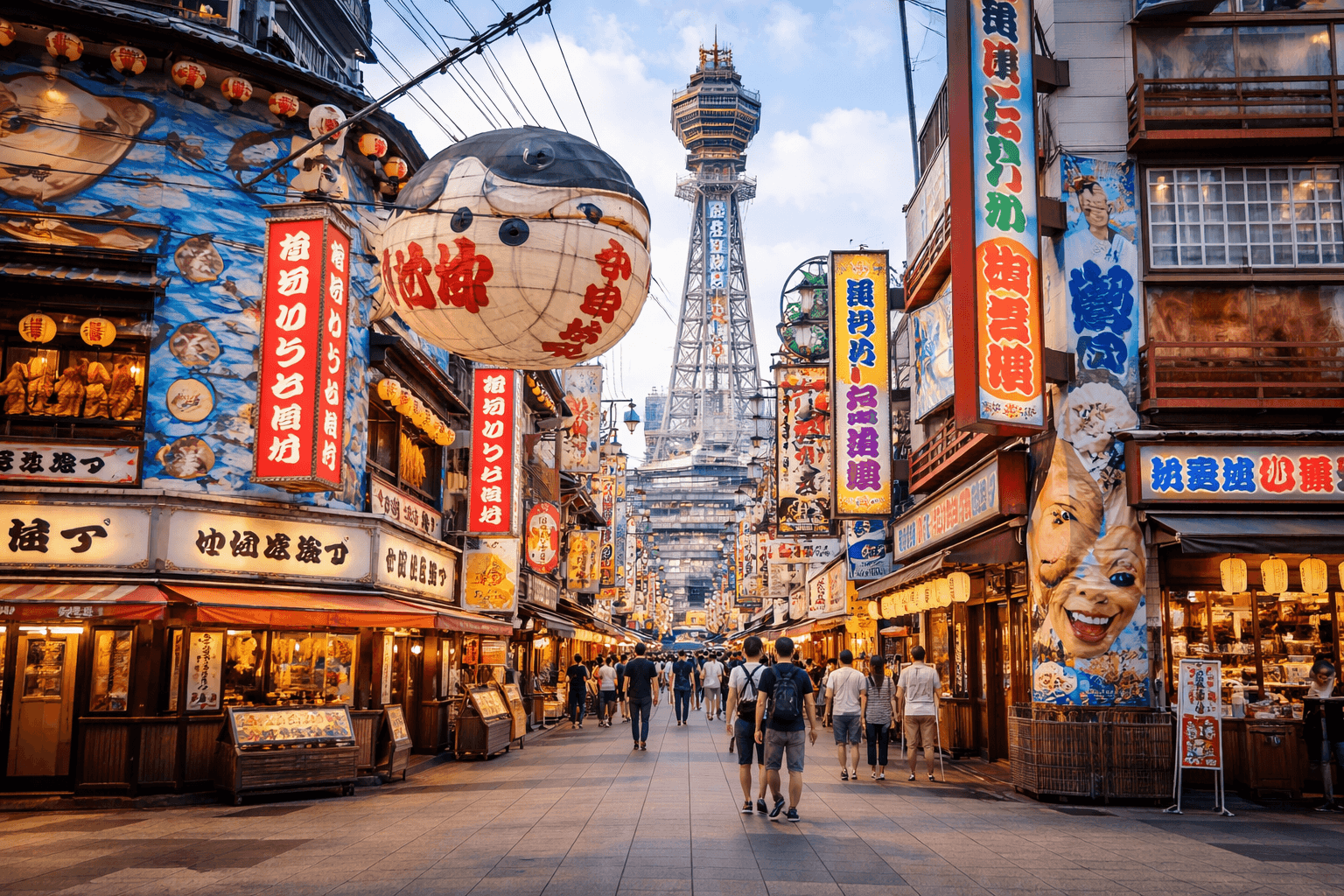
Tsutenkaku Tower is an iconic observation tower in Osaka’s Shinsekai neighborhood, recognized by its neon lights and retro atmosphere. Built as a symbol of modernity in the early 20th century and rebuilt after World War II, it blends local history, pop-culture charm, and everyday street life. The tower appeals to history-minded visitors, photographers seeking neon-lit scenes, food lovers exploring Shinsekai’s kushikatsu culture, and travelers who enjoy offbeat urban neighborhoods.
Why Visit
- Classic Osaka skyline viewpoint with a distinctive retro vibe.
- Easy gateway to Shinsekai’s street-food scene and local culture.
- Photogenic day-to-night contrasts: daytime city views and colorful night illumination.
- Short, rewarding stop suitable for tight schedules or neighborhood exploration.
Main Areas & What to See
Observation Deck
- What it is: The tower’s main viewing floor offering 360-degree views over southern Osaka.
- Why it matters: Provides perspective on Osaka’s dense urban fabric, nearby parks, and, on clear days, distant landmarks.
- What to notice/do: Walk the full circle to catch different angles, check the weather board for visibility, and read the informational panels about the city layout.
Neon Facade & Illuminations
- What it is: The tower’s changing external light displays and the famous neon signage.
- Why it matters: Tsutenkaku’s lights are a visual symbol of Osaka nightlife and Shinsekai’s retro character.
- What to notice/do: Photograph from the base plaza or nearby streets at dusk when the colors pop; consider returning after dark for the best effect.
Billiken Shrine (Inside/near the tower)
- What it is: A small statue called Billiken (the “god of things as they ought to be”) housed in or close to the tower.
- Why it matters: A local folk icon—visitors rub the statue’s feet for good luck, a common Shinsekai ritual.
- What to notice/do: Observe the modest, casual shrine etiquette—queue politely and avoid loud behavior while others pray.
Shinsekai Streets & Kushikatsu Eateries
- What it is: The surrounding neighborhood of narrow streets, retro shops, and many kushikatsu (deep-fried skewers) restaurants.
- Why it matters: Offers a full-sensory slice of Osaka: food, neon signs, and local atmosphere distinct from the city center.
- What to notice/do: Try kushikatsu at a reputable spot (remember the shared-dipping etiquette—no double-dipping), browse small game arcades, and look for vintage storefronts.
Best Time to Visit
- Time of day: Late afternoon into early evening is ideal—daylight views turn into illuminated scenes after sunset.
- Crowd considerations: Weekends and evenings are busiest; weekday mornings are quietest for photos and a calmer observation deck experience.
- Atmosphere differences: Daytime feels nostalgic and local; night brings an energetic, neon-lit urban nightlife vibe.
Seasonal Highlights
- Spring: Mild weather makes rooftop viewing pleasant; cherry-blossom spots elsewhere in Osaka add context to skyline views.
- Summer: Longer daylight and late-night energy; expect more visitors and lively street scenes.
- Autumn: Clearer skies and comfortable temperatures—good visibility for distant views.
- Winter: Crisp air can yield the best long-range visibility; evenings are chilly but the lights feel especially atmospheric.
- Festivals: Shinsekai and nearby wards host various local events through the year; these can amplify crowds and street activity—check local listings if timing matters.
Practical Tips
- Cultural etiquette: Be polite and patient in queues; when visiting Billiken, follow the local custom quietly. Respect small-business staff in kushikatsu restaurants.
- Photography: Allowed in public areas and observation deck; be mindful of signs and private areas. Use flashes discreetly in low-light indoor spaces.
- Payment & access: The tower charges a modest admission for the observation deck—carry cash or card depending on the ticket desk; nearby shops accept cash more readily. Many restaurants are cash-preferred.
- Accessibility: There are elevators to the observation levels, but some older streets in Shinsekai are uneven—bring comfortable shoes.
- Estimated visit duration: 45–90 minutes if combining observation deck, Billiken, and a quick street-food stop; 2–3 hours for a relaxed meal and neighborhood wander.
Getting There
- Nearest stations: Ebisucho Station (Subway Sakaisuji Line) and Dobutsuen-mae Station (Osaka Metro Midosuji and Sakaisuji lines) are the closest metro stops.
- Typical travel time from city center: From Namba (a central hub) it’s a 5–10 minute subway ride or a 15–20 minute walk; from Umeda (Osaka Station area) expect about 20–30 minutes by subway.
Is It Worth It?
Yes—Tsutenkaku is a compact, character-rich stop that rewards a short visit with authentic local flavor and memorable views. It’s not a sweeping architectural wonder, but for travelers wanting Osaka’s less-polished, lively side—food, neon, and neighborhood history—it’s definitely worth including on a day in Shinsekai. If you have limited time, pair it with nearby attractions (Spa World, Tennoji Park) to make the most of the area.