
Introduction
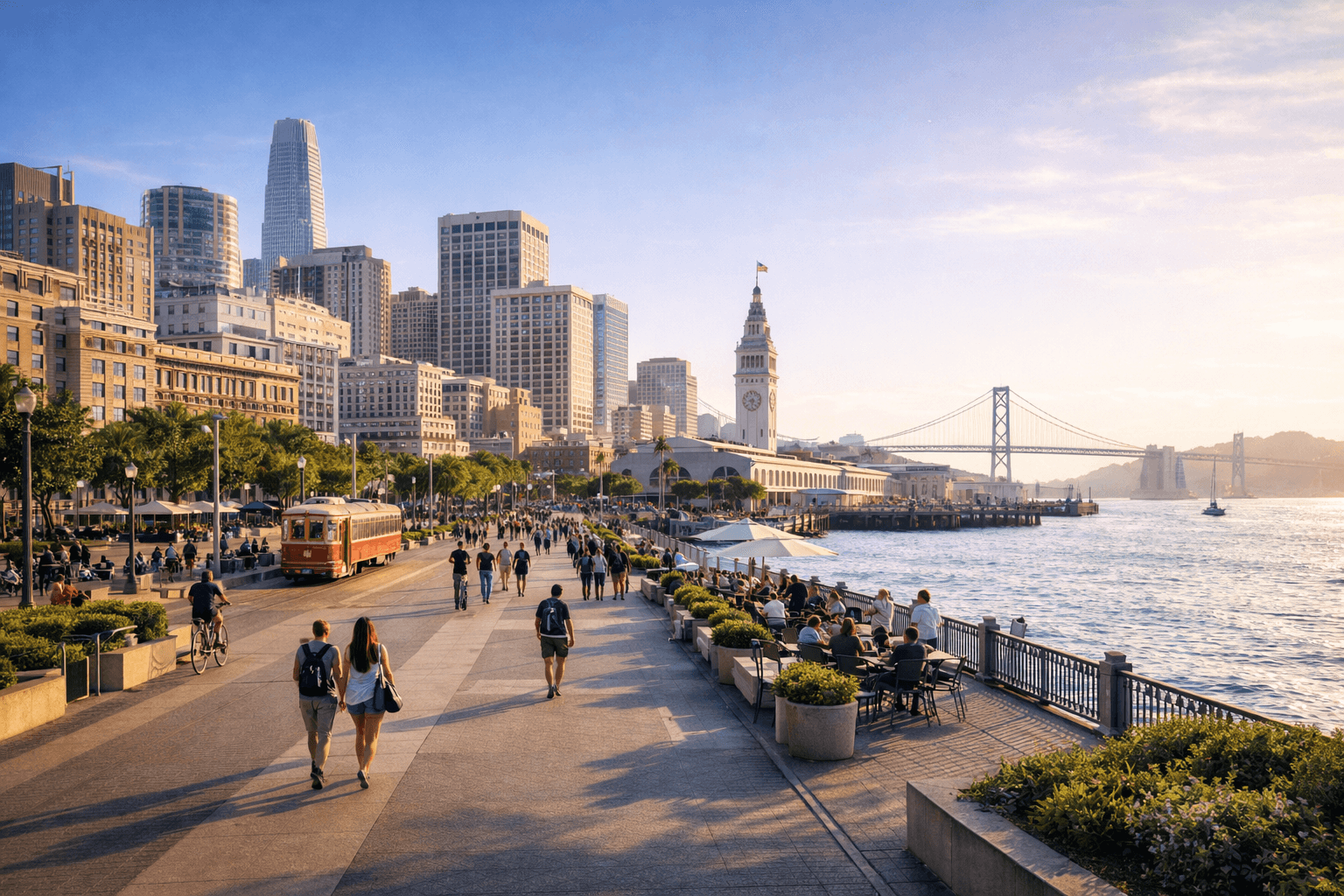
The Embarcadero is San Francisco’s waterfront promenade running along the eastern edge of the city from the Ferry Building to Fisherman’s Wharf. Once an industrial waterfront and freeway corridor, it’s now a lively civic spine where ferries, markets, public art, historic piers, and sweeping bay views meet. The area blends everyday local life with classic tourist sights and tells a lot of San Francisco’s maritime and transportation history.
The Embarcadero appeals to: first-time visitors seeking iconic views and access to ferry rides; repeat travelers who enjoy food markets, people-watching, and walking; and anyone interested in architecture, public space, or bayfront recreation.
Why Visit
- Waterfront views of the Bay Bridge, Bay, and passing ferries.
- The Ferry Building Marketplace: local food, farmers’ market, and artisanal shops.
- Easy access to piers, museums, and boat tours (Alcatraz, bay cruises).
- Pleasant, flat walking and cycling route with public art and historic structures.
- Strong public-transport connections for wider San Francisco explorations.
Main Areas & What to See
Ferry Building & Ferry Plaza
- What it is: Restored 1898 Beaux-Arts terminal and indoor marketplace.
- Why it matters: A hub for Bay Area producers and a great introduction to local food culture.
- What to notice/do: Browse shops and cafés, sample oysters or cheese, visit the farmers’ market (Tuesdays, Thursdays, and large Saturday market), and step outside for unobstructed views of the Bay Bridge.
Embarcadero Promenade (the esplanade)
- What it is: A wide, palm-lined walkway running north-south along the waterfront.
- Why it matters: It connects many piers and provides uninterrupted bay views and public art.
- What to notice/do: Walk or bike north toward Fisherman’s Wharf or south toward Oracle Park; look for mosaics and plaques, benches for sunset watching, and frequent street performers.
Pier 7 & Pier 14
- What it is: Public piers offering vantage points over the water.
- Why it matters: Pier 7 is a quiet, photogenic wooden pier; Pier 14 sits directly under the Bay Bridge with dramatic city-to-bridge perspectives.
- What to notice/do: Photograph sunrise or sunset, watch ferries and sailboats, and enjoy the openness—Pier 7 is often less crowded.
Historic Piers & Waterfront Landmarks (Piers 1–33)
- What it is: A sequence of piers with varied uses—restaurants, museums, and attractions.
- Why it matters: The piers trace the city’s maritime past and house key attractions like the Exploratorium (Pier 15) and seasonal food stalls.
- What to notice/do: Check visiting hours for the Exploratorium, walk the piers' promenades, and sample seafood at select piers.
Fisherman’s Wharf & Pier 39 (northern end)
- What it is: A tourist hub with shops, seafood restaurants, and sea lion viewing at Pier 39.
- Why it matters: Classic San Francisco tourist experience and gateway to boat tours.
- What to notice/do: Expect crowds; plan early morning or late afternoon visits for easier movement; consider booking Alcatraz or bay cruises from nearby piers.
South Embarcadero & Civic Anchors (AT&T Park/Oracle Park view)
- What it is: Southern stretch toward SoMa and the ballpark area.
- Why it matters: Good for catching game-day energy and access to museums and tech-centric neighborhoods.
- What to notice/do: Combine a promenade walk with a visit to nearby museums or a Giants game when in season.
Best Time to Visit
- Time of day: Early morning for calm light and fewer people; late afternoon to sunset for golden light on the Bay Bridge; evenings can be breezy but atmospheric.
- Crowd considerations: Weekends—especially Saturday—are busiest (farmers’ market and Ferries); weekdays are quieter, midday popular with office workers.
- Atmosphere differences: Mornings feel local and relaxed; afternoons are busier and social; evenings offer skyline and bridge illuminations.
Seasonal Highlights
- Spring (Mar–May): Mild temperatures and blooming street plantings; good farmers’ market produce.
- Summer (Jun–Aug): Cooler, often foggy “Karl” conditions in the morning; clearer late afternoons. Peak tourist season—expect crowds.
- Fall (Sep–Nov): Often the warmest and clearest weather—best window for long waterfront walks and photography.
- Winter (Dec–Feb): Cooler and windier, but fewer tourists; holiday lights and occasional winter festivals on the piers.
Seasonal events: The Ferry Building hosts seasonal food events and holiday markets; check local listings for parades, fireworks (e.g., New Year’s) and temporary festivals.
Practical Tips
- Cultural etiquette: San Franciscans are casual—be polite, yield to cyclists on shared paths, and keep noise reasonable in residential sections.
- Photography: Public spaces are fine for photos; respect signage, private businesses, and individuals’ privacy. Some piers or indoor venues may restrict tripods—ask first.
- Payment & access: Many waterfront vendors accept cards and contactless payments; carry a small card or phone payment method. Restrooms are available in the Ferry Building and at selected piers.
- Safety & weather: Wind off the bay can be strong—dress in layers and bring a windproof jacket. Watch for slick surfaces after rain.
- Mobility: Flat, accessible route with ramps; wheelchair-accessible restrooms at major piers and the Ferry Building.
- Estimated visit duration: 1–3 hours for a focused visit (Ferry Building + a short walk); half a day to explore multiple piers, museums, and a meal.
Getting There
- Nearest transit: Embarcadero BART station (Embarcadero/Market) places you steps from the Ferry Building. Muni F-Line historic streetcar runs along the waterfront. Several bus routes and Muni Metro lines stop at or near Market Street.
- From downtown/SOMA: 5–15 minutes by transit or a 10–25 minute walk, depending on starting point.
- From other parts of the city: Expect 20–40 minutes by public transit from most neighborhoods; driving is possible but parking near the piers can be limited and expensive.
Is It Worth It?
Yes—especially for first-time visitors. The Embarcadero offers a compact, accessible slice of San Francisco: food culture at the Ferry Building, striking bay and bridge views, and easy connections to ferries and attractions. For repeat visitors, it’s a pleasant place to relax, people-watch, and pick up local produce or specialty food items.
Balanced note: If you’re short on time and not interested in waterfront walks or food markets, prioritize a brief stop at the Ferry Building and a photo at Pier 14; otherwise, allow more time to enjoy the pace and views.