
Introduction
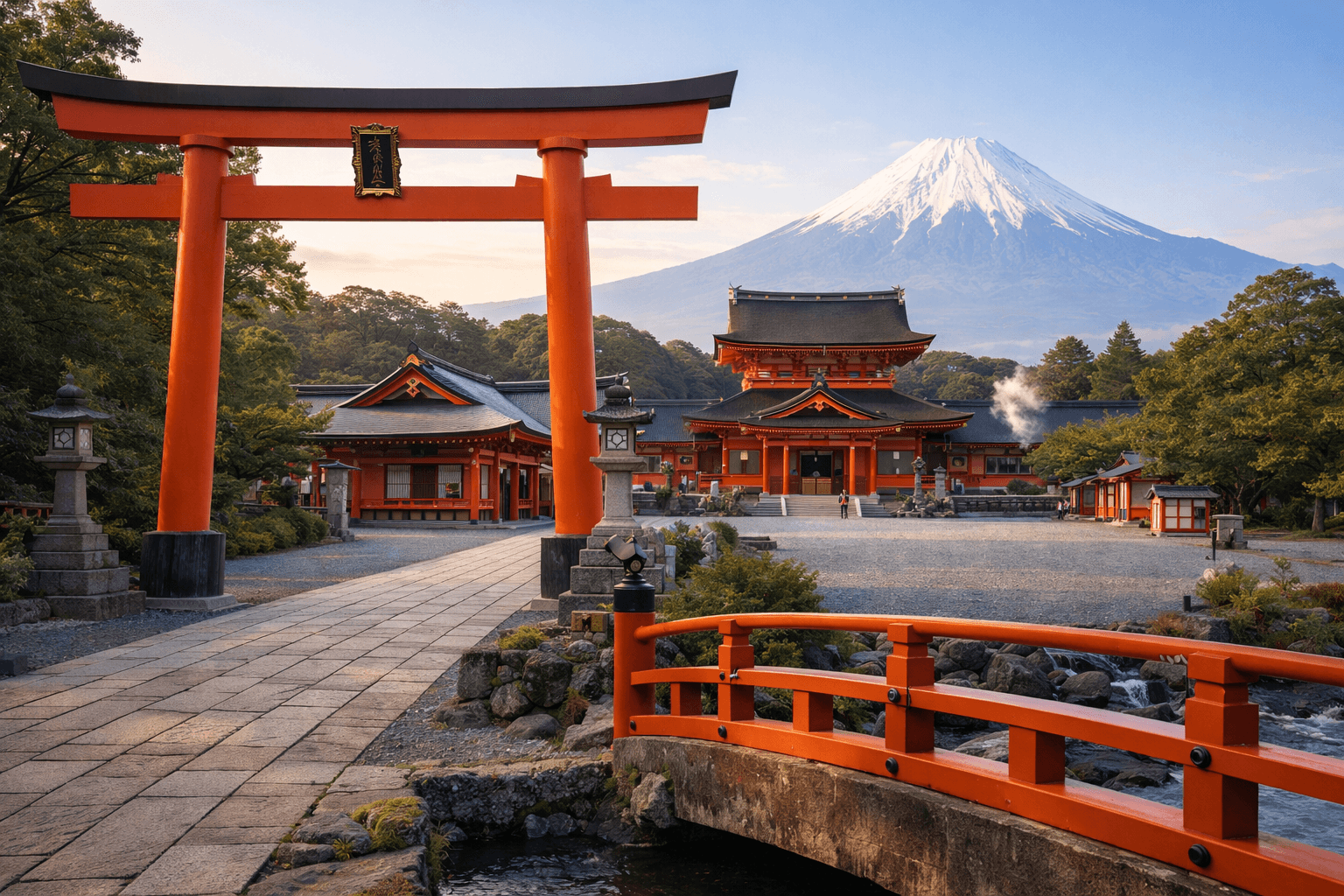
Fujisan Hongu Sengen Taisha (often shortened to Fujisan Hongu Sengen) is the head shrine of the Sengen and Asama shrines dedicated to Mount Fuji, located in Fujinomiya, Shizuoka Prefecture. The shrine has served as a spiritual gateway to Mount Fuji for centuries: it was a center for mountain worship (fuji-ko) and remains an important cultural and religious site linked to the mountain’s status as a sacred peak. The site appeals to pilgrims, history and architecture lovers, photographers, and travelers planning to climb or view Mount Fuji.
Why Visit
- Deep cultural ties to Mount Fuji and traditional Shinto rituals.
- A well-preserved shrine complex with striking torii, gates, and ancient trees.
- Close access to excellent views of Mount Fuji (weather permitting) and convenient links to climbing routes.
- Quieter, more contemplative alternative to busier tourist spots.
Main Areas & What to See
Approaching Torii and Shrine Avenue
What it is: A large stone torii marks the entrance, followed by a tree-lined avenue leading to the main complex. Why it matters: The torii frames the sacred precinct and prepares visitors for the transition from ordinary to sacred space. What to notice/do: Walk slowly, respect worshippers, and pause for photos that include the torii and, on clear days, Mount Fuji beyond.
Main Haiden (Worship Hall) and Honden (Main Sanctuary)
What it is: The Haiden is the public worship hall where offerings and prayers are made; the Honden houses the shrine’s principal deity and is typically closed to public access. Why it matters: The architecture reflects Edo-period rebuilding and Shinto aesthetics tied to mountain worship. What to notice/do: Observe ritual etiquette — bow, clap if appropriate, and keep voice low. Photography is usually allowed outside but avoid intrusive shots of worshippers.
Sengu and Historical Structures
What it is: Ancillary buildings, restored gates, and the treasure house showcasing shrine artifacts and historical items. Why it matters: These structures tell the shrine’s history as a pilgrimage hub and its connection to Fuji cults. What to notice/do: Check opening times for any small museums; read signage (English available at major points) to contextualize artifacts.
Ancient Camphor Trees and Sacred Forest
What it is: Large, centuries-old trees within the shrine precinct. Why it matters: In Shinto, ancient trees are often considered yorishiro—objects that attract spirits—so they are central to the site’s atmosphere. What to notice/do: Take a quiet moment beneath the canopy; these trees are excellent for contemplative photography.
Viewpoints Toward Mount Fuji
What it is: Several sightlines within and just outside the shrine grounds offering views of Mount Fuji. Why it matters: The shrine was historically valued as a place from which to venerate the mountain; a clear view enhances the spiritual experience. What to notice/do: For the best shots, position yourself with the shrine architecture in the foreground and the mountain behind; check the weather forecast before your visit.
Best Time to Visit
- Time of day: Early morning (shortly after opening) or late afternoon for softer light and fewer visitors. Sunrise can be exceptional when combined with clear skies.
- Crowds: Weekdays and off-peak seasons (late autumn through spring, excluding Golden Week) are quieter. Weekends and Fuji climbing season (July–August) bring more visitors.
- Atmosphere differences: Mornings feel tranquil and devotional; midday is busier and brighter for photography; evenings are calm but some facilities may close early.
Seasonal Highlights
- Spring (March–May): Early cherry blossoms and fresh greenery; pleasant temperatures for walking.
- Summer (June–August): Lush foliage; peak climbing season for Mount Fuji—expect more pilgrims and tourists.
- Autumn (September–November): Clearer skies with crisp air and autumn colours — often the best visibility for views of Mount Fuji.
- Winter (December–February): Cold but often the clearest views of Mount Fuji with snow-capped summit; fewer visitors and a quieter shrine experience.
- Festivals: The shrine hosts traditional rituals and seasonal festivals. If you want to attend a ceremony, check local event calendars for exact dates (they vary year to year).
Practical Tips
- Cultural etiquette: Bow at torii before entering, speak softly, and follow shrine signage. When making an offering: wash hands and mouth at the temizuya (purification basin) and follow local worship customs at the Haiden.
- Photography: Generally permitted in outdoor areas; avoid photographing worshippers during private rites and respect any "no photography" signs near the Honden or during ceremonies.
- Payment/access: Entrance to the main shrine area is typically free; small fees may apply for special exhibits or the treasure house. Credit cards are not always accepted at nearby small shops—carry some cash (yen).
- Facilities: Restrooms and a visitor information office are available but may have limited hours. Nearby souvenir shops and small eateries serve local specialties.
- Estimated visit duration: 45 minutes to 2 hours depending on interest level (quick visit vs. exploring exhibits and views).
Getting There
- Nearest major station: Fujinomiya Station (JR Tokaido Line). From Fujinomiya Station, the shrine is about a 15–20 minute taxi ride or a 30–40 minute walk depending on pace.
- From Tokyo: Approximately 2–2.5 hours by train (Tokaido Shinkansen to Shizuoka or Shin-Fuji, then local service or bus/taxi to Fujinomiya).
- From Shizuoka city center: Roughly 45–60 minutes by car or a combination of local trains and buses.
- Access tips: Local buses connect Fujinomiya Station with the shrine area; taxis are convenient if you have luggage or tight timeframes.
Is It Worth It?
Short answer: Yes — especially if you value cultural depth, quieter shrine precincts, and the chance for close-up Mount Fuji views. For climbers and those interested in Japan’s mountain-worship traditions, the shrine is essential. If your schedule or weather prevents mountain visibility, combine the visit with nearby attractions (Shiraito Falls, Fujinomiya Yakiho) to make the trip more rewarding.