
Introduction
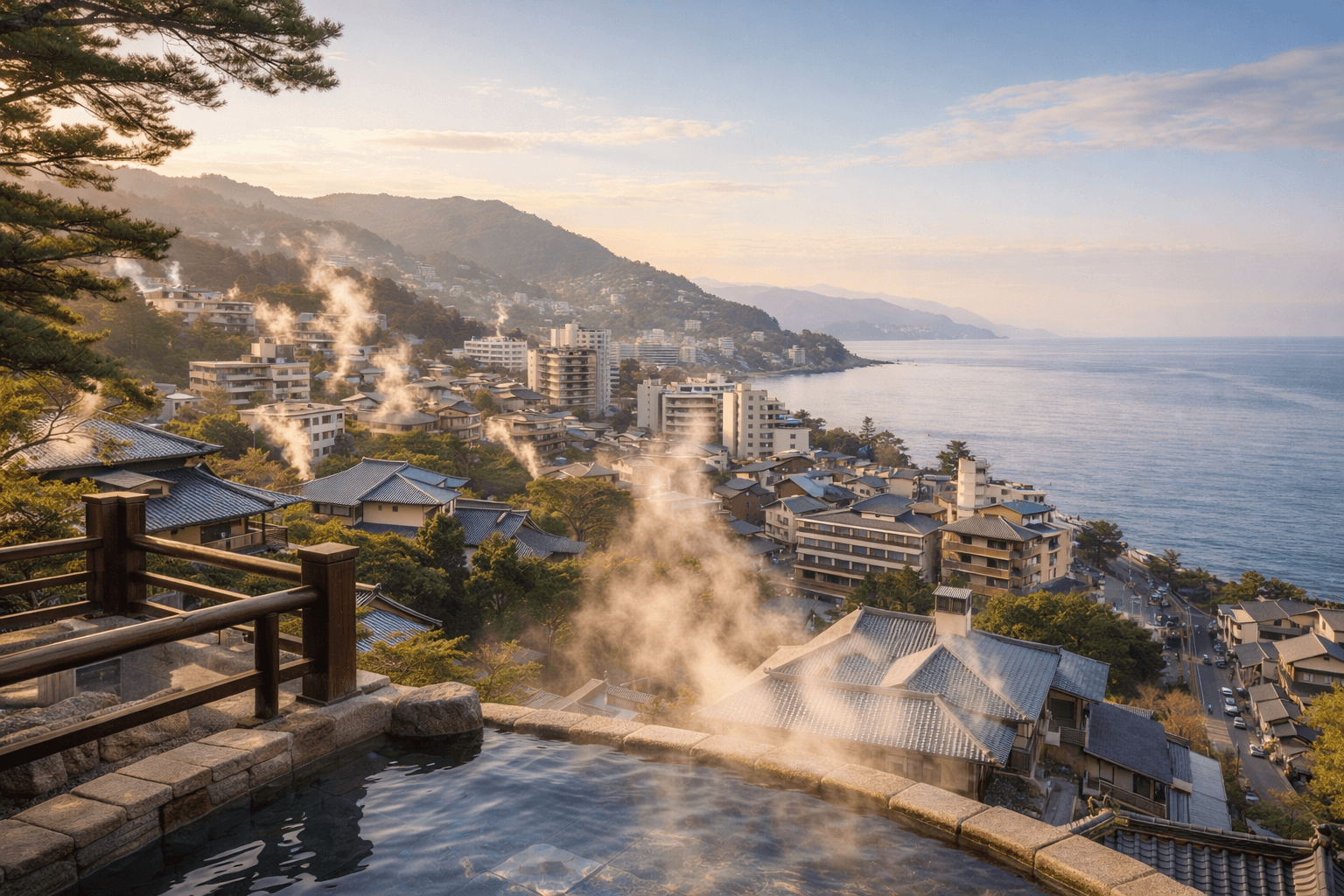
Ito Onsen is the historic hot-spring district centered around Ito City on the eastern coast of the Izu Peninsula, Shizuoka Prefecture. Known for seaside views, a cluster of public baths and ryokan (traditional inns), and a history as a coastal resort since the Meiji era, Ito blends beachside scenery with Japan’s onsen culture. It appeals to day-trippers from Tokyo, couples and families seeking a relaxing onsen stay, and onsen enthusiasts interested in public-bath hopping and local ryokan experiences.
Why Visit
- Easy weekend escape from Tokyo with scenic coastal setting.
- Variety of baths: public sento, day-use onsen, ryokan with indoor/outdoor pools.
- Walkable town center with seafood, local sweets, and small museums.
- Good base for exploring the Izu coast (Jogasaki, Mount Omuro, Ito Marine Town).
Main Areas & What to See
-
Ito Station & Surrounding Streets
- What it is: The town’s transport hub and gateway to local shops and restaurants.
- Why it matters: Many ryokan and day-baths are within a 10–20 minute walk; easy connections to the Izu Kyūkō Line.
- What to notice/do: Buy a souvenir sweet (manju), check local tourist info for bath passes and walking routes.
-
Public Bathhouses (e.g., Yugawara-style public baths / local sento)
- What it is: Small municipal and privately run public baths scattered through town.
- Why it matters: Affordable way to experience different spring waters and communal bathing culture.
- What to notice/do: Bring small towel (or rent one), follow onsen etiquette (wash before entering, no swimsuits), watch for gender-segregated hours.
-
Ryokan Districts and Large Onsen Hotels
- What it is: Traditional inns offering overnight stays and private or open-air baths.
- Why it matters: Full onsen experience—kaiseki dinners, yukata, and private rotenburo (outdoor baths) with ocean views at some properties.
- What to notice/do: Book dinner-inclusive plans for best experience; check whether day-use bathing is available.
-
Ito Marine Town & Sun Beach
- What it is: Small coastal leisure area with shops, cafes, and a promenade.
- Why it matters: Easy seaside strolls after bathing; good sunset spots.
- What to notice/do: Combine a beach walk with fresh seafood at local eateries.
-
Seven Lucky Gods Onsen Circuit
- What it is: A charming walking route linking several small public baths and shrines dedicated to good fortune.
- Why it matters: Cultural way to explore the town and try multiple baths.
- What to notice/do: Pick up a map at tourist information and pace yourself—some baths are small and limited in hours.
Best Time to Visit
- Time of day: Early morning for quiet outdoor baths and late afternoon to dusk for sunset views from rotenburo. Evening is best for ryokan stays and dinner.
- Crowds: Weekends and national holidays are busiest; weekday mornings are calm. Summer sees beach visitors; winter sees more onsen-focused guests.
- Atmosphere differences: Mornings are relaxed and local; evenings lively around dining in ryokan and restaurants.
Seasonal Highlights
- Spring (Mar–May): Mild weather, cherry blossoms in nearby parks and along rivers—pleasant walking conditions.
- Summer (Jun–Aug): Beach season; combine onsen with seaside activities but expect more tourists and higher rates.
- Autumn (Sep–Nov): Peak colors inland on the Izu Peninsula; cooler air makes outdoor baths especially appealing.
- Winter (Dec–Feb): Quietest season for tourism; hot springs feel most comforting—some ryokan offer special seafood winter menus.
- Festivals/events: Local summer festivals and occasional fireworks on the Izu coast; check Ito city event calendar when planning.
Practical Tips
- Cultural etiquette: Shower and wash thoroughly before entering baths; no towels in the water; cover tattoos if required (some establishments refuse guests with visible tattoos—ask ahead or use private family baths).
- Photography: Avoid taking photos inside changing rooms or bath areas. Exterior and street photography is fine; be discreet around other guests.
- Payment & access: Many ryokan accept cards but small bathhouses and shops may be cash-only—carry yen. Day-use onsen usually charge modest fees (varies by facility).
- Timing tips: Public baths commonly open mid-morning and close mid-evening; ryokan check-in typically after 3 pm. Confirm hours in advance.
- Estimated visit duration: Day-trippers can enjoy 4–8 hours (one public bath, lunch, short walk). An overnight stay (1–2 nights) is ideal to experience ryokan dinner and multiple baths.
Getting There
- Nearest stations: Ito Station (JR Ito Line / Izu Kyūkō Line) is the main access point; Minami-Ito (Izukyu Line) serves southern neighborhoods.
- Typical travel times: From Tokyo Station to Ito Station by limited express (Odoriko) or combination via Atami typically about 1 hour 40 minutes to 2 hours; Atami to Ito by local train ~25 minutes. From central Ito (near Ito Station) many baths and ryokan are within a 5–20 minute walk.
- By car: About 2–2.5 hours from Tokyo depending on traffic (use Tomei/Odawara routes).
Is It Worth It?
Ito Onsen is a practical, low-friction onsen escape with genuine bathing culture, seaside scenery, and a range of accommodation. If you want an accessible mix of hot springs and coastal atmosphere without the size and bustle of big resort towns, it’s worth a visit—especially as an overnight ryokan stay. Day-trippers can enjoy a pleasant taste of onsen life, but two days lets you relax fully and explore nearby Izu highlights.