
Introduction
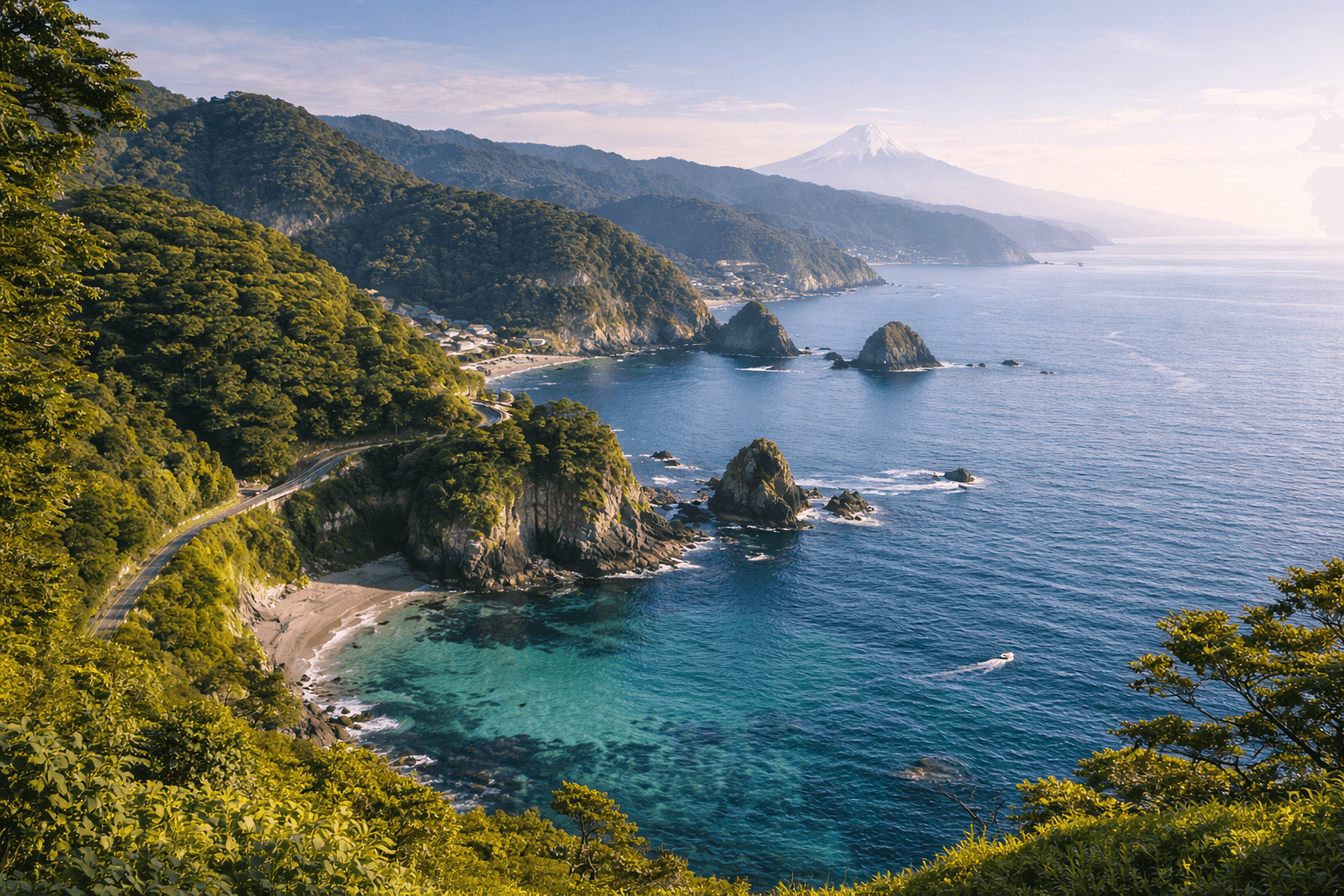
The Izu Peninsula (Izu Hanto) is a volcanic, coastal region jutting south from central Honshu in Shizuoka Prefecture. Known for its rugged coastlines, hot springs (onsen), citrus orchards and mountain trails, Izu blends seaside scenery with traditional Japanese towns and outdoor adventure. It holds cultural importance as a longtime retreat for writers and artists and as a place where seaside fishing villages and onsen culture remain distinctly local.
This guide is for first-time and returning travelers planning a real visit: nature lovers, onsen seekers, active walkers, photographers, families and anyone wanting a relaxed, regional Japanese experience away from big-city crowds.
Why Visit
- Scenic coastlines and lookout points (Jogasaki, Irozaki) for dramatic Pacific views.
- Abundant onsen towns (Atami, Shuzenji, Ito) for relaxing thermal baths and ryokan stays.
- Accessible outdoor activities: coastal walks, snorkeling/diving, and mountain hikes.
- Charming local food: fresh seafood, wasabi and citrus-grown regional cuisine.
- Close enough to Tokyo for easy multi-day trips without long-distance travel stress.
Main Areas & What to See
Atami
- What it is: A historic onsen and seaside city on the northeast edge of Izu.
- Why it matters: One of the most accessible resort towns with public baths, promenades and modern museums.
- What to notice/do: Stroll the waterfront, visit a public sento or hotel onsen, try local seafood at the morning market and climb to MOA Museum of Art for views.
Ito
- What it is: A mid-sized onsen town with a pleasant seaside feel and convenient transport links.
- Why it matters: Gateway for southern Izu and base for coastal excursions.
- What to notice/do: Relax in an onsen ryokan, explore Karatachi Park, and take short trips to nearby beaches and museums.
Shuzenji
- What it is: A tranquil mountain town centered on a small, historic onsen precinct.
- Why it matters: Traditional atmosphere with bamboo groves, a historic temple and charming streets.
- What to notice/do: Visit Shuzenji Temple, walk the bamboo path, soak in a public footbath, and sample local soba and tofu.
Jogasaki Coast
- What it is: A dramatic stretch of rocky coastline with cliffs, sea stacks and a scenic suspension bridge.
- Why it matters: One of Izu’s most iconic coastal walks with dramatic Pacific views.
- What to notice/do: Hike the coast trail from Izu-Kogen to Jogasaki-Kaigan, pause at the suspension bridge, and watch for migrating seabirds and surfers below.
Izu Kogen & Amagi Highlands
- What it is: Elevated, aromatic highlands with museums, art spots and panoramic views.
- Why it matters: Cooler air, flower gardens and a different landscape from the coast.
- What to notice/do: Rent a bike, visit the Izu Granpal Park or art museums, and drive or hike the Amagi pass for views.
Southern Izu (Shimoda, Minami Izu)
- What it is: Sandy beaches, historic Shimoda port and quieter southern villages.
- Why it matters: Shimoda is known for its role in Japan’s opening to the West (1850s) and has some of the best beaches for swimming.
- What to notice/do: Explore Perry Road in Shimoda, swim at Shirahama Beach, and try boat trips or snorkeling around the bay.
Mount Omuro
- What it is: A small, grassy volcanic cone you can ride a chairlift to the rim of.
- Why it matters: Offers unobstructed panoramic views of the peninsula and Mount Fuji on clear days.
- What to notice/do: Walk the rim, take photos at sunrise/sunset when light is best.
Best Time to Visit
- Time of day: Early morning for coastal light and quiet onsen visits; late afternoon into evening for golden light and onsen relaxation. Midday is best for boat trips and beaches.
- Crowd considerations: Weekends and national holidays are busy at popular onsen towns and Shimoda beaches. Weekdays are noticeably quieter.
- Atmosphere differences: Mornings are calm and local; evenings center on ryokan dining and baths; afternoons in summer bring beach crowds and surfers.
Seasonal Highlights
- Spring (Mar–May): Cherry blossoms in lower elevations, comfortable temperatures and blooming citrus trees.
- Early summer (Jun): Warmer weather; hydrangeas and fewer crowds before the peak season.
- Summer (Jul–Aug): Best for beaches, swimming and snorkeling; expect the busiest crowds around popular beaches and resorts.
- Autumn (Sep–Nov): Clearer air, autumn foliage in the highlands and excellent hiking conditions.
- Winter (Dec–Feb): Cooler temps, quieter onsen towns, and striking winter seascapes; rare clear days reveal Mount Fuji.
Festivals & events: Local summer fireworks, small onsen-town festivals and occasional citrus- or seafood-themed markets. Dates vary by town—check local event calendars when planning.
Practical Tips
- Cultural etiquette: Remove shoes where requested (ryokan, temples). Be quiet and respectful in public baths; follow posted onsen rules (wash before entering; no swimsuits unless specified).
- Photography: Scenic viewpoints welcome photos; avoid photographing people (especially in onsen areas) without permission and respect privacy in residential streets.
- Payment & access: Cash remains common in smaller shops and markets — carry yen. Major hotels and stores accept cards. ATMs in larger stations and convenience stores.
- Timing tips: Allow buffer time for winding coastal and mountain roads — some transfers are slower than distances suggest. Book popular ryokan in advance for weekends and peak seasons.
- Estimated visit duration: 2–5 days gives a good balance (1–2 nights in an onsen town plus 1–2 days exploring coast and south Izu). A very quick taste is possible in a long day trip from Tokyo, but overnight stays make the trip worthwhile.
Getting There
- Nearest rail access: Ito, Atami and Shimoda stations are principal rail or bus gateways. Izu is also accessible by the JR Tokaido / Ito lines (Atami/Ito) and Odoriko / Izu Kyuko services from Tokyo.
- Typical travel time from city centers: From Tokyo Station or Tokyo city center to Atami: approximately 50–90 minutes by JR train (shinkansen to Atami is fastest, regular limited express services also run). To Ito: about 1.5–2 hours by limited express. To Shimoda (southern Izu): roughly 2.5–3.5 hours by limited express or a combination of train and bus.
- If driving: Expect scenic but narrow roads and variable parking at peak times; allow extra time for coastal routes and mountain passes.
Is It Worth It?
Yes, if you value varied coastal scenery, accessible onsen culture and a relaxed pace that mixes outdoor activity with low-key local life. Izu rewards at a slower pace: short stays can feel rushed, while an overnight ryokan and a couple of days exploring the coast and highlands deliver a memorable regional experience. For travelers seeking urban nightlife or a fast, action-packed itinerary, Izu is quieter and more restorative than flashy; plan accordingly.