
Introduction
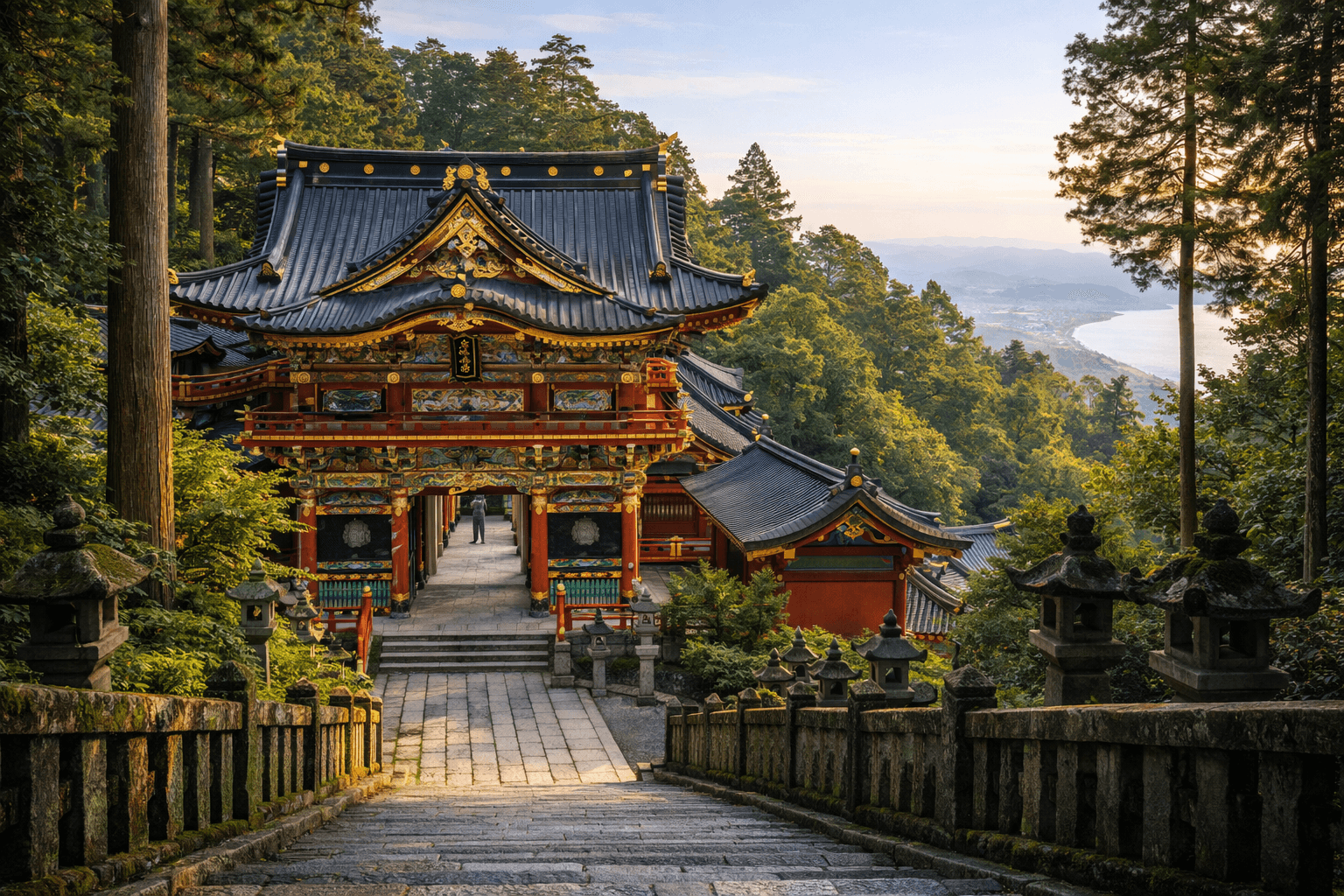
Kunōzan Tōshō-gū is a compact, richly decorated Shinto shrine sitting on Mount Kunō (Kunōzan) in Shizuoka City. Built in the early Edo period to honor Tokugawa Ieyasu, it preserves important artifacts and ornate architecture that predate and complement the more famous Nikkō Tōshō-gū. The shrine offers both cultural history and panoramic views of Suruga Bay and Mount Fuji on clear days. It will appeal to history buffs, shrine-and-temple travelers, hikers who enjoy a short climb, and anyone seeking quieter cultural sites outside major tourist circuits. (toshogu.or.jp)
Why Visit
- Authentic early-Edo architecture and lacquer/gilded ornamentation rarely seen at smaller shrines. (toshogu.or.jp)
- Historical connection to Tokugawa Ieyasu including original artifacts in the on-site museum. (japan.travel)
- Scenic perch above Suruga Bay with great views and photo opportunities. (japan.travel)
- Two distinct approaches — a 5-minute ropeway ride from Nihondaira or a traditional 1,159-step stone stair climb — each offering a different experience. (toshogu.or.jp)
Main Areas & What to See
Main Shrine (Honden and Haiden)
- What it is: The core complex of brightly painted, carved, and lacquered buildings dedicated to Tokugawa Ieyasu. (toshogu.or.jp)
- Why it matters: It represents early Tokugawa religious patronage and is a local counterpart to the grander Nikkō site. (japan.travel)
- What to notice/do: Study the intricate carvings, painted panels and the layered roofs; observe respectful behavior (no loud voices, bow at the torii).
Stone Staircase (Omotesandō)
- What it is: A long, steep set of 1,159 stone steps from the foot of the hill to the shrine. (toshogu.or.jp)
- Why it matters: It’s a traditional pilgrimage route that connects visitors physically to the site’s history.
- What to notice/do: Wear sturdy shoes; take breaks at viewpoint landings; this route gives a stronger sense of arrival.
Nihondaira Ropeway & Mountaintop Approach
- What it is: A short 5-minute ropeway that links the Nihondaira plateau to the shrine area. (toshogu.or.jp)
- Why it matters: Fast, scenic access with sweeping valley and sea views during the ride.
- What to notice/do: Check ropeway operating hours and any maintenance closures before planning; have coins or card ready for tickets where needed. (toshogu.or.jp)
Shrine Museum (Treasure House)
- What it is: Displays swords, armor, documents and personal items associated with Tokugawa Ieyasu. (toshogu.or.jp)
- Why it matters: Offers context and tangible links to early-Edo politics and craftsmanship.
- What to notice/do: Allow time to read labels; photography may be restricted inside—follow posted rules.
Viewpoints and Grounds
- What it is: Paths, small shrines and lookouts around the main complex.
- Why it matters: The setting enhances the spiritual atmosphere and provides photo frames of the shrine with sea/Mt. Fuji backdrops.
- What to notice/do: Walk the perimeter for different vantage points and quieter corners.
Best Time to Visit
- Time of day: Early morning (shortly after opening) for softer light, cooler temperatures and fewer visitors; late afternoon can offer warm light for photos. (toshogu.or.jp)
- Crowd considerations: Weekdays and mornings are quietest. Weekends, Japanese national holidays and school holiday seasons are busier, especially at the ropeway station and parking areas. (toshogu.or.jp)
- Atmosphere differences: Morning feels contemplative and cool; midday is livelier with tour groups; sunset hours can be peaceful but ropeway schedules may limit return options.
Seasonal Highlights
- Spring: Cherry blossoms near the approach and on the plateau brighten the walk; comfortable temperatures.
- Summer: Lush greenery, but midday can be hot and humid; bring water. Ropeway offers cooling breeze and views. (shimizu-explorer.jp)
- Autumn: Vivid foliage on the slopes enhances the shrine’s colors—one of the most photogenic times.
- Winter: Crisp air and clearer skies make views of Mount Fuji more likely; colder, quieter experience.
- Special events: The shrine holds periodic rituals and special viewings (including occasional night illumination events and shrine festivals). Check the shrine’s calendar before visiting as dates and availability vary. (toshogu.or.jp)
Practical Tips
- Cultural etiquette: Bow at the torii, follow the two-bow, two-clap, one-bow procedure at the main hall if participating in prayer; keep voices low and respect prayer spaces. Avoid stepping on center lines of stone paths reserved for deity passage when indicated.
- Photography: Outdoor photography of the grounds is generally allowed; photography inside display cases or museum galleries may be restricted—follow signs and staff instructions. (toshogu.or.jp)
- Payment & admissions: The shrine and museum charge separate admission (combined ticket available). Bring cash (yen) though major cards may be accepted at official counters—smaller vendors may be cash-only. Current opening hours are typically 9:00–17:00 (last entry shortly before closing). (toshogu.or.jp)
- Accessibility: There is no road directly to the shrine summit; access is by ropeway or stairs. The ropeway is the easier option for mobility-limited visitors; the stone steps are steep and not suitable for strollers or wheelchair users. (toshogu.or.jp)
- Estimated visit duration: 1–2 hours to see the main shrine, museum and viewpoints; add 1–2 hours if you plan to hike the stone steps round-trip.
Getting There
- From Shizuoka Station: Take the Shizutetsu Justline/Ishida Kaido Line bus toward Higashi-Otani and transfer to a bus bound for Kunōzan-shita (foot of Kunōzan). Total bus time is typically ~40–50 minutes depending on transfers and schedule. Some direct buses run several times daily. (toshogu.or.jp)
- Via Nihondaira Ropeway: From the Nihondaira plateau (reachable by car, taxi or bus from Shizuoka), take the Nihondaira Ropeway for a 5-minute descent to the shrine area. By taxi from Shizuoka Station to Nihondaira take roughly 30 minutes (fare varies). (toshogu.or.jp)
- From Tokyo: Shinkansen Hikari to Shizuoka Station takes about 60 minutes; then follow the local bus/taxi instructions above. (edolegacytravel.metro.tokyo.lg.jp)
Is It Worth It?
Kunōzan Tōshō-gū is worth visiting if you value Edo-period history, ornate shrine architecture and scenic views without the heavy crowds of larger national sites. For a compact cultural experience paired with memorable vistas, plan 1–2 hours and choose the ropeway for convenience or the stairway for a more atmospheric approach. If your schedule is tight and you prefer central-city sightseeing only, you may skip it; but for many visitors to Shizuoka it provides a rewarding—often unexpectedly tranquil—slice of Japan’s Tokugawa legacy. (japan.travel)