
Introduction
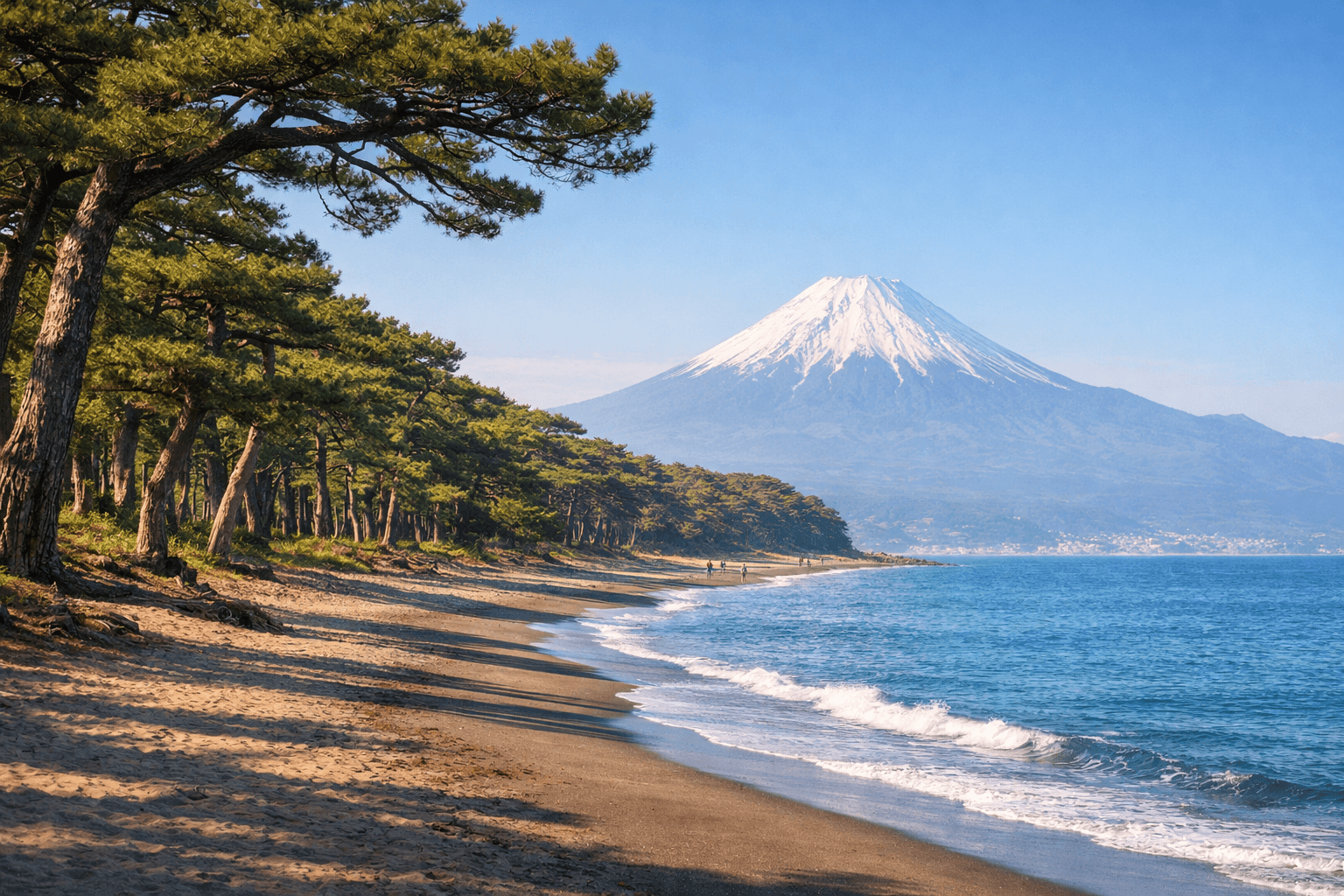
Miho-no-Matsubara is a scenic coastal pine grove on the Miho Peninsula in Shizuoka Prefecture, facing Suruga Bay with Mount Fuji often visible on clear days. Designated a Place of Scenic Beauty and part of the Mount Fuji World Heritage landscape, it combines natural shoreline, cultural landmarks, and traditional views of Japan’s most famous mountain. The site appeals to nature lovers, photographers, culture-minded travelers, and anyone seeking a peaceful seaside walk with strong local character.
Why Visit
- Expansive black-sand beach fringed by a long avenue of Japanese black pines creating a unique coastal landscape.
- Classic views of Mount Fuji framed by pines — iconic and photogenic on clear days.
- Cultural sites like the Miho Shrine and tea-houses that connect you to local history and coastal traditions.
- Relaxed, low-key atmosphere ideal for strolling, picnics, and sunrise/sunset watching.
Main Areas & What to See
The Pine Grove (Matsubara)
- What it is: A long, linear stand of Japanese black pines along the shoreline.
- Why it matters: The grove shapes the character of the coastline and is central to the site’s heritage and photographic appeal.
- What to notice/do: Walk the tree-lined path, listen for wind in the needles, and pause at viewpoints where pine silhouettes frame Mount Fuji.
The Beach and Shoreline
- What it is: A black-sand volcanic beach stretching beneath the pines.
- Why it matters: Offers direct access to Suruga Bay and unobstructed horizons for sunrise and sunset.
- What to notice/do: Walk along the shoreline, collect smooth pebbles, or sit for a quiet sea view; swimming is uncommon due to currents, so check local advice before entering the water.
Miho Shrine and Shinto Elements
- What it is: Small coastal shrine(s) near the grove with torii gates and local votive practices.
- Why it matters: Adds cultural context — the area has been a sacred landscape and inspiration for poets and painters.
- What to notice/do: Observe shrine etiquette (bow slightly before entering, be respectful), and enjoy small architectural details and coastal religious markers.
Viewpoints toward Mount Fuji
- What it is: Several designated spots where Fuji is framed by pine branches.
- Why it matters: These are the signature images of Miho-no-Matsubara and a reason many people visit.
- What to notice/do: On clear days, use a telephoto lens or zoom to compress Fuji into the pine foreground; early morning and late afternoon light are best.
Nearby Tea-houses and Local Cafés
- What it is: Small establishments offering tea, light meals, and local snacks.
- Why it matters: A chance to sample Shizuoka tea and regional treats while enjoying the view.
- What to notice/do: Try a tea tasting or matcha sweets; many places are modest and cash-friendly.
Best Time to Visit
- Time of day: Early morning for soft light and fewer people; late afternoon/sunset for dramatic color and silhouettes. Midday can be bright but less atmospheric.
- Crowd considerations: Weekdays and early mornings are quiet. Weekends and national holidays attract more local visitors, especially when Fuji is visible.
- Atmosphere differences: Clear days reward with Fuji views; misty or low-cloud days offer moody coastal scenes and calmer crowds.
Seasonal Highlights
- Spring (Mar–May): Pleasant temperatures; nearby cherry blossoms may appear in surrounding areas but not heavily within the pine grove.
- Summer (Jun–Aug): Warmer, beachside feel; higher humidity and more locals on holiday. Late summer sunsets can be striking.
- Autumn (Sep–Nov): Cooler, clearer air increasing chances of Fuji visibility; autumn foliage is limited at the grove but surrounding hills may show color.
- Winter (Dec–Feb): Crisp air with some of the best Fuji views on really clear days; quieter and cooler for long walks.
- Festivals/special events: Local coastal and shrine festivals occur at different times of year — check town event calendars when planning a visit.
Practical Tips
- Cultural etiquette: Be respectful at shrines (bow, remove hats if appropriate), avoid loud behavior, and take litter with you. Stick to paths and respect any restricted areas.
- Photography: No special permits for casual photography; drone use may be restricted—check local rules and avoid flying over people or shrine areas.
- Payment & access: Many small cafés take cash; bring some yen. Facilities are modest—public restrooms exist but plan accordingly.
- Timing: Allow 1–2 hours for a relaxed visit, longer if you plan to picnic, photograph extensively, or walk the full shore.
Getting There
- Nearest stations: From Shizuoka Station or nearby JR stations, take local trains or buses toward Miho Peninsula. The closest larger hub is Shimizu (Shimizu Station) in Shizuoka City; from there a short bus or taxi ride reaches the grove.
- Typical travel time: From downtown Shizuoka City center, expect about 20–40 minutes by car or 30–50 minutes using public transport (train + bus), depending on connections.
Is It Worth It?
Miho-no-Matsubara is worth a visit for a calm, scenic break from city touring — especially if you value coastal walks, cultural touches, and the chance to see Mount Fuji framed by pine trees. If you need constant activity or many attractions nearby, combine it with other Shizuoka sites (Sengen Shrine, S-Pulse Dream Plaza, or local tea farms) for a fuller day. For photographers and contemplative travelers, it is a high-value stop.