
Introduction
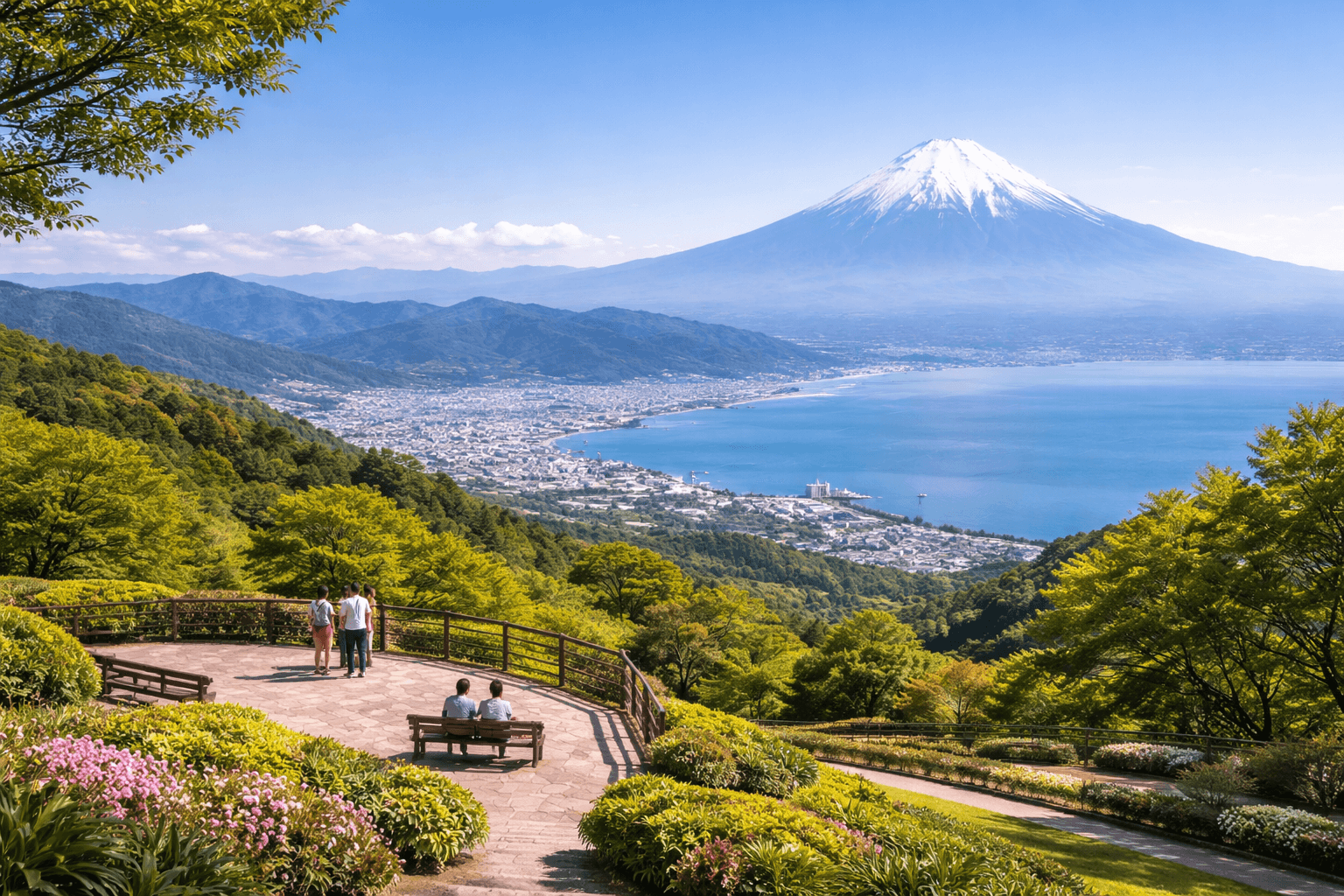
Nihondaira is a gently sloping plateau above Shizuoka City overlooking Suruga Bay, the Izu Peninsula and — on clear days — an iconic, broad view of Mount Fuji. It’s valued for panoramic scenery, tea-country landscapes and access to cultural sites such as Kunōzan Toshogu Shrine via the Nihondaira Ropeway. The area blends light outdoor walking, photo viewpoints and traditional culture, making it a pleasant escape from the city.
Nihondaira appeals to:
- Sightseers and photographers who want classic Fuji + bay panoramas.
- Travelers seeking short nature walks and tea-country scenery.
- Culture-minded visitors pairing a view with a shrine visit (Kunōzan Toshogu).
- Families looking for easy outdoor time and a small zoo/play areas.
Why Visit
- Superb panoramic viewpoints of Mount Fuji, Suruga Bay and the Izu coastline.
- Easy access to Kunōzan Toshogu Shrine via a short ropeway ride — history in a compact visit.
- Gentle walking, tea fields and picnic-friendly grassy areas for low-effort outdoor time.
- Good half-day outing from central Shizuoka or a pleasant stop en route to the Izu Peninsula.
Main Areas & What to See
Nihondaira Observatory (lookout points)
What it is: A series of viewing platforms and a small park along the plateau ridge. Why it matters: The signature place for sweeping vistas of Mt. Fuji, Suruga Bay and the port of Shimizu. What to notice/do: Arrive on a clear morning or sunset for the best light; bring a telephoto for Fuji and a wide-angle for the bay. Windproof layers are useful.
Nihondaira Ropeway & Kunōzan Toshogu Shrine
What it is: A short aerial lift from the Nihondaira plateau down to Mount Kunō (Kunōzan), where Kunōzan Toshogu sits. Why it matters: Kunōzan Toshogu is an ornate Edo-period shrine dedicated to Tokugawa Ieyasu and offers a historic contrast to the natural panoramas. What to notice/do: Ride the ropeway for views, then climb the stone steps at the shrine; notice carved woodwork, brightly lacquered gates and the shrine’s hilltop setting.
Nihondaira Park & Promenade
What it is: Grass terraces, picnic spots and easy walking paths along the ridge. Why it matters: Relaxed spot for families, tea breaks and watching clouds roll over the bay. What to notice/do: Pack a small picnic or stop at a nearby café; benches face the view so plan to linger a little.
Tea Plantations and Local Shops
What it is: Patches of green tea fields and small retail stalls selling Shizuoka tea and sweets. Why it matters: Shizuoka is Japan’s foremost tea-producing region; tasting fresh greens here is authentic and local. What to notice/do: Try a sample of sencha or matcha sweets; buy a small packet of local tea as a souvenir.
Nihondaira Zoo (Shizuoka Municipal Nihondaira Zoo)
What it is: A modest city-run zoo near the plateau with family-friendly exhibits. Why it matters: Good option for families with young children or visitors wanting a short animal-focused stop. What to notice/do: Check opening hours and combine with the park for a full morning or afternoon.
Best Time to Visit
- Time of day: Early morning (for clearer air and fewer clouds over Mt. Fuji) and late afternoon to sunset (warmer light over the bay). Midday can be hazy in summer.
- Crowd considerations: Weekdays and mornings are quieter; weekends—especially good-weather days—draw local families and photographers.
- Atmosphere differences: Mornings are crisp and contemplative; late afternoons are social and photogenic; evenings can be windy and cool.
Seasonal Highlights
- Spring: Cherry blossoms in nearby spots and fresh green tea fields; pleasant temperatures.
- Early summer: Lush tea plantations; visibility toward Fuji can become hazy as humidity rises.
- Autumn: Clearer skies and autumn foliage on nearby slopes—excellent for Fuji views.
- Winter: Often the clearest season for dramatic Fuji vistas when air is crisp; colder winds.
Special events: Local communities occasionally hold small festivals or seasonal tea-picking experiences—check local listings if you travel during harvest or festival months.
Practical Tips
- Cultural etiquette: Respect quiet at viewpoints and near shrine areas; remove hats in shrine buildings and follow any signage about footwear or photography.
- Photography rules: Photography is generally allowed outdoors; at Kunōzan Toshogu follow posted rules—some indoor or sacred spaces may prohibit flash or close-up photography.
- Payment & access: Small shops accept cash; larger vendors may take cards, but carry some yen for ropeway tickets, snacks and small purchases.
- Timing: Ropeway and shrine hours vary by season—plan around daylight hours. Allow 1–3 hours for an unhurried visit, longer if combining park, zoo and shrine.
Getting There
- Nearest stations: Shizuoka Station (JR Tokaido Line) and Shimizu Station are the main rail access points for the area.
- From Shizuoka city center: By bus or taxi the plateau is typically 20–40 minutes depending on route and traffic; buses to Nihondaira run regularly from Shizuoka and Shimizu stations.
- Ropeway connection: The Nihondaira Ropeway links the plateau to Kunōzan—use it to combine the viewpoint with the shrine visit (short ropeway ride of a few minutes).
Is It Worth It?
Yes for travellers who value accessible panoramas, a relaxed outdoor pace and a compact cultural stop. Nihondaira is not a long, activity-packed destination, but it delivers reliably beautiful views, a dose of Shizuoka tea culture and an easy cultural pairing with Kunōzan Toshogu. If your trip prioritizes dramatic natural vistas and a gentle half-day outing near Shizuoka, it’s worth the visit; if you’re on a tight schedule and uninterested in views or shrines, you might skip it for city museums or the Miho no Matsubara pine grove instead.