
Introduction
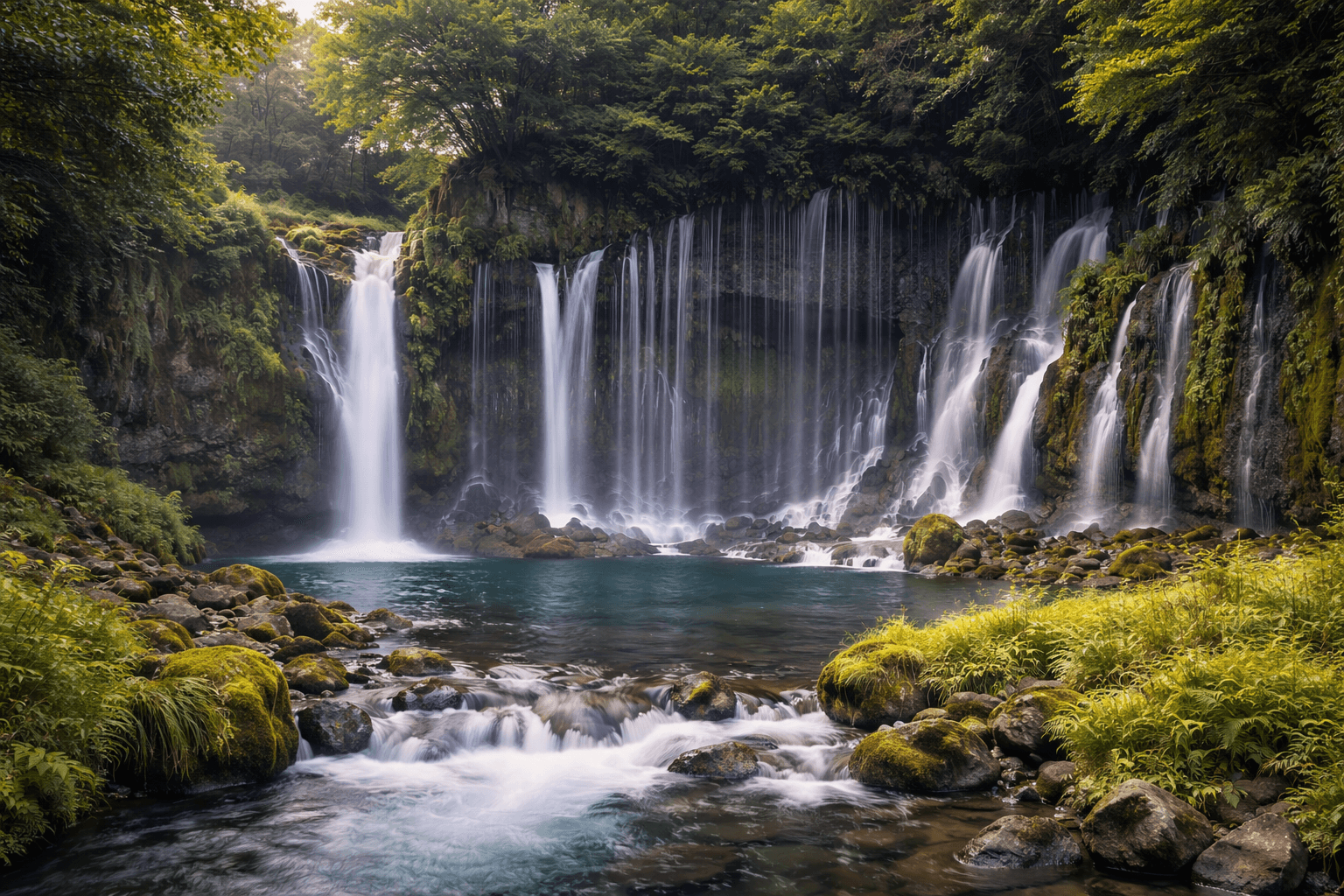
Shiraito Falls (Shiraito no Taki) is a wide, delicate waterfall on the southwestern foothills of Mount Fuji in Fujinomiya, Shizuoka Prefecture. Thin, white streams of spring water fan down a roughly 20–24 m cliff over a broad rock face, creating a curtain-like effect that has inspired poets, pilgrims, and painters. The falls are a protected natural monument and part of the Fuji World Heritage landscape, and they sit beside the more dramatic Otodome Falls.(en.wikipedia.org)
Who will enjoy it: nature lovers, photographers, travelers planning a Mount Fuji day trip, families seeking an easy outdoor stop, and anyone interested in Japan’s cultural landscapes.(en.wikipedia.org)
Why Visit
- Unique “silk-thread” cascade fed by Mount Fuji spring water — photogenic and calming.(japan-guide.com)
- Short, accessible trail and viewing platform — suitable for most fitness levels.(japan-guide.com)
- Close to Otodome Falls and Fujinomiya’s cultural sites — easy to combine into a half-day itinerary.(en.wikipedia.org)
- Recognized natural and cultural value (nationally protected; part of Fujisan’s World Heritage listing).(en.wikipedia.org)
Main Areas & What to See
-
Shiraito Falls viewing area
- What it is: The main platform and short path that bring you close to the curtain-like cascade.(japan-guide.com)
- Why it matters: The wide, delicate streams are unlike a single-column waterfall and are the principal reason the site is celebrated.(japan-guide.com)
- What to notice/do: Walk the lower path for varied angles; listen to the soft, constant flow and frame shots that include the mossy rock face and surrounding trees.
-
Otodome Falls (nearby)
- What it is: A separate, louder 25 m single-drop waterfall about a 3–5 minute walk from Shiraito.(en.wikipedia.org)
- Why it matters: Offers contrast — powerful roar and narrower column versus Shiraito’s fine threads. Good for photos and a slightly different sensory experience.(en.wikipedia.org)
- What to notice/do: Walk the short trail from Shiraito and compare the viewpoints; bring a light rain jacket if spray is strong.
-
Shops and approach trail
- What it is: Small souvenir shops and a short, well‑signed trail from the road down to the viewing area.(japan-guide.com)
- Why it matters: Convenient stops for refreshments and local goods; the approach sets the mood for the falls.(japan-guide.com)
Best Time to Visit
- Time of day: Early morning (just after opening) or late afternoon for softer light and fewer people. Morning often yields calmer conditions for reflection shots.(japan-guide.com)
- Crowds: Popular with day-trippers from the Fuji area; expect higher visitor numbers mid-morning to mid-afternoon, especially on weekends and public holidays.(japan-guide.com)
- Atmosphere differences: Mornings are tranquil and cooler; midday is brighter but busier; late afternoon has warm light on the rock face and leaves.
Seasonal Highlights
- Spring/early summer: Strong flow from Mount Fuji snowmelt and lush greens — a peak period for water volume.(japan-guide.com)
- Autumn: Striking fall colors (usually mid–late November) that frame the falls in red and gold.(japan-guide.com)
- Winter: Clear views of the falls with fewer visitors; water flow can be lower but the scene is quieter.(japan-guide.com)
- Events: The site itself does not host large festivals regularly, but nearby Fujinomiya and Mount Fuji cultural events occur seasonally — check local listings when planning.(japan.travel)
Practical Tips
- Etiquette: Keep voices low near the falls, follow posted signs, and avoid trampling vegetation. Respect local worship or purification spots if present.(en.wikipedia.org)
- Photography: Public viewpoints are open; tripods may be limited at crowded times — be courteous and avoid blocking trails. No special permits for casual photography.(japan-guide.com)
- Payment & access: Entrance to the viewing area is typically free (small parking or facility fees may apply during peak times). Shops accept cash; some may accept cards but carry yen for convenience.(japan-guide.com)
- Timing: Allow 45–90 minutes for a relaxed visit (viewpoints, short walks to Otodome Falls, souvenir stops). Longer if combining with nearby attractions or hiking.(japan-guide.com)
Getting There
- Nearest station(s): Fujinomiya Station (JR) is the common access point; Shin-Fuji Station also serves the area for some bus routes.(rome2rio.com)
- Typical connections: Local buses run between Fujinomiya Station and Shiraito Falls (about 25–35 minutes; fares vary around ¥400–¥800). Bus frequency is generally once or twice per hour on local lines; some longer-distance buses from Kawaguchiko or Shin-Fuji run only a few times daily.(japan-guide.com)
- By car: About 20–30 minutes from Fuji or Shin-Fuji area (parking available near the site). Driving from central Tokyo typically takes around 2–2.5 hours depending on traffic.(travelinjapan.net)
Is It Worth It?
Shiraito Falls is worth a visit if you appreciate accessible natural beauty, tranquil viewpoints, and combining a stop with Mount Fuji or Fujinomiya sightseeing. It’s particularly rewarding in spring (high flow) and autumn (colors). If you have limited time in the region, pair Shiraito with Otodome Falls and a Fujinomiya lunch to make the most of a half-day visit. For travelers seeking dramatic, remote waterfalls, Shiraito’s appeal is quieter and more contemplative than adrenaline-driven.